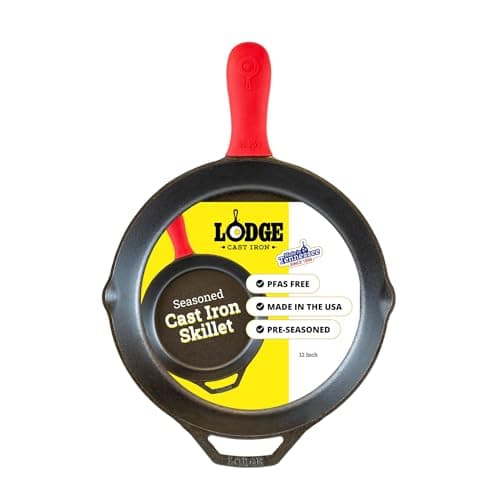
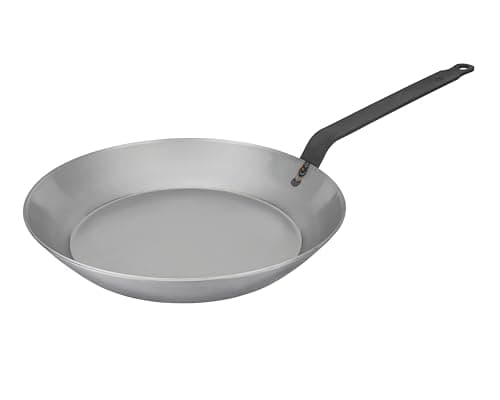
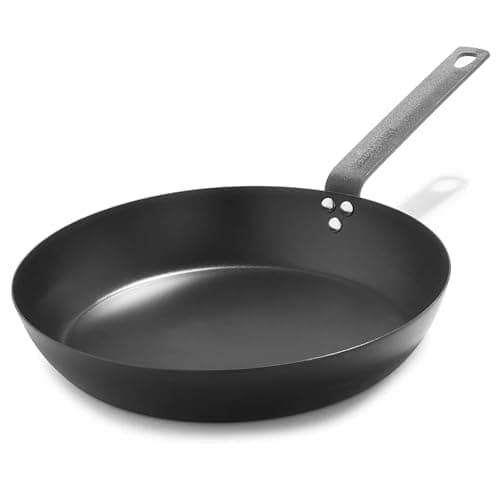
The best wok alternative is a wide carbon steel fry pan, and the pick is the Merten & Storck 12-inch — best for a cook on an electric, smoothtop or induction hob who wants stir-fried food to brown rather than steam. The budget pick is the Lodge 12-inch cast iron skillet. The counterintuitive part is that the fix for a wok you cannot use is not a different wok: it is a flatter, wider pan, because on a flat burner the flat part is the only part that gets properly hot.
First: what a wok is actually good at
We are not here to talk anyone out of a wok. A round-bottomed wok is a brilliant piece of design and nothing on this page replaces it on its own terms. Over a gas ring, the flame curls up the outside of the bowl and heats the walls as well as the base, so you get a searing-hot zone at the bottom and a cooler slope above it. That geometry is what makes stir-frying work: you sear a batch at the bottom, push it up the side to hold, sear the next batch, and combine. The curve also lets you toss food back onto itself with a flick rather than stirring it.
If you have gas, buy a wok. Our best woks for gas stoves is the page for you, and the best woks under $50 shows how little you need to spend. This page exists for the much larger group of kitchens where that flame does not exist.
Why a wok disappoints on a flat hob
On an electric coil, a radiant smoothtop or an induction hob, heat enters the pan only where the pan touches the surface. A round-bottomed wok touches almost nothing, which is why flat-bottomed woks exist. But a flat-bottomed wok is a compromise object: its flat area is small — often five or six inches on a 14-inch pan — and the sloping walls above it are heated only by conduction through the metal. Since both steel and iron conduct heat sideways poorly, those walls stay comparatively cool.
The practical result is a small hot disc surrounded by a large warm bowl. Food piled in it releases water faster than the pan can drive it off, and you get a gray braise instead of browning. A 12-inch flat pan has roughly four times the genuinely hot area, which is the entire argument of this page. On induction specifically, the hob heats only the metal in close flat contact with it, so the effect is at its most extreme — the best woks for induction cooktops is the page for readers who want a wok anyway, and it is honest about the same limit.
What you give up, stated plainly
Three things, and they are real. You lose the cool parking zone, so you cook in batches and combine at the end instead of stacking food up the side. You lose tossing — a flat pan with low walls will throw food on your hob, so you stir with a spatula. And you lose the shape that makes a wok good at deep-frying a small volume of oil, because a flat pan spreads the same oil thin.
What you gain is browning, which is usually what people are missing. Batch cooking is not a workaround invented for this page; it is what everyone with a domestic burner ends up doing anyway, wok or not. Our guide to using a wok makes the same point.
Carbon steel or cast iron?
Carbon steel is the closer match to a wok, because it iswhat most woks are made of: thin, light, fast to heat, fast to respond, and it seasons the same way. The Merten & Storck is the value route into it and the Matfer Bourgeat is the professional one — a single piece of uncoated carbon steel with a rivet-free welded handle and roughly a 9.5-inch flat base, the widest we carry.
Cast iron is the better choice if your burner is weak. A 12-inch Lodge holds far more stored heat than any thin steel pan, so a handful of cold vegetables does not collapse the surface temperature and stall browning. The trade is that it takes longer to heat and is slow to come back down, which makes it less forgiving when something is about to burn. Cast iron versus carbon steel is the full comparison, and cast iron wok versus carbon steel wok is the wok-shaped version of the same argument.
When you actually do want walls
Two jobs push back toward a deeper vessel. If you shallow-fry or deep-fry as part of the dish, a flat pan with two-inch sides is a splatter problem and a poor oil reservoir. And if you cook saucy stir-fries in volume, a flat pan overflows.
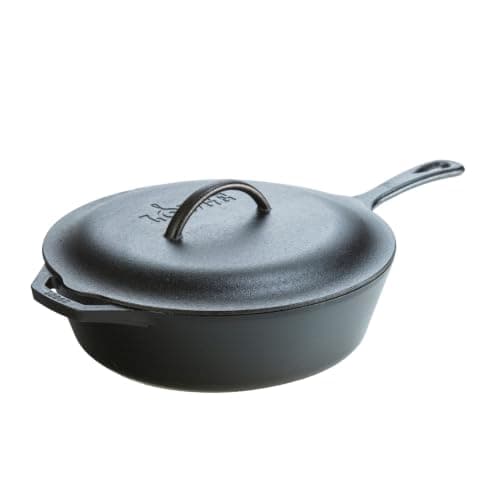
The Lodge 5 qt covered deep skillet is the answer to both: tall straight sides, a wide flat floor, a cast iron lid, and enough depth for a couple of inches of oil. It is not a wok — its walls run cool and it is heavy — but it is the closest thing in our registry to a wok’s capacity. The best cast iron for deep frying ranks it properly.
The flat griddle, for the opposite reason
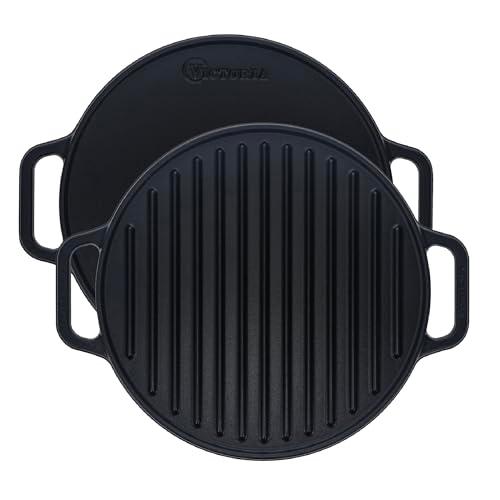
The Victoria 12.5-inch reversible round griddle is here as the extreme version of this page’s logic: no walls at all, so every square inch is hot cooking surface and nothing ever steams. For dry, fast cooking — the tail end of a fried rice, vegetables you want charred rather than saucy, anything you would do on a flat-top — a griddle beats both a wok and a skillet. It is useless for anything with liquid in it, which is why it ranks last rather than first. See the best cast iron griddles and cast iron skillet versus griddle.
So should you just buy a wok anyway?
If you have a gas hob, yes — and the pages above will sell you a good one cheaply. If you have an induction hob and stir-frying is central to how you cook, a heavy flat-bottomed cast iron wok is a legitimate choice, because thick metal carries base heat up the walls better than thin steel does.
For everyone else — electric coil, radiant smoothtop, or an induction hob where the wok would be one more thing in a small kitchen — a wide flat pan you already half-own is the better buy, and you will use it six days a week instead of one. If weight rather than shape is your constraint, cast iron skillet alternatives runs the same reasoning for the pan rather than the wok.
How the prices on this page work
Every number comes from the live Amazon listing at the date stamped under the comparison table, read through this site’s price layer. Nothing is typed in from memory, and a pick with no verified live offer shows no number at all.