If you want a proper enameled braiser, buy the Le Creuset Signature 3.5-quart. Its wide, low shape browns meat better than a tall pot, it goes from stovetop to oven to table, and it carries the same French build and lifetime warranty as the dutch oven. Choose the Staub braiser instead if a glass lid you can watch through matters more to you than maximum oven heat. And if you only want the function — sear then simmer — without the French price, a bare Lodge covered deep skillet braises chicken thighs and short ribs for a small fraction of the cost, as long as you accept it is deeper and not a true wide braiser.
A braiser is the pan for braising — you sear food hard, then simmer it gently in a little liquid under a lid until it is tender. The classic braiser is wide and shallow, which gives you a big flat floor for browning (more surface in contact with the metal means more Maillard color) and a low profile that reduces to a glossy sauce fast. That shape is exactly what separates it from a dutch oven, which is tall and deep for soups, stocks and bread. If you are unsure which you need, the dutch oven versus braiser guide lays it out; most kitchens want the deep pot first and add a braiser second.
Why the Le Creuset is the one to buy
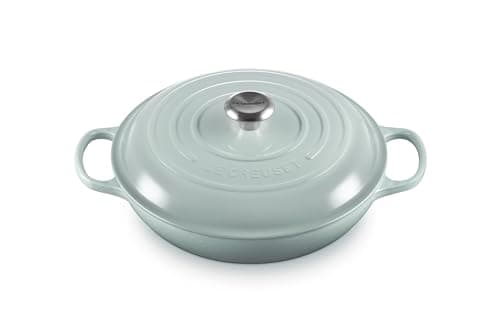
Among true braisers, the Le Creuset Signature is our pick because it does everything the shape promises with the best-executed enamel and hardware in the category. The wide floor browns chicken thighs, short ribs or sausages without crowding; the low walls reduce a pan sauce quickly; and it moves from a stovetop sear straight into the oven and then to the dinner table looking good enough to serve from. The pale interior lets you read fond color so you do not scorch a sauce, and the tall loop handles are easy to grip with a full mitt. Le Creuset's enamel is oven-safe to a high temperature and backed by a lifetime warranty (per the maker's care guidance). The honest catch is the price and the shallow depth — this is a coveted second pan, not a starter, and its low walls are wrong for a deep stew or stock.
| Braiser | Capacity | Lid | Best for |
|---|
| Le Creuset Signature | 3.5 qt | Enameled cast iron | The do-everything braiser |
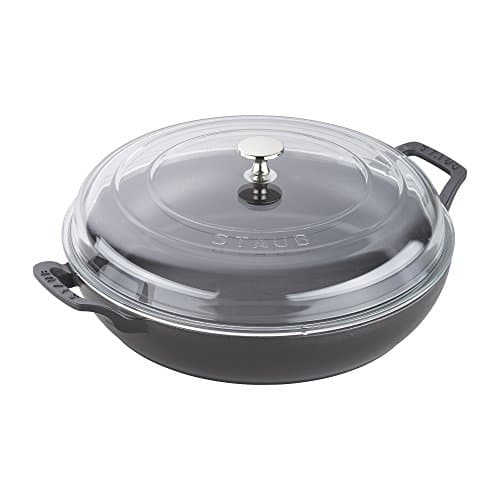
| Staub braiser | 3.5 qt | Glass | Watching a braise without lifting the lid |
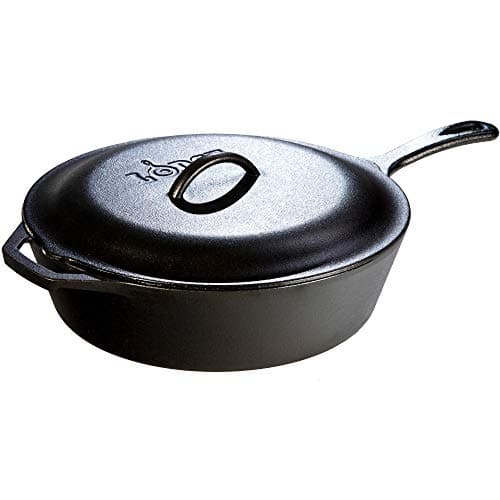
| Lodge covered deep skillet | 5 qt | Bare cast iron | The budget bare-iron alternative |
The Staub, and its glass-lid trade-off
Staub's braiser goes the other way on two counts. Its dark, matte enamel interior browns aggressively and hides stains, and it comes with a glass lid so you can watch a risotto or a braise without lifting it. The cost of that glass lid is heat: it cannot take the extreme oven temperatures a solid cast-iron lid shrugs off, so it limits the pan's top-end range. Choose the Staub if being able to see the pot matters to you and you rarely push a braiser to very high oven heat; choose the Le Creuset if you want the widest temperature range and the easier-to-read pale interior. Both are French, both are heirloom pieces, and neither is a cooking mistake.
The budget route: a bare deep skillet
You do not strictly need enamel to braise. A bare, seasoned Lodge covered deep skillet does the core job — sear hard, add liquid, cover, and cook low until tender — for a small fraction of a French braiser's price, and its extra depth makes it more versatile for shallow frying and one-pot meals. Be honest with yourself about the differences: it is deeper and straighter-walled than a true wide braiser, so it browns a little less surface at once, and because it is bare iron a long, acidic tomato-and-wine braise can nibble at the seasoning. For those specifically acidic, all-day braises, enamel is the better tool — see cooking acidic food in cast iron. For everything else, the deep skillet is a genuine money-saver.
What you actually cook in a braiser
The braiser's wide, shallow shape is built for dishes that start with a sear and finish in a little liquid: braised chicken thighs, short ribs, osso buco, coq au vin, sausages with peppers, and pork shoulder cut into chunks. It is equally at home with one-pan dishes that never leave the stovetop — shakshuka, a paella-style rice, a risotto you stir and then rest, or a big skillet of braised greens. Because it goes straight from a stovetop sear into the oven and then to the table, it doubles as a serving dish, which is a real part of its appeal. For the technique itself, our cast iron chicken thighs method is the classic braiser dish.
Where it struggles is depth. A tall stew, a pot of stock, a batch of soup, or anything you deep-fry wants the height of a dutch oven, not the low walls of a braiser. That is the whole reason we tell most people to buy the deep pot first and add the braiser second — the two shapes cover different halves of the same job, and a kitchen with both rarely reaches for anything else.
Protect the enamel and it lasts for decades.Avoid thermal shock, skip hard metal utensils on the glass, and use pot protectors when you stack. Lodge's enameled care guide covers stains too; we summarize it in enameled cast iron care.
How to choose a braiser
Do you actually want a braiser or a pot?
A braiser is wide and shallow for browning and reducing; a dutch oven is deep for soups, stews, stock and bread. If you can own only one vessel, buy the pot first — it is more versatile. A braiser is the rewarding second piece once you have the deep pot. The dutch oven versus braiser guide walks through it.
Enamel or bare iron?
Enamel needs no seasoning, shrugs off acidic braises, and cleans with soap and water — the right choice for a do-everything braiser. Bare iron costs far less and sears beautifully, but a long acidic braise can strip its seasoning, and it needs drying and oiling after each wash. Match the material to the food you cook most.
Size: 3.5 quarts is the sweet spot
A 3.5-quart braiser handles a family batch of chicken thighs, a pan of shakshuka, or a risotto for four, and still browns without crowding. Go bigger only if you regularly cook for a crowd; a braiser that is too large leaves food spread thin and dries a sauce out.
Lid: solid cast iron or glass?
A solid cast-iron lid takes any oven heat and seals in a heavy, even simmer. A glass lid lets you watch without lifting but limits maximum oven temperature. If you braise mostly on the stovetop and like to keep an eye on things, glass is a fair trade; if you finish braises in a hot oven, choose the cast-iron lid.
Handles and stove-to-table looks
A braiser earns its keep partly by going to the table, so wide loop handles you can grip with a mitt and a finish you are happy to serve from both matter. This is where the French pans justify their price, and where a bare skillet is purely functional. Decide how much the object, versus the function, is worth to you.