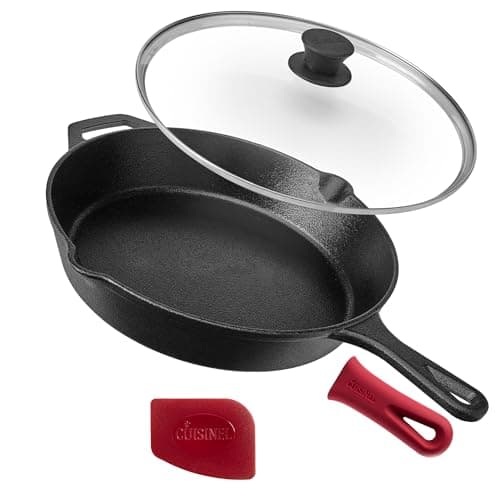
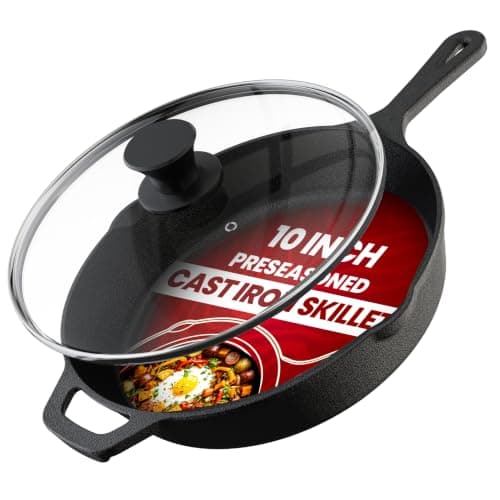
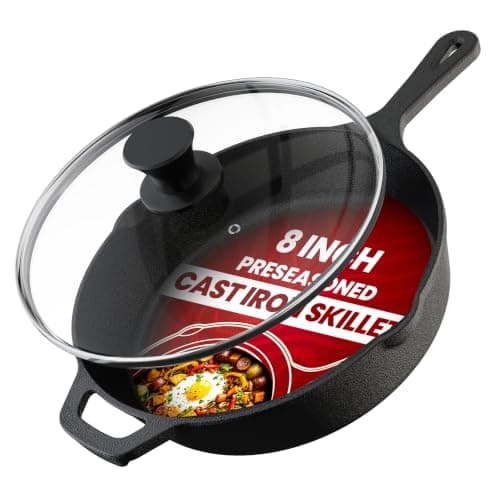
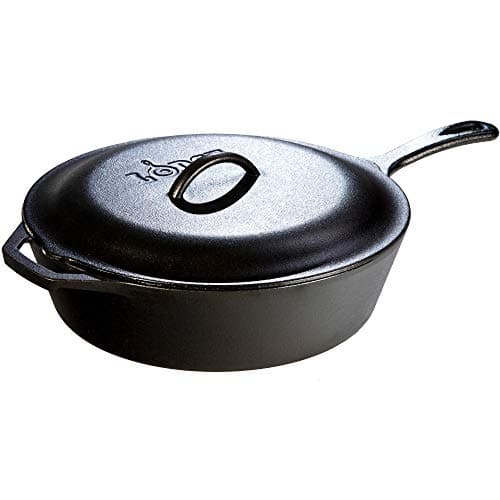
A lid earns its keep on a skillet: it traps heat and moisture for braising and steaming, shields your stovetop from splatter, and lets one pan sear-then-simmer a whole dish. The best covered cast iron pan for most people is the deep Lodge covered skillet (a "chicken fryer"), which is deep enough to braise and shallow-fry with the lid on. The Cuisinel 12-inch is the value big-pan pick, and the Utopia covered skillets are the cheapest way in. But know the limit: for soups and big braises a dutch ovenholds far more — a covered skillet is for shallow, wide cooking.
Most cast iron skillets are sold lidless, and for searing that is fine. But a lid changes what a pan can do. Cover a seared piece of chicken with a little liquid and you can braise it to tenderness in the same pan; cover a batch of vegetables and they steam; cover a shallow-fry and the lid contains the spatter that otherwise coats your stove. A cast-iron lid also adds thermal mass from above, so the food cooks more evenly. The trade is weight — a covered cast-iron skillet is heavy, and heavier still with the lid on — and depth, since a skillet, even a deep one, holds less than a proper pot.
Covered skillet or dutch oven?
This is the honest question to settle first. A covered skillet is wide and shallow: ideal for browning a lot of surface area, braising thin cuts, shallow-frying under a splatter lid, and one-pan skillet dinners. A dutch oven is deep: better for soups, stews, big braises, deep-frying and bread. If you already own a dutch oven, a covered skillet is a genuinely useful second vessel for the shallow, wide jobs the deep pot does clumsily. If you own neither and can buy one, the dutch oven is the more versatile first purchase — a covered skillet is the specialist. A cheaper route, worth knowing, is a universal glass or metal lid that fits a skillet you already own, though it lacks the even heat of a cast-iron lid.
What a covered skillet is really good at
The covered skillet earns its keep on the one-pan dinner. Sear chicken thighs skin-side down in the open pan, add a splash of stock and a handful of vegetables, drop the lid, and you have a braised weeknight meal in the same pan with nothing else to wash — the crisp sear up top, the tender braise underneath. It shines at smothered pork chops, chicken and rice, shallow-braised greens, and any dish that wants a hard sear followed by a covered simmer. The lid also makes it a safer shallow fryer, containing the spatter that otherwise coats a stovetop, and it steams vegetables or reheats leftovers without a second pot. What it will not do is replace a deep pot for soup, stock or a big batch braise — the depth is not there.
Seasoning and caring for the pan and lid
These are bare cast iron, so pan and lid both build a seasonednonstick surface with use and both need the usual care: wash without long soaking, dry thoroughly, wipe a thin film of oil. The lid deserves special attention — a covered pan traps steam, and a lid put away even slightly damp is the most common way one of these rusts. Store the lid ajar or with a paper towel between it and the pan so air can circulate. Do that, and a covered skillet is as near-indestructible as any cast iron.
How to choose a covered cast iron skillet
Depth matters as much as diameter
A deep covered skillet (a chicken fryer) holds enough liquid to braise and enough oil to shallow-fry safely under the lid, which a shallow covered skillet cannot. If braising and frying are the point, buy depth; if you mostly want a splatter shield over a normal skillet, a standard covered pan is fine.
Cast-iron lid or glass lid?
A cast-iron lid adds even heat from above and takes any oven temperature; a glass lid lets you watch without lifting but caps out at a lower heat and can shatter with thermal shock. For oven braising and high heat, the cast-iron lid is the better tool.
Weight is the real cost
A covered cast-iron skillet is among the heaviest pans in the kitchen, especially with the lid on. Make sure you can comfortably lift and maneuver it full — a helper handle and a handle holder help a lot.
Season and care like any bare skillet
These are bare cast iron, so they need seasoning and the usual care: dry after washing, wipe with oil, no long soaking. The lid needs the same attention as the pan, since trapped moisture under a stored lid is a rust risk.