Skip to content
Hearth & Patina

Care & Seasoning

Why Your Dutch Oven Bread Burns on the Bottom

It is not your oven and it is not your recipe. Cast iron conducts heat more than a hundred times better than a baking stone, and you preheated it empty to 450F - the base of your loaf never had a chance.

By Stephen V.Updated How we research
#ad

We earn a commission when you buy through our Amazon links, at no extra cost to you. It never affects our rankings, and we say so when the cheaper pan is the better buy. How this works.

Your bread is burning underneath because preheated cast iron is a very good heat conductor and your loaf is sitting directly on it. The quickest free fixes are: move the pot one rack higher, put a round of parchment under the dough, and brush the excess flour off the bottom of the loaf. If it still scorches, stop preheating the pot — King Arthur documents a cold-start method that works, at a small cost in oven spring. If you want the problem to go away permanently, bake in a vessel with a thinner base or a ceramic one.

First, the reassurance: this is not a sign that you did anything wrong. The standard dutch-oven bread method is to preheat the empty pot and lid at 450°F for about thirty minutes, then drop the dough in. That is excellent advice for crust and oven spring, and it is also, mechanically, how you end up with a base darker than the top. Worth noting plainly: that article does not discuss bottom burning at all, so we are not going to pretend it offers a fix.

The mechanism, in one paragraph

Commercial cast iron conducts heat at roughly 55 W·m⁻¹·K⁻¹. Insulating firebrick — the family of materials baking stones come from — sits at 0.19 to 0.36. That is a difference of more than a hundredfold, and it is why a baker's stone is specified the way it is. Wikipedia states the consequence outright: because of a stone's “property as a poor heat conductor, food is less likely to burn when one uses a baking stone instead of metal”. Your dutch oven is metal, it has been soaking up energy for half an hour, and the first thing that touches it is the sugar-rich surface of a wet dough, which caramelizes and then scorches long before the top of the loaf has finished coloring.

Add a second factor: most domestic ovens have their heating element at or near the bottom, and a heavy iron pot sitting on a low rack is being radiated from underneath for the entire bake. The lower the rack, the worse the asymmetry.

The five fixes, ranked

1. Move the pot up a rack. Free, instant, most effective.

Put the pot on the middle or upper-middle rack rather than the bottom one. You are moving the base away from the bottom element and giving the top of the loaf more radiant heat, which evens out the two crusts. Most people who solve this solve it here and never need anything else on the list.

2. Parchment under the loaf. Nearly free, very effective.

A round of parchment between the dough and the iron does two things: it interrupts direct conduction slightly, and it means you are not dusting the pot with flour that then burns. It also makes loading a slack boule dramatically easier — a parchment sling is the standard trick. Note that King Arthur's method instead calls for semolina flour or cornmeal in the pot, which works for release but adds something that can itself scorch; parchment is cleaner on both counts.

3. Brush the excess flour off the dough. Free.

Loose bench flour on the underside of a boule is the first thing to burn, and it burns bitter. Much of what people read as a burnt base is actually a layer of carbonised flour sitting on an acceptable crust. Brush it off before the loaf goes in and smell the difference.

4. Cold-start the pot. Free, with a real trade-off.

Skip the preheat: put the dough into a cold pot, lid on, and put the whole thing into the cold or heating oven. King Arthur tested this and concluded there is “no baking police” and that neither method is “decidedly ‘better’” — while being clear that the preheated loaf “rose taller while it baked” with “a remarkably similar crumb structure”. So you trade some oven spring for a base that cannot scorch at the moment of contact. For a baker whose bread is otherwise good and whose bottoms are black, that is often the right trade.

5. Change the vessel. Costs money, fixes it permanently.

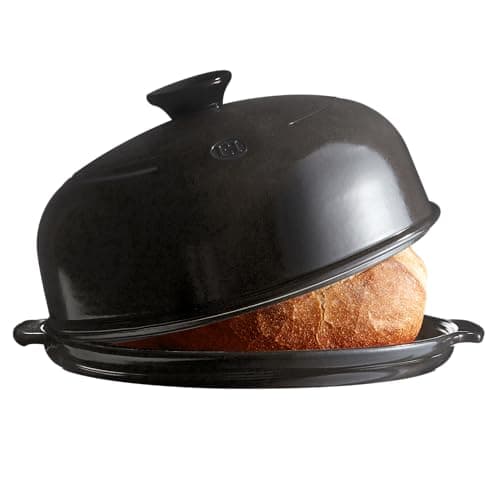
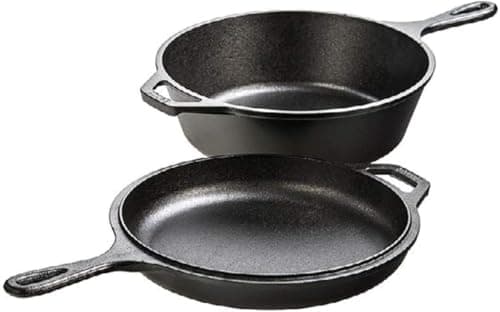
Two directions, both ranked below. A combo cookerbakes with the shallow skillet as the base rather than a deep pot's thick floor, so there is less iron underneath the loaf and you load onto an open, flat surface instead of lowering dough into a hot well. A ceramic cloche takes the mechanism away entirely: fired clay is the poor conductor that stone is, which is precisely why the baking-stone source says food is less likely to burn on it. If you bake several loaves a week and the burnt base has never gone away, this is the purchase that ends it.

Three things people try that do not work

Lowering the oven temperature for the whole bake. It reduces the scorch and it also kills the oven spring and the crust you wanted the pot for. You end up with pale, dense bread and a slightly less burnt bottom. Fix the geometry, not the thermostat.

Putting a baking sheet directly under the pot. A thin steel tray in contact with the pot base is another conductor, pressed against the thing you are trying to insulate. An empty rack position of air between the pot and the element is far better.

Taking the lid off earlier. That helps the top catch up in color, which makes the contrast less obvious, but it does nothing about the base and it shortens your steam phase. Treat it as cosmetic.

Is it actually burnt, or is it just dark?

One honest check before you change anything. A properly baked dutch-oven loaf has a base that is noticeably darker than the top — deep brown, firm, with an audible knock. That is correct, and it is where a good deal of the flavor lives. Burnt is different: black, bitter, carbon that marks your finger. If yours is dark but tastes good, the only thing you need to change is your expectation.

If you are in the first weeks of baking in a pot and several things are going wrong at once, work through how to bake bread in a dutch oven first — it is easier to debug one fault at a time, and a scorched base is usually the last one standing.
The short answer

Quick picks

#ProductBest forScorePrice
01
Lodge Lodge Cast Iron Combo Cooker, 3.2 qt
Lodge Cast Iron Combo Cooker, 3.2 qt

The cheapest great sourdough vessel there is — a deep skillet and a shallow one that lock together.

Sourdough on a budget
8.8
$59.90Amazon
02
Emile Henry Emile Henry Bread Cloche
Emile Henry Bread Cloche

Not cast iron at all — a glazed ceramic bread dome. Lighter, easier to load, purpose-built for one thing.

A dedicated bread baker
6.8
$149.95Amazon

#ad · Live prices from the Amazon Product API, as of October 5, 2026. Where we have no verified live price, we show none — we would rather leave a gap than print a number that has gone stale.

In detail

The picks, in full

01
Lodge Lodge Cast Iron Combo Cooker, 3.2 qt

Sourdough on a budget

Lodge Cast Iron Combo Cooker, 3.2 qt

3.2 qt deep pan10.25" skillet lidPre-seasonedMade in USA
8.8/10

The cheapest great sourdough vessel there is — a deep skillet and a shallow one that lock together.

Heat retention
9
Enamel durability
8
Everyday usability
9
Oven & stovetop range
8
Value
10

Pros

  • The shallow pan on the bottom makes loading and scoring a boule far easier than a tall dutch oven
  • Preheats fast and traps steam for a great oven-spring crust
  • Doubles as two separate skillets for everyday cooking

Cons

  • 3.2 qt is sized for a single standard loaf, not a big double batch
  • Bare iron — season it and keep it dry

Don't buy this if…

…you bake large or high-hydration loaves that need tall walls. A round dutch oven gives more headroom; the combo cooker wins on ease of loading and price.

$59.90View on Amazon

Price as of October 5, 2026. Prices change — Amazon's is the one that counts.

#ad · we may earn a commission from this link to Lodge Cast Iron Combo Cooker, 3.2 qt

02
Emile Henry Emile Henry Bread Cloche

A dedicated bread baker

Emile Henry Bread Cloche

Glazed ceramicShallow baseMade in FranceBread only
6.8/10

Not cast iron at all — a glazed ceramic bread dome. Lighter, easier to load, purpose-built for one thing.

Heat retention
7
Enamel durability
8
Everyday usability
7
Oven & stovetop range
6
Value
6

Pros

  • Much lighter than a cast-iron dutch oven and far easier to load a shaped loaf into
  • The shallow base and domed lid are designed around the loaf, not adapted from a pot
  • Glazed, so no seasoning and easy cleanup

Cons

  • A single-purpose tool — it bakes bread and does nothing else
  • Ceramic is more fragile than iron; no stovetop use

Don't buy this if…

…you want one vessel that bakes bread AND braises. A dutch oven is the multi-tasker; this is the specialist that does bread a little more easily.

$149.95View on Amazon

Price as of October 5, 2026. Prices change — Amazon's is the one that counts.

#ad · we may earn a commission from this link to Emile Henry Bread Cloche

How we picked

We do not run a testing lab

We researched published manufacturer specifications, materials and thermal properties, and aggregated owner reviews, then scored each pan against a published rubric. The scores are judgments from documented research — they are notmeasurements we took, because we do not have a lab and we are not going to pretend we do. Where a number came from a manufacturer's spec sheet or someone else's lab, we name it in Sources.

Questions

Frequently asked

Why does my dutch oven bread burn on the bottom?
Because preheated cast iron conducts heat roughly a hundred times better than a baking stone, and the dough is in direct contact with it on a rack close to the oven's bottom element. It is the expected outcome of the standard method, not a mistake in your recipe.
What is the quickest fix for a burnt bread bottom?
Move the pot up one or two rack positions and put a round of parchment under the loaf. Those two changes cost nothing, take no time, and solve it for most bakers. Brushing the loose bench flour off the underside of the boule is the third free fix.
Should I stop preheating my dutch oven?
It is a legitimate option. King Arthur documents the cold-start method and found the crumb “remarkably similar”, though the preheated loaf “rose taller”. You trade some oven spring for a base that cannot scorch on contact.
Does parchment paper stop the bottom burning?
It helps, and it also stops you dusting the pot with flour that burns. It is not a thermal barrier in any serious sense — it will not fix a pot sitting on the bottom rack of a hot oven on its own — so combine it with moving the rack up.
Is a ceramic cloche better than cast iron for bread?
For this specific problem, yes. Fired clay is a poor heat conductor, which is why the baking-stone literature says food is less likely to burn on it than on metal. Cast iron wins on durability, temperature headroom and versatility — the full comparison is here.
Would a combo cooker fix it?
Often, and for two reasons: the shallow skillet used as the base has less iron under the loaf than a deep pot's floor, and you load the dough onto an open flat surface rather than lowering it into a hot well. It is also our top pick for sourdough generally — see the sourdough rankings.
Should I lower the oven temperature instead?
No. A lower bake reduces the scorch and costs you the oven spring and crust color that you bought the pot for. The problem is where the heat is coming from, not how much of it there is — change the rack and the contact surface, not the thermostat.

Keep reading

Receipts

Sources

We do not run a testing lab, and we do not pretend to. Where a measured number came from a manufacturer's spec sheet or someone else's lab, we name them and link them. Where we could not verify something, we say so on the page rather than quietly leaving it out. Read our full method.