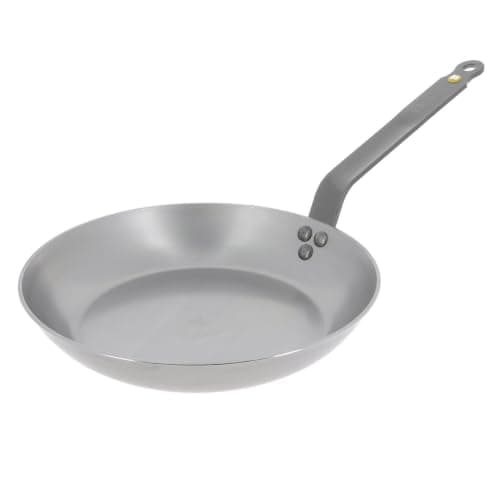
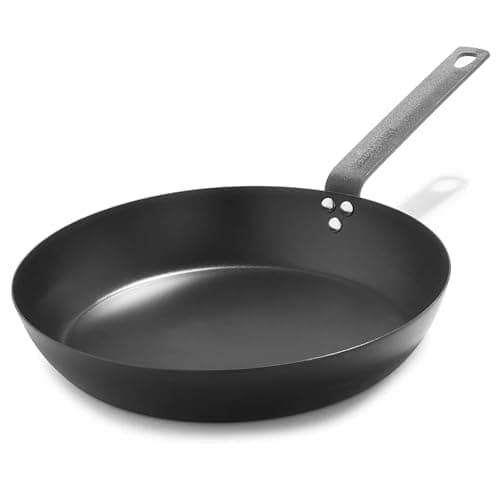
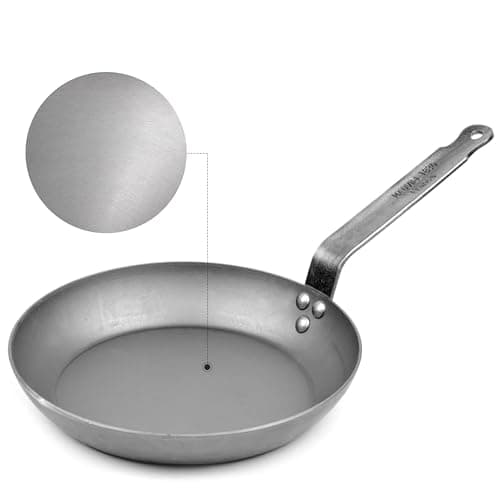
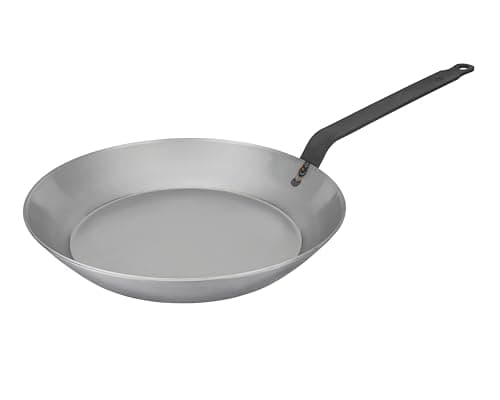
The best carbon steel pan for steak is the Matfer Bourgeat 12 5/8-inch, best for searing two or three steaks in one batch without crowding them. The budget pick is the Merten & Storck 12-inch, which gives up finish and provenance but not width. The reason the ranking looks like this is that searing is a stored-heat problem, and in carbon steel the only way to store heat is thickness and area.
Carbon steel is a brilliant pan with one weakness, and steak is it
Carbon steel is iron with a little carbon and almost nothing else, which is why it seasons and rusts exactly like cast iron. What makes it feel different in the hand is gauge: a carbon steel fry pan is rolled to two or three millimetres, where a cast iron skillet is cast several times thicker. Thin means light, fast to heat and fast to respond, which is why professional kitchens use it for everything that needs control.
A steak does not want control. It wants a surface that barely notices a cold piece of meat landing on it, and that is thermal mass, which thin steel does not have much of. Drop a 1.5-inch ribeye into a 2 mm pan and the surface temperature falls off a cliff, the meat releases water, and you get grey instead of Maillard crust. Everything on this page is an answer to that one problem.
Why width matters as much as thickness
The published numbers on carbon steel pans describe the rim, not the cooking area, because the walls flare. The Matfer’s 12 5/8-inch rim gives roughly a 9.5-inch flat base; the De Buyer Mineral B’s 10.25-inch rim gives about 7.3 inches of flat. That is a big practical difference: 7.3 inches holds one steak properly and two with their edges touching, and touching edges steam each other.
So the honest order for a steak pan is: get the widest flat base you can, then the thickest steel you can, then worry about finish. Our best carbon steel skillets page ranks the same pans for general cooking and comes out in a different order, for exactly that reason.
The three French pans, honestly separated
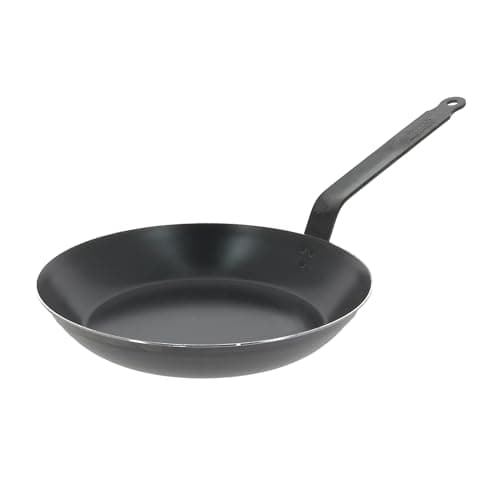
De Buyer’s Mineral B is the all-rounder: about 3 mm of steel with a beeswax finish from the factory, which is the thickest of the three and the one we would own if we could only own one carbon steel pan. The De Buyer Blue is 2 mm and the most responsive pan here — superb for fish and a poor choice for a thick steak. The Mauviel M’Steel sits between them and carries a cast iron handle and explicit all-cooktop compatibility, which is why it is the pick if your hob is induction.
None of them is pre-seasoned in the way a Lodge is. All of them arrive needing a proper first seasoning, and our guide to seasoning carbon steel is the half-hour that decides whether the pan sticks for a year or for a week.
The budget pan, and what it costs you
The Merten & Storck 12-inch is a fraction of the Matfer’s price, arrives pre-seasoned and is oven safe, and at 12 inches it has the second-widest footprint on the page. For a cook who wants to find out whether they like steel before spending French money, it is the right call.
What you give up is consistency and the hardware: a riveted handle rather than a welded one (rivets are a fond trap and a cleaning nuisance), a thinner factory seasoning, and more variation pan to pan. See the best carbon steel pans under $100 for how the whole cheap end of this category shakes out.
Should you just use cast iron?
For steak alone, cast iron is the easier answer and we say so: the best cast iron for steak ranks pans that store more heat than anything on this page for less money. Carbon steel wins when the same pan also has to do eggs, fish and a weeknight stir-fry without being a 12-inch dumbbell, and when you want a pan you can lift and swirl.
If you are weighing the two materials in general, cast iron versus carbon steel is the full argument, and cast iron versus stainless steel for steak covers the third material people reach for.
How to actually sear in one of these
Preheat longer than you think — thin steel reaches temperature fast but the whole pan needs to be hot, not just the spot over the burner, because steel conducts heat sideways slowly. Dry the meat. Use a thin film of a high-smoke-point fat. Put the steak down and leave it. Our guides to searing and cooking on carbon steel both apply unchanged here.
How the prices on this page work
Every number comes from the live Amazon listing at the date stamped under the comparison table, read through this site’s price layer. No number is ever typed into our content files, and a pick with no verified live offer shows no price at all rather than a remembered one.