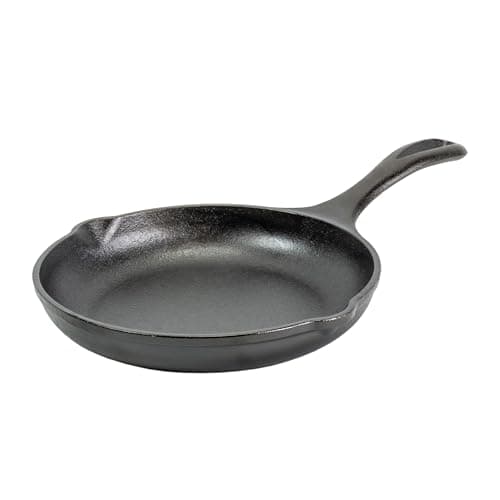
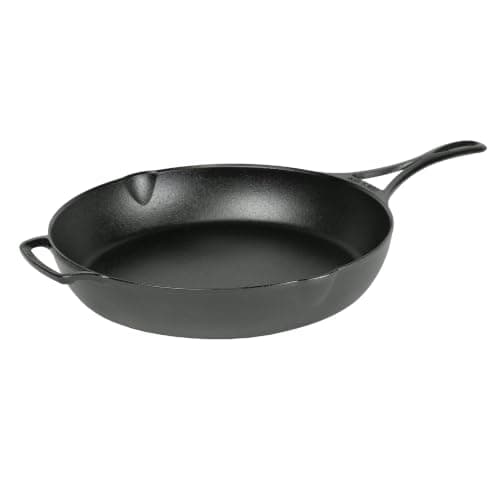
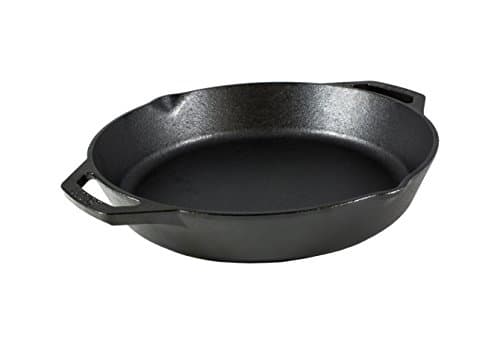
Buy Classic. Then, if you have cooked on it for a few months and the thing you keep wishing were different is the weight or the handle, step up to Blacklock or Chef Collection respectively. All three lines are the same metal from the same foundries, and none of them is machined — that is the single most misunderstood point in this comparison, and Lodge is careful never to claim it.
What is actually the same across all three
More than the price gaps suggest. Same South Pittsburg, Tennessee foundries, same grey iron, same sand-casting process, same polymerized-oil seasoning chemistry, same any-heat-source compatibility, same indestructibility, same lifetime. A steak seared in a Classic and a steak seared in a Blacklock are the same steak. Nobody who sells cast iron will say that plainly, so: it is the same steak.
Difference 1: how smooth the casting is
All Lodge pans come out of sand moulds, which leaves the familiar slightly pebbly surface. Lodge then casts its upper lines to a finer finish — Chef Collection is visibly smoother than Classic, and Blacklock is smoother again. But smoother casting is not machining. A machined pan has the texture physically milled away, which is what Stargazer publishes as a CNC-machined interior and what Field publishes as a polished cooking surface. Lodge does not sell a pan like that at any price.
How much does the finish matter? Less than the internet thinks, because seasoning fills and levels texture. A Classic cooked on regularly becomes slick within a few months. The finer finish buys you a head start, not a permanently better pan. The long version is in smooth vs rough cast iron, and if a genuinely milled surface is what you are after, the smooth-skillet rankings are the right page — no Lodge appears at the top of it.
Difference 2: weight, which is the one that changes your cooking
This is where real money is well spent. Modern pans are cast thicker than pre-war ones, and a standard Lodge is frankly heavy — the 10.25-inch Classic is listed at 5.66 lb empty, and the 12-inch runs around eight. Lodge engineers Blacklock to be lighter than its traditional iron, and Chef Collection sits in between on a thinner profile.
Weight decides whether a pan gets used. If you have ever left a 12-inch skillet in the cupboard because you did not fancy lifting it, that is the upgrade worth paying for, and it is the only one in this comparison that changes behaviour rather than feel. Ranked on published weights across all brands: best lightweight cast iron skillets.
Difference 3: the seasoning claim
Classic and Chef Collection arrive pre-seasoned with 100% natural vegetable oil. Blacklock is published as “the first and only triple seasoned” cast iron cookware— three factory layers rather than one. In practice this means the pan releases food better in its first few weeks. It does not mean you can skip maintenance, and it does not compound: after six months of real cooking, all three pans have whatever seasoning you have given them. How often to season cast iron is the honest answer to the follow-up question.
Difference 4: the handle
Classic uses the traditional short Lodge handle with the thumb notch. Chef Collection redesigned it — the line is built around a more comfortable grip and a lighter profile — and Blacklock's is longer and more tapered. If you cook one-handed, flip by tossing, or move pans from hob to oven constantly, a handle is not a cosmetic spec. If you mostly slide a pan into the oven and leave it, it is.
All three handles are bare iron and all three get blazing hot, which is cast iron's one genuine design flaw and a two-dollar problem to solve — see the accessories page.
So which line should you buy?
Classicfor a first pan, a gift, a camping pan, a pan you will abuse, or any situation where you are not sure. It is the best value in the entire category and the reason this site keeps recommending it — is Lodge worth it makes the full argument.
Chef Collection when the handle is the thing you want fixed, or when you want a slightly smoother, slightly lighter pan without leaving mainstream money. The 8-inch is the sweet spot of the line.
Blacklock when weight is the deciding factor and you still want Lodge provenance and Lodge pricing rather than boutique pricing. Our full write-up is the Blacklock review.
And if what you actually want is a milled, light, beautiful pan, none of these three is it, and it is worth knowing that before you spend. That comparison is best Lodge alternatives, Lodge vs Stargazer and Stargazer vs Smithey once you are shopping at that tier.
The upgrade decision, in one table
| If your complaint about your Lodge is | The right move is |
|---|
| “Food sticks” | Not a new pan. It is heat or seasoning — why food sticks |
| “It is too heavy to use” | Blacklock, or a smaller size in any line |
| “The handle is uncomfortable” | Chef Collection |
| “The surface is rough” | Cook on it for three more months first; then a machined pan, not another Lodge |
| “It is too small / too big” | A different size in Classic — the size chart |
| “It looks plain” | Honest answer: a boutique pan. Lodge does not sell beauty |
Two traps in this comparison
Do not read “triple seasoned” as “non-stick”.It is a head start of weeks, not a coating. Cast iron is stick-resistant and never truly non-stick — the honest version.
Do not read “smoother” as “machined”. Retail copy and forum posts blur these constantly, and the gap in real money between a smoother Lodge casting and a genuinely milled boutique pan is several times the price. If you want milled, buy milled; if you want Lodge, buy Lodge and let the seasoning do the levelling.
One final note for anyone comparing a new Lodge against an old one: pre-war pans really were cast thinner and finished smoother, which is why vintage iron has the reputation it does. That is a different purchase with different risks — how to date a Lodge cast iron skillet and how to buy vintage cast iron.