A new cast iron skillet does not need a project. It needs four decisions: where it lives, what you cook in it first, what you clean it with, and when you oil it. Get those right in the first week and the pan improves on its own for the next thirty years. Get them wrong and you will spend a month thinking cast iron is difficult, which it is not. This page is deliberately about the setup — the technique of cooking is how to use cast iron for the first time.
Decision 1: where it lives (this is the big one)
Keep it on the stovetop or hanging, not in a cupboard. That sounds like decoration advice. It is not: it is the single strongest predictor of whether somebody still uses their cast iron in six months. A heavy pan that has to be lifted out from under other pans does not get used for a weekday breakfast, and a pan that is not used does not build seasoning, and a pan with weak seasoning sticks, and a pan that sticks gets put away for good. The whole failure chain starts with storage.
Two practical rules. Never stack iron directly on iron— the rims chip seasoning off the pan below, and on enamelled pieces they chip enamel. If you must stack, put a paper towel or a felt pad between them, which also absorbs any stray moisture. Never store it with the lid on. A sealed pan traps humidity, and rust needs only water and oxygen — you have just provided both. Lid alongside, or lid off. Full detail: how to store cast iron.
Decision 2: what you cook first, in order
A factory-seasoned pan has one thin layer on it. Your job in week one is to add several more, and the easiest way is to cook the right things in the right order rather than to run oven-seasoning cycles.
- Bacon. First cook, every time. Fatty, forgiving, starts cold, and it lays down a layer across the whole base. The method— note that bacon is the one thing you start in a cold pan.
- Chicken thighs, skin down. More rendered fat, higher heat, longer contact. The recipe.
- Cornbread. Fat in a preheated pan, batter straight in. Bakes a layer onto the sides as well as the base, which nothing else does. The recipe.
Then, and only then, try eggs. Eggs are the hardest thing to cook in a new pan and the thing everybody attempts on day one, which is why so many people conclude their skillet is faulty. Leave them a month: the egg method.
Two things to avoid for the first month: anything acidic(tomato, wine, vinegar — they strip a young layer; why) and boiling water, which does nothing useful and undoes a little.
Decision 3: what you clean it with
Hot water and something to scrape with. That is the whole kit, and it costs a couple of dollars. The sequence, every time, takes ninety seconds:
- While the pan is still warm, scrape the stuck bits off with a plastic scraper.
- Rinse under hot water. A little soap is fine — this is settled, see below.
- Dry it on the burner, not on a towel. Thirty seconds over heat drives off the water a towel leaves in the pores. This is the step people skip and the reason pans rust.
- Wipe a very thin film of oil over the warm cooking surface and let it cool.
On soap: modern dish soap does not strip polymerized seasoning — the myth dates from when soap meant lye. The full version is can you use soap on cast iron. What genuinely does damage a pan: a dishwasher (why), soaking it overnight, and steel wool on a young pan. Metal spatulas, incidentally, are fine — metal utensils on cast iron.
The “thin film” instruction is doing real work. Too much oil polymerises unevenly into a tacky varnish, which is the most common new-pan complaint there is: why is my cast iron sticky. Wipe it on, then wipe most of it off.
Decision 4: your heat habit
Set your default to medium, and early. Cast iron takes several minutes to come up to an even temperature because it moves heat sideways slowly; a short blast on high gives you a scorching centre, cold edges, and a kitchen full of smoke. Put the pan on before you start prepping and leave it on medium.
Once it is hot it stays hot, so the second habit is to turn the dial down earlier than instinct says. See how to preheat cast iron and, if the kitchen keeps filling with smoke, why does my cast iron smoke.
The small-apartment version
This is the most common variant of the question and the standard advice is wrong for it. In a small kitchen three things change:
Buy one pan, not a set. A 10.25-inch skillet that lives on the hob beats three pans in a cupboard, and an 8-inch is the better choice if you cook for one. The set argument in full: cast iron set vs individual pieces.
Assume a rental cooktop. Glass-ceramic or coil electric, which means lift rather than slide, and favour a lighter pan. See best cast iron for glass top stoves and, if your induction hob rattles under a heavy pan, why does my induction cooktop buzz.
Plan for smoke.A small kitchen with a weak extractor makes high-heat searing genuinely unpleasant. Sear on medium for longer, or finish in the oven — how to sear steak without smoke. The whole small-space question is best cast iron for a small kitchen.
What you can safely ignore in week one
Oven-seasoning cycles. A pre-seasoned pan does not need them. Cook in it instead; cooking fatty food is seasoning, and it builds a better layer than an empty oven does. How often to season cast ironis the honest schedule, and the answer is “less often than the internet says”.
Flaxseed-oil arguments. Any neutral oil with a reasonable smoke point works. If you want the comparison it is best oil for seasoning cast iron, but it is not a week-one decision.
Black residue on a paper towel. Normal on a new pan, and not dangerous — is black residue on cast iron safe. It stops after a few cooks.
A rust spot. Not a catastrophe. Scrub it, dry it, oil it, carry on — remove rust from cast iron.
What to buy alongside the pan
Two cheap things, and they are the two picks below besides the skillet itself. Both solve problems that otherwise become reasons to stop using the pan.
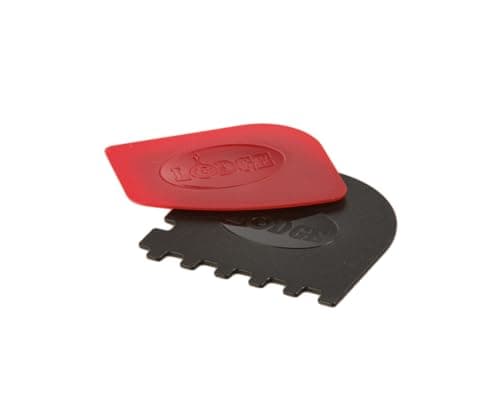
A plastic pan scraper.A couple of dollars, and it removes the single most annoying part of cast iron — standing over the sink with a sponge working at a stuck patch. A scraper takes it off in seconds without touching the seasoning. Nothing else in this category gives you that much back for the money.
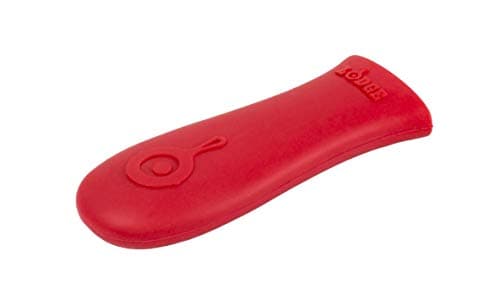
A silicone handle holder.Cast iron's one genuine design flaw is a bare iron handle that reaches the same temperature as the pan and stays there for twenty minutes after it leaves the oven. A handle sleeve is the fix, and it is the difference between confidently moving the pan hob-to-oven-to-table and being slightly scared of it.
What you do not need in week one: a chainmail scrubber (useful later, overkill on a young pan, and aggressive on a thin factory layer), seasoning spray (any oil in your cupboard works), or a lid. The full kit, ranked: best cast iron accessories.
| Week-one kit | Published specs | What it solves |
|---|
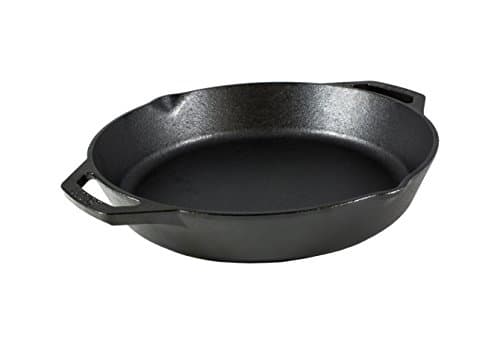
| 10.25" pre-seasoned skillet | 10.25 in, 5.66 lb (listing), made in USA, pre-seasoned | The pan itself — the size most recipes are written for |
| Pan scrapers | 2-pack, polycarbonate, contoured edges, dishwasher safe | Stuck food, without touching the seasoning |
| Silicone handle holder | Silicone, fits 9 in and up, rated to 450°F | A bare iron handle that stays dangerous after the oven |
Specs are as listed by the makers on the live listings; the live prices are on the picks above.
If you have not bought the pan yet
Buy a 10.25-inch pre-seasoned skillet from a mainstream foundry. It is the size that fits four eggs, two steaks or a cornbread; it is cast in Lodge's own Tennessee foundries; Lodge publishes it as pre-seasoned with vegetable oil and compatible with any stovetop, the oven, a grill or a campfire; and it costs little enough that getting the decision slightly wrong costs you almost nothing.
The alternatives worth considering, in one line each: an 8-inch if you cook for one, a 12-inch if you cook for a family and can lift it, or a lighter boutique pan if you want something slick from day one and are happy to pay several times as much. The pages: how to choose a cast iron skillet, the best skillet for beginners, the size chart and the full comparison table.
A one-week checklist
| Day | Do this |
|---|
| Arrival | Rinse, dry on the burner, wipe thin with oil. Do not scrub, do not oven-season. Decide where it lives |
| First cook | Bacon, from a cold pan. Keep the fat for the next cook |
| Second cook | Chicken thighs skin-down, or anything fatty on medium-high |
| Third cook | Cornbread — seasons the sides as well as the base |
| Every time | Scrape warm, rinse hot, dry on the burner, thin oil film |
| After a month | Try eggs. If they stick, it is heat or oil, not the pan |
If something is already going wrong, cast iron skillet problems and how to fix them is the diagnostic page, and it almost always turns out to be one of the four decisions above.