Skip to content
Hearth & Patina

The Skillets

How to Choose a Cast Iron Skillet

Four decisions, in this order: how big, how heavy, how smooth, how much. Get the first one right and the rest barely matter — and the honest pros and cons nobody leads with.

By Stephen V.Updated How we research
#ad

We earn a commission when you buy through our Amazon links, at no extra cost to you. It never affects our rankings, and we say so when the cheaper pan is the better buy. How this works.

Top pick

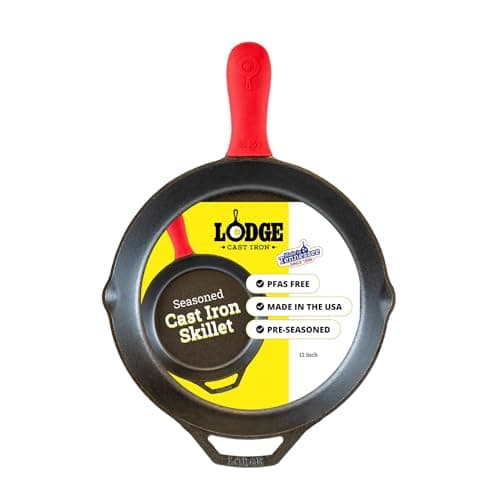
Lodge Lodge 10.25" Pre-Seasoned Cast Iron Skillet

Lodge 10.25" Pre-Seasoned Cast Iron Skillet

10.25 inPre-seasonedMade in USA5.66 lb
$24.42View on Amazon

Price as of October 12, 2026. Prices change — Amazon's is the one that counts.

#ad · we may earn a commission from this link to Lodge 10.25" Pre-Seasoned Cast Iron Skillet

If you want the answer without the reasoning: buy a 10.25-inch pre-seasoned Lodge. It is the size that fits four eggs, two steaks or a cornbread, it is cast in Lodge's own Tennessee foundries, Lodge publishes it as compatible with any stovetop including induction, plus the oven, a grill or a campfire, and it costs so little that getting the decision slightly wrong costs you almost nothing. Everything below is about the cases where that is not the right pan.

Cooking for a family most nights? Size up to the 12-inch. Cooking for one in a small kitchen? Down to the 8-inch. Want to skip the break-in and have a lighter, smoother pan from day one? The Stargazer 10.5-inch.

Compare

The size decision, in published numbers

VesselPublished weightCooks forInterior finishPriceBuy
Lodge 10.25" Pre-Seasoned Cast Iron Skillet

Lodge

5.66 lb (listing figure)1-3 people, most householdsAs-cast, pre-seasoned$24.42Check Price on Amazon
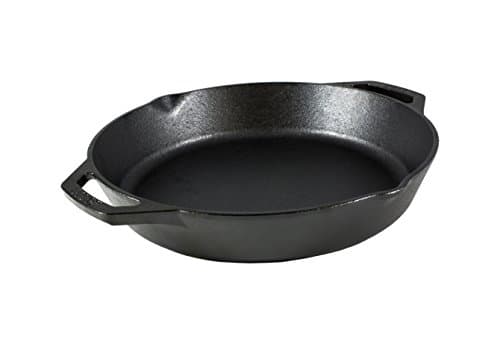
Lodge Seasoned Cast Iron Skillet, 12"

Lodge

About 8 lb (listing figure)A family, or batch searingAs-cast, pre-seasoned$34.90Check Price on Amazon
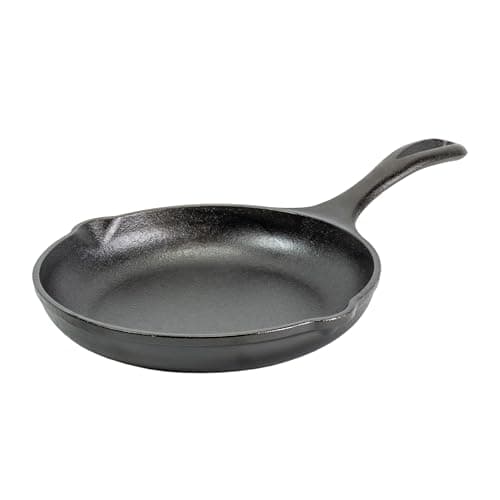
Lodge 8" Chef Collection Cast Iron Skillet

Lodge

About 3.5 lb (listing figure)1-2 people, eggs, small sidesChef Collection, smoother$19.90Check Price on Amazon
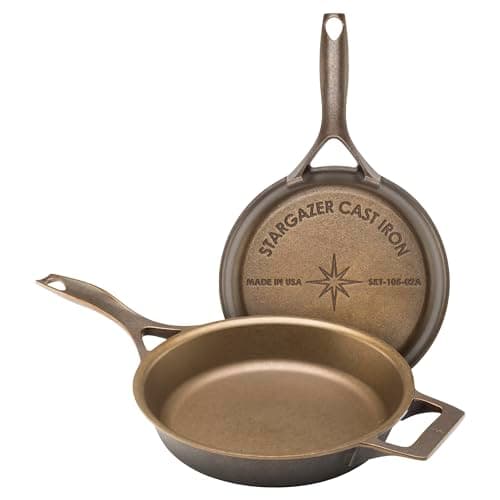
Stargazer 10.5" Cast Iron Skillet

Stargazer

5.2 lb (Stargazer)1-3 people, upgrade buyCNC machined$155.00Check Price on Amazon

#ad · Live prices from the Amazon Creators API, as of October 12, 2026. Where we have no verified live price we show none rather than a stale number — we may earn a commission.

Choosing a cast iron skillet is four decisions in a fixed order: size, weight, finish, then price tier. Size is the one that determines whether you enjoy the pan; the other three are refinements. Nearly everybody should buy one 10.25-inch pre-seasoned pan from a mainstream foundry, cook on it for three months, and only then decide whether they want something lighter or smoother. This page is the reasoning, not another ranked list — if you want the ranking, it is here.

Decision 1: size, and only one size matters

A cast iron skillet's quoted diameter is measured across the top rim, and the flat cooking surface is meaningfully smaller — Field Company, for example, publishes an 8⅜-inch top diameter with a 7-inch cooking surface, and Stargazer's 10.5-inch pan publishes an 8.1-inch cooking surface. Read the cooking-surface figure where a maker gives one; it is the number that decides how many chicken thighs fit.

The practical ladder:

  • 8 inches: eggs, a single portion, toasting spices, a side dish. A second pan, or a first pan for one person in a small kitchen.
  • 10.25 inches: the default. Four eggs, two steaks, a cornbread, a spatchcocked chicken thigh-side-down. If you buy one skillet, buy this.
  • 12 inches:a family pan. More searing room, and a real jump in weight — around eight pounds empty by the usual retail figures, which is the number that sends pans to the back of cupboards.
  • 15 inches and up: specialist. Hangs off a domestic burner and needs two hands even empty.

Our cast iron skillet sizes page has the full chart, and the two head-to-heads worth reading before you commit are 8-inch vs 10-inch and 10-inch vs 12-inch.

Decision 2: weight, which is really about whether you will use it

Weight is the single most underrated spec in this category. Modern pans are cast thicker than pre-war ones, so a new 12-inch skillet is heavier than the vintage pan your grandmother swung around one-handed. The fix is not strength; it is buying the right size, or paying for a thinner casting. Lodge engineers its Blacklock line to be lighter than its traditional iron, and the boutique smiths cast thinner still — Field publishes 3 lbfor its No. 6. The whole field, ranked on the makers' own published weights, is in the best lightweight cast iron skillets.

Decision 3: finish — as-cast or machined

A mainstream pan is sand cast, which leaves a slightly pebbly surface. A boutique pan has that surface machined away: Stargazer publishes a CNC-machined interior, Field publishes a polished one. A machined pan releases food earlier in its life because there is less texture for food to key into.

What nobody selling those pans volunteers: the gap closes. Seasoning is polymerized oil that fills and levels the texture, so a Lodge cooked on regularly becomes slick within a few months. Machining buys you a head start, a nicer object, and usually a lighter casting — not a permanently better pan. We argue that out in smooth vs rough cast iron and Backcountry Iron vs Lodge.

Decision 4: price tier, and what each tier actually buys

Three tiers, in qualitative terms, because the live numbers are in the buy buttons on this page rather than in prose that would go stale:

  • Mainstream (the cheapest tier): Lodge, Victoria, Utopia. Pre-seasoned, as-cast, heavy, and functionally excellent. This is where the value is, and it is where we point most readers.
  • Mid (a modest step up): Lodge's own Chef Collection and Blacklock lines — smoother, lighter, same foundry, still nothing like boutique money.
  • Boutique (several times the mainstream price):Stargazer, Field, Smithey, Finex, Lancaster. Machined interiors, thinner castings, better handles, genuinely lovely objects. A real upgrade in use and an easy one to over-justify — see is Stargazer worth it and is Field Company worth it.

One tier-independent point: provenance is checkable. Lodge publishes that it operates two foundries in South Pittsburg, Tennessee; several budget brands publish nothing about where their pans are cast. If that matters to you, best American-made cast iron sorts the field on exactly that question.

The honest pros and cons

Every buying guide lists the pros. Here are both columns, because the cons are the reason some people should buy something else entirely.

What cast iron is genuinely good atWhat it is genuinely bad at
Searing. High thermal mass means the pan barely drops in temperature when cold food hits it.Fast temperature changes. Low thermal conductivity means slow preheats and hot spots while it gets there.
Oven, grill and campfire use — one pan, any heat source.Long acidic cooking. Tomato and wine attack seasoning and taste tinny.
A surface that improves with use and can always be rebuilt.A surface you have to maintain at all. Dry it or it rusts.
Price-to-lifetime: the cheapest tier lasts generations.Weight. A full 12-inch pan is a two-handed lift for many people.
No coating to scratch or wear out.Delicate release. It is stick-resistant, never truly nonstick.

If the right-hand column is the deciding one for you, the honest alternatives are carbon steel (lighter, faster, still seasonable — ranked here), enameled cast iron (no seasoning, no acid worries, no searing either — ranked here), or plain stainless. Our cast iron vs carbon steel and cast iron vs nonstick pages are the two comparisons most buyers actually need.

If you are buying for a small apartment

This is the version of the question we get asked most, and the standard advice is wrong for it. In a small kitchen three things change:

Storage beats capacity. A 12-inch skillet plus a lid is a shelf of its own. One 10.25-inch pan that lives on the stovetop, or an 8-inch if you cook for one, is the setup that actually gets used. Hanging it is fine; stacking it under other iron is how enamel and seasoning get chipped.

Your cooktop is probably the constraint.Rental kitchens mean glass-ceramic or coil electric, where the rule is to lift rather than slide the pan — Field's own guidance is “Do NOT shuffle or slide” — which makes a lighter pan safer as well as easier. Induction needs a flat base and rewards matching the pan to the hob diameter. Both cases: cast iron for glass-top and electric stoves and cast iron for induction.

Smoke matters more.A small kitchen with a weak extractor hood turns a hard sear into an event. Lower heat, a drier food surface and a higher smoke-point fat all help — how to sear without setting off the smoke alarm is the page. Our best cast iron for a small kitchen guide covers the whole small-space setup.

What to skip

Boxed sets spread your money across sizes you will not reach for; one good pan beats five mediocre ones, and we make that case in cast iron set vs individual pieces. Nonstick-coated “cast iron” gives you the weight of iron with the finite lifespan of a coating. Pans with no published provenance or specs are a gamble you do not need to take at this price. And a second pan to avoid re-seasoning the firstsolves nothing — if your pan is misbehaving, start with cast iron skillet problems and how to fix them.

How this page differs from our other skillet pages. This is the decision framework. The best cast iron skillets is the ranked field with live prices; best for beginners is the first-pan-plus-first-month walkthrough; common problems is for a pan you already own that is misbehaving. If you have decided against Lodge specifically, the best Lodge alternatives is the page.

The short answer

Quick picks

#ProductBest forScorePrice
01
Lodge Lodge 10.25" Pre-Seasoned Cast Iron Skillet
Lodge 10.25" Pre-Seasoned Cast Iron Skillet

The honest first cast-iron pan for almost everyone. Cheap, indestructible, made in the USA.

The default first skillet
8.4
$24.42Amazon
02
Lodge Lodge Seasoned Cast Iron Skillet, 12"
Lodge Seasoned Cast Iron Skillet, 12"

The big-batch workhorse. More searing room, more weight, same near-unkillable Lodge value.

Cooking for a family
8.4
$34.90Amazon
03
Lodge Lodge 8" Chef Collection Cast Iron Skillet
Lodge 8" Chef Collection Cast Iron Skillet

The small pan that earns its shelf space — eggs, a single steak, toasting spices, a personal cornbread.

One or two servings
8.2
$19.90Amazon
04
Stargazer Stargazer 10.5" Cast Iron Skillet
Stargazer 10.5" Cast Iron Skillet

A machined interior in the size people actually cook in, cast and milled in Pennsylvania. The smooth pan to buy if you only buy one.

The best all-round smooth pan
8.6
$155.00Amazon

#ad · Live prices from the Amazon Product API, as of October 12, 2026. Where we have no verified live price, we show none — we would rather leave a gap than print a number that has gone stale.

In detail

The picks, in full

01
Lodge Lodge 10.25" Pre-Seasoned Cast Iron Skillet

The default first skillet

Lodge 10.25" Pre-Seasoned Cast Iron Skillet

10.25 inPre-seasonedMade in USA5.66 lb
8.4/10

The honest first cast-iron pan for almost everyone. Cheap, indestructible, made in the USA.

Heat retention
9
Cooking surface
7
Handling
7
Versatility
9
Value
10

Pros

  • The 10.25" is the size that fits four eggs, two steaks, or a batch of cornbread — the most useful single size
  • Pre-seasoned from the factory, so it works the day it arrives
  • Costs a fraction of a boutique pan and will outlive you with basic care

Cons

  • The cooking surface is pebbly, not machined smooth — food releases better once you build your own seasoning on top
  • The short helper handle is small; a leather or silicone sleeve on the main handle is a near-essential add

Don't buy this if…

…you specifically want a glass-smooth machined surface out of the box. That is what Stargazer, Smithey and Field sell, at five to eight times the price — for most cooks the Lodge gets there with a few months of use.

$24.42View on Amazon

Price as of October 12, 2026. Prices change — Amazon's is the one that counts.

#ad · we may earn a commission from this link to Lodge 10.25" Pre-Seasoned Cast Iron Skillet

02
Lodge Lodge Seasoned Cast Iron Skillet, 12"

Cooking for a family

Lodge Seasoned Cast Iron Skillet, 12"

12 inPre-seasonedMade in USA~8 lb
8.4/10

The big-batch workhorse. More searing room, more weight, same near-unkillable Lodge value.

Heat retention
10
Cooking surface
7
Handling
6
Versatility
9
Value
10

Pros

  • The extra diameter is the difference between searing two chicken thighs and searing six without crowding
  • Deep enough sidewalls for shallow-frying and pan sauces
  • Includes a silicone handle holder in the box

Cons

  • At roughly 8 lb full, it is genuinely heavy — one-handed tossing is out for most people
  • Overkill for one or two servings; a bare 8" or 10.25" is the everyday pan

Don't buy this if…

…you mostly cook for one or two. A 12" pan that lives in the cupboard because it is too heavy to bother with is worse than a 10.25" you reach for daily.

$34.90View on Amazon

Price as of October 12, 2026. Prices change — Amazon's is the one that counts.

#ad · we may earn a commission from this link to Lodge Seasoned Cast Iron Skillet, 12"

03
Lodge Lodge 8" Chef Collection Cast Iron Skillet

One or two servings

Lodge 8" Chef Collection Cast Iron Skillet

8 inChef CollectionSmoother finish~3.5 lb
8.2/10

The small pan that earns its shelf space — eggs, a single steak, toasting spices, a personal cornbread.

Heat retention
8
Cooking surface
8
Handling
9
Versatility
7
Value
9

Pros

  • Chef Collection pans have a lighter, slightly smoother casting than the standard Lodge line
  • Light enough to handle one-handed, which most cast iron is not
  • The right size for the single-egg or single-portion cooking you actually do on a weekday

Cons

  • Too small for family cooking — it is a complement to a bigger pan, not a replacement
  • Costs a little more than the standard 8" Lodge for the smoother finish

Don't buy this if…

…it would be your only cast-iron pan. As a solo pan it is excellent; as a household's only skillet it is too small for most meals.

$19.90View on Amazon

Price as of October 12, 2026. Prices change — Amazon's is the one that counts.

#ad · we may earn a commission from this link to Lodge 8" Chef Collection Cast Iron Skillet

04
Stargazer Stargazer 10.5" Cast Iron Skillet

The best all-round smooth pan

Stargazer 10.5" Cast Iron Skillet

10.5 inCNC-machined interior5.2 lbMade in USA
8.6/10

A machined interior in the size people actually cook in, cast and milled in Pennsylvania. The smooth pan to buy if you only buy one.

Heat retention
9
Cooking surface
10
Handling
9
Versatility
9
Value
6

Pros

  • The interior is CNC machined across the whole cooking surface, so food releases from the first month instead of the second year
  • Cast, machined, finished and seasoned in-house in Allentown, Pennsylvania — a short supply chain the company states plainly
  • 10.5 inches across with a published 8.1-inch cooking surface is the size that covers weeknight cooking without becoming a lift

Cons

  • At a published 5.2 lb it is barely half a pound under a 10.25-inch Lodge's published 5.66 lb — buy it for the surface, not to spare your wrist
  • Costs several times a Lodge for a pan that cooks better rather than differently

Don't buy this if…

…you have never owned cast iron. Buy a Lodge, cook on it for six months, and come back only if the pebbly surface turns out to be the thing that bothers you.

$155.00View on Amazon

Price as of October 12, 2026. Prices change — Amazon's is the one that counts.

#ad · we may earn a commission from this link to Stargazer 10.5" Cast Iron Skillet

The five-minute version

1. Buy 10.25 inches unless you have a reason not to

Cook for four or more most nights? 12 inches. Cook for one, or in a galley kitchen? 8 inches. Everything else: 10.25.

2. Buy pre-seasoned

Every mainstream pan now arrives seasoned and usable — Lodge seasons with 100% natural vegetable oil. A bare pan is only worth buying if you specifically want to season it yourself. Either way read how to use cast iron for the first time before the first cook.

3. Check the weight before the finish

A machined surface you can barely lift is worse than a pebbly one you use daily. Published weights are the honest spec here; where a maker does not publish one, treat the listing figure as approximate and say so — as we do in the table above.

4. Check one compatibility line

If your hob is induction or glass-ceramic, confirm the maker publishes stovetop compatibility and look at the base: flat, burr-free, and no wider than you can lift comfortably. Lodge publishes any-stovetop including induction across its classic range.

5. Budget for the two cheap accessories, not a second pan

A silicone handle holder and a chainmail scrubber fix the two complaints that are not about cooking at all. Both are in the accessories guide, and chainmail vs steel wool explains what to keep away from the pan.

6. Give it three months before you upgrade

Seasoning builds with use, and most “I need a better pan” feelings resolve in the first season of cooking. If after three months you still want lighter or smoother, you will know exactly which of the two you want — which is a much better position to spend boutique money from. The upgrade field is in the best smooth cast iron skillets and the best Lodge alternatives.
How we picked

We do not run a testing lab

We researched published manufacturer specifications, materials and thermal properties, and aggregated owner reviews, then scored each pan against a published rubric. The scores are judgments from documented research — they are notmeasurements we took, because we do not have a lab and we are not going to pretend we do. Where a number came from a manufacturer's spec sheet or someone else's lab, we name it in Sources.

Questions

Frequently asked

What size cast iron skillet should I buy?
A 10.25-inch pan suits most households: four eggs, two steaks or a cornbread. Go to 12 inches if you cook for four or more, and 8 inches if you cook for one or have very little space. Read the cooking-surface figure, not just the rim diameter.
Is an expensive cast iron skillet worth it?
It buys a machined interior, a thinner and lighter casting, and a better handle — not better searing. Buy the cheap pan first, cook on it for three months, and spend boutique money only on the specific thing that still bothers you.
What are the main cons of a cast iron skillet?
Weight, slow preheating and hot spots (low thermal conductivity), a surface you have to keep dry and seasoned, and poor tolerance for long acidic cooking. If those are deal-breakers, carbon steel or enameled cast iron are the honest alternatives.
Pre-seasoned or bare cast iron?
Pre-seasoned, for almost everyone — it cooks the day it arrives and you build on the factory layer. A bare pan only makes sense if seasoning it yourself is part of the appeal.
Which cast iron skillet is best for a small apartment?
A single 10.25-inch pan, or an 8-inch if you cook for one — stored on the stovetop rather than stacked. Lighter is better on a rental glass cooktop, where you should lift rather than slide the pan. See best cast iron for a small kitchen.
Should I buy a cast iron set?
Usually not. A set spreads money across sizes you rarely use; one well-chosen skillet plus a dutch oven covers far more cooking — the full argument.
How do I know if a cast iron skillet is good quality?
Published specs and provenance: a stated weight, a stated cooking-surface diameter, a stated country of casting, and a flat base you can check in the photos. A maker that publishes nothing is asking you to take the pan on trust at a price where you do not have to.

Keep reading

Receipts

Sources

We do not run a testing lab, and we do not pretend to. Where a measured number came from a manufacturer's spec sheet or someone else's lab, we name them and link them. Where we could not verify something, we say so on the page rather than quietly leaving it out. Read our full method.