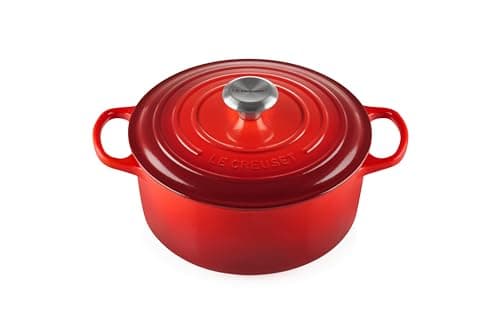
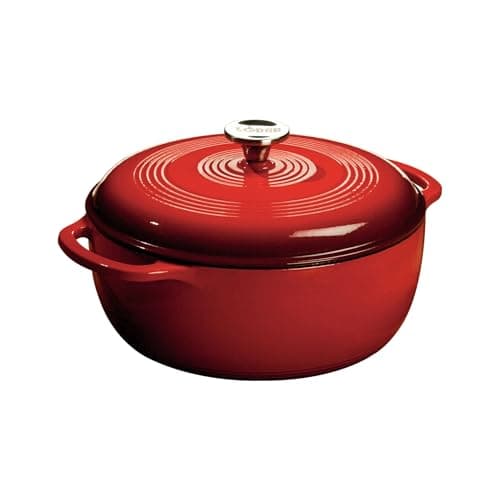
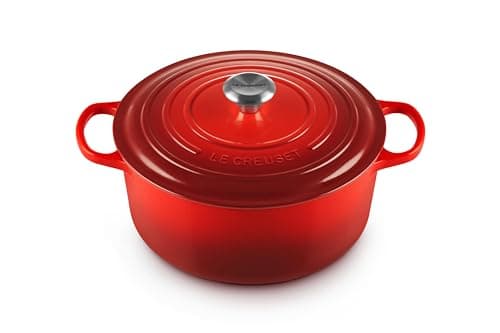
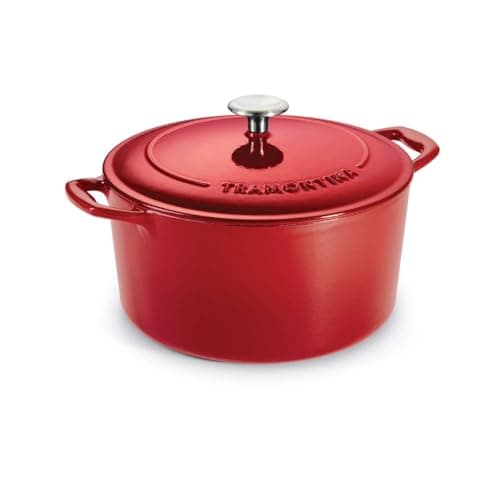
For cooking, buy the Tramontina 6.5-quart — best for a cook who wants a big, capable braising pot and not an heirloom. For an object you will still own in forty years and could resell, buy the Le Creuset 4.5-quart. The budget pick between them is the Lodge 6-quart enameled, best for someone who wants a 500°F rating without French pricing. This is the widest price gap in the category, and almost none of it is a cooking difference.
Where they are the same
Both are cast iron pots coated in vitreous enamel — powdered glass fused to the metal by firing. That coating is what makes an enameled pot non-reactive, so a four-hour tomato braise or a wine reduction is fine in either; it is also why both chip if abused. Both have the thick walls that hold a low, even simmer, and both have heavy lids that seal. For the two things that actually decide a braise — even heat and trapped moisture — they are peers.
Both also need the same care. Le Creuset publishes that the enamel interior needs no seasoning and should be protected from thermal shock, which is identical to the advice for the Tramontina. Nobody is getting a more forgiving pot by spending more; they are getting a more durable coating under the same rules.
Where Tramontina wins
Capacity per dollar, by a wide margin. The Tramontina is a 6.5-quart pot and the Le Creuset most people buy is 4.5 or 5.5 quarts, so the cheaper pot is also the bigger one — which matters for a pot roast with vegetables, for a double batch of chili, and for making stock. It also wins on fear-of-use: a pot you are not anxious about is a pot that stays on the stove instead of in a cupboard, and that is a real cooking advantage rather than a rhetorical one.
Where Le Creuset wins
Four things, all genuine and none of them about dinner. The enamel is harder and more chip-resistant. The handles are larger and easier to hold with oven mitts, which is not trivial on a nine-pound pot full of boiling liquid. There is a lifetime limited warranty behind it. And there is a real secondhand market, so the pot has residual value in a way the Tramontina does not. If you are buying once, for life, and you want recourse if the coating fails, those four are worth the money. Our is Le Creuset worth it page makes that case in full.
The temperature caveat, stated plainly
This is the one specification difference that can change what you can cook. Tramontina publishes a 450°F oven-safe ceiling. A standard no-knead bread recipe asks you to preheat an empty covered pot to 450 or 500°F before the dough goes in. At 450 you are at the limit rather than inside it, and an empty enameled pot at high heat is also the exact condition that stresses enamel. So if bread is the reason you are buying a pot, this comparison has a clear answer that has nothing to do with brand prestige: take a pot that publishes 500°F, which in our registry means the Lodge enameled line, or bake in bare iron instead.
Browning, and why the premium does not buy it
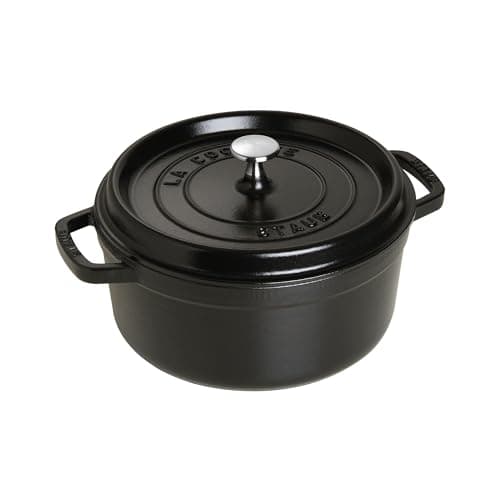
The browning reaction that gives a braise its flavor needs a hot, dry surface and a pan with enough thermal mass that cold meat does not cool it below that point. Mass is a function of how thick the iron is, and both pots are thick. What premium pots sometimes offer is a dark matte interior, which some cooks prefer for browning — that is a Staub feature rather than a Le Creuset one, since Le Creuset interiors are pale. So on this particular axis the expensive pot in this matchup has no advantage at all.
So which one
If you are equipping a kitchen, buy the Tramontina and spend the difference on a cast iron skillet and a chainmail scrubber. You will cook better with three good tools than with one beautiful one. If you are buying a wedding present, or you have wanted the orange pot since you were twenty, buy the Le Creuset — that is a legitimate reason and we are not going to argue you out of it. What we will not tell you is that it makes a better stew. Our Lodge vs Le Creuset and Lodge vs Tramontina pages are the other two corners of this triangle, and our Tramontina cast iron reviews cover the rest of that line.