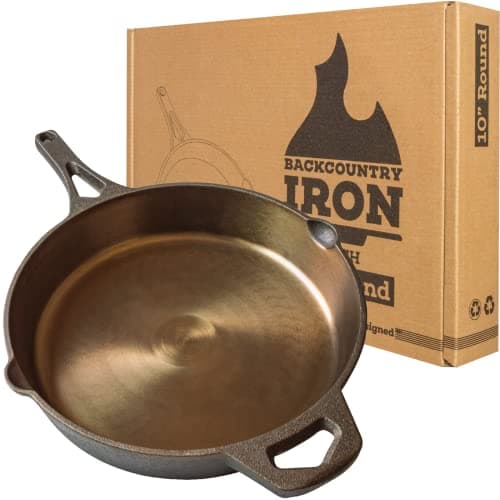
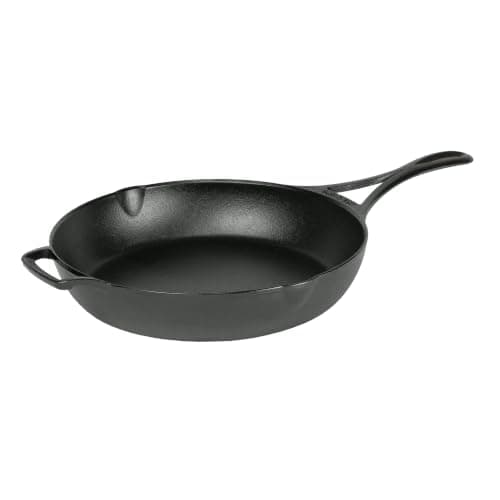
Buy the plain Lodge. The Backcountry Iron Wasatch is a genuine milled pan at a price no boutique smith comes close to, and if a machined surface on day one is what you are after, it is the cheapest honest way to get one. But it is a published 7 lb against the Lodge's 5.66 lb, it costs more, and the surface advantage shrinks every month you cook on the Lodge. That is the whole comparison in three sentences.
This is the decision a lot of people reach after reading about smooth cast iron: boutique pans from Stargazer, Field and Smithey are five to eight times the price of a Lodge, and then a cheaper milled pan appears and looks like the loophole. Sometimes it is. Here is what you are actually trading.
What “milled” means, and what it buys
A standard Lodge is sand cast, which leaves the slightly pebbly as-cast texture you can feel with a fingertip — a poured casting, not a forged piece, a distinction covered in cast iron vs wrought iron. A milled pan has had that surface machined away — metal cut off to leave a flat, smooth face. Backcountry Iron publishes a milled cooking surface and a deep heat ring for the Wasatch, and that is a real specification, the same kind of claim Stargazer makes when it says its interiors are CNC machined.
What it buys is a head start. A smooth surface releases food earlier in the pan's life, because there is less texture for food to key into before you have built up any seasoning. That genuinely matters in the first weeks, and it is why the boutique pans feel so good out of the box.
What it does not buy is a permanent advantage. Seasoning is polymerized oil that fills and levels an as-cast surface over time; six months of regular cooking turns a Lodge into a dark, slick pan, as Lodge's own seasoning guidance describes. Our smooth vs rough cast iron page is the long version of this argument, and the smooth skillet roundup ranks every machined pan we cover.
The weight is the catch, and it is a big one
Backcountry publishes 7 lb for the 10-inch Wasatch and 9 lb for the 12-inch. Lodge publishes 5.66 lb for its 10.25-inch. That is roughly a pound and a third of difference on a pan you lift one-handed, often full, often from a hot oven — and it goes the wrong way. The boutique smiths charge their premium partly for a thinner casting that is both smooth and lighter; the Wasatch gives you the surface and none of the weight saving.
If weight is what has been bothering you about cast iron, this pan is the wrong answer entirely, and the Blacklock is the interesting one: Lodge engineers that line to be lighter than its traditional iron. Our lightweight skillet roundup ranks the field by the makers' own published weights, and the Blacklock review goes through that pan in full.
Be clear about what Blacklock is not
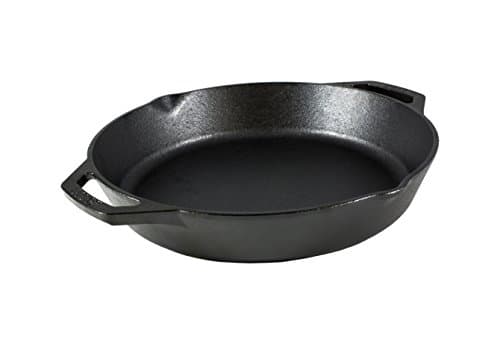
Blacklock is often recommended as “the smooth Lodge”, and that is not what Lodge claims. Lodge describes the line as triple seasoned with 100% natural vegetable oil, made in the USA, with an extended raised handle, and it makes nomachining claim anywhere. So Blacklock is a thinner, lighter, better-seasoned sand casting — which is a real upgrade, just not the same upgrade as a milled pan. We are not going to upgrade a claim the manufacturer never made.
Provenance: one of these does not say
Lodge is unusually specific about where its bare iron comes from — it publishes that it operates two foundries in South Pittsburg, Tennessee, and has been casting since 1896. Backcountry Iron does not publish where the Wasatch is cast. That is not an accusation, and plenty of good cookware is made under contract, but if made-in-USA is part of why you wanted a smooth skillet then a pan with no published provenance does not satisfy it. Our best American-made cast iron page sorts the whole field on exactly that question.
So who should buy the Wasatch?
Three types of buyer, honestly:
- You want a machined surface and you refuse to pay boutique money. The Wasatch is the cheapest honest route to one.
- You cook a lot of delicate things early in a pan's life — eggs, fish, crepes — and would rather not wait out the break-in period. See the best skillet for eggs.
- You actively want maximum thermal mass: at 7 lb this pan stores a lot of heat, which is an advantage for searing steaks on a weak burner, as cast iron's density and thermal mass generally are. Heavy is not automatically worse.
Everyone else should buy the Lodge, cook on it for six months, and spend the difference on food. If after that the surface still bothers you, the honest upgrade is a boutique pan that is smooth and light — the cases for those are in our Stargazer review, Field Company and Lancaster vs Field.
What we have not done:weighed these pans, measured their surface roughness or run release tests. Every number on this page is the manufacturer's own published figure, and where a maker publishes nothing — Blacklock's 10.25-inch weight, Backcountry's country of casting — the table says so instead of guessing. That is the standard set out on our methodology page.
How to decide between a milled pan and a Lodge
Rank your three variables honestly
Surface, weight, price. Almost nobody can have all three: the Lodge wins price and weight, the Wasatch wins surface, and the boutique pans win surface and weight for a lot more money. Decide which one you will actually notice in a year.
Weigh the pan you will really lift
Published empty weights understate the experience, because you lift these pans with a steak and a half-inch of fat in them. A pound and a third of difference between two 10-inch pans is significant for anyone with wrist or shoulder trouble, which is the single most common reason people stop using cast iron. The published figures across the whole field are in best lightweight cast iron skillets.
Size before finish
A 10.25-inch pan is the right first size for most kitchens, and a 12-inch is the family default. Getting the diameter right matters more than the surface texture — the trade-offs are in 10-inch vs 12-inch and cast iron skillet sizes.
Check what the maker actually claims
“Smooth”, “polished”, “triple seasoned” and “milled” are not synonyms. Only machining removes the as-cast texture; the rest describe seasoning or a finer casting. If a listing does not say the interior is machined or milled, assume it is not — and treat a nitriding claim as its own separate thing, which we assess in is nitrided cast iron worth it.
Factor in replaceability
Part of the quiet case for a Lodge is that you can replace it for pocket money and will never feel precious about it — you will cook harder in a pan you are not protecting. That is a real cooking advantage, and it is why the Lodge wins most of the head-to-heads on this site, including Lodge vs Stargazer and Lodge vs Field.
Then season whatever you buy
A milled pan still needs seasoning, and an as-cast pan still gets slick. Either way, the routine is the same — how to season cast iron, and how to use cast iron for the first time for the first week.