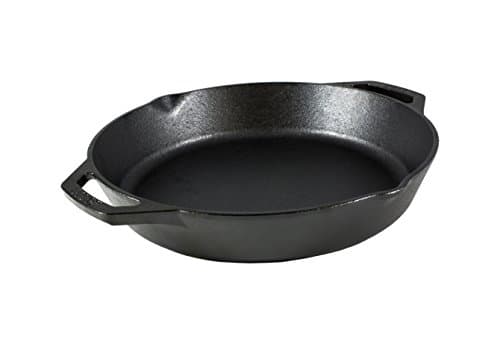
Put a plain 10.25-inch cast iron skillet on your grill and you have the single most useful upgrade there is: it sears harder than the grates, cooks shrimp, vegetables, eggs, and sauces that would fall through or burn, and it shrugs off live fire. Add a grill press for smash burgers and bacon and a griddle for breakfast, and the grill becomes a full outdoor kitchen.
Bare cast iron and a grill are made for each other. Iron does not care about direct flame, so it takes the grill's heat and stores it, searing harder and more evenly than open grates ever can, and it lets you cook everything a grate cannot hold — small vegetables, seafood, a pan sauce, breakfast. One rule up front, because it is the one that saves a pan: use bare, not enameled, cast iron on a grill. Enamel dislikes the fierce, uneven, empty-pan heat of a grill and can crack or discolor; bare iron thrives on it. Everything here is bare iron for that reason.
We ranked these five by how much each adds to real grill cooking. If you want ridged-pan grill marks indoors on the stovetop instead, that is a different tool — see our best cast iron griddles and grill pans guide. And if the fire is a campfire rather than a gas grill, our best cast iron for camping guide is the one you want.
How the picks break down
| Piece | What it does on the grill | Best for |
|---|
| Lodge 10.25-inch skillet | Sears and holds the small stuff | The one piece to start with |
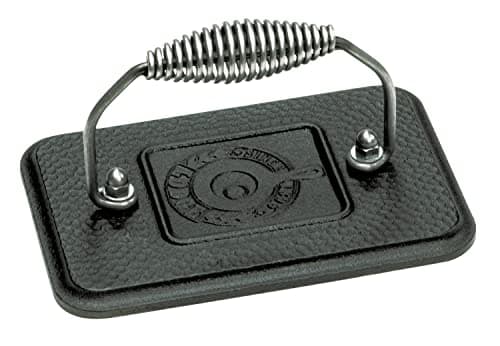
| Lodge grill press | Weights food flat for full contact | Smash burgers, bacon, paninis |
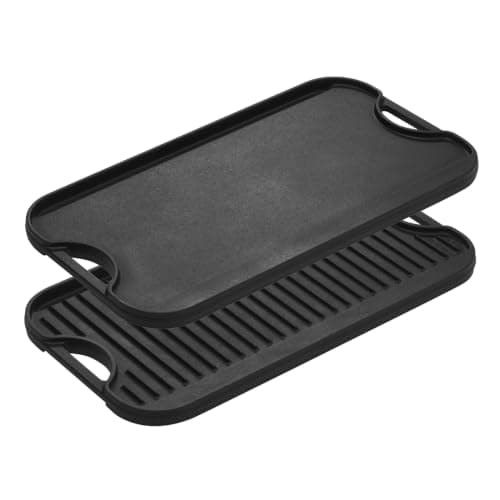
| Lodge reversible griddle | Big flat (or ridged) surface | Breakfast and smash burgers for a crowd |
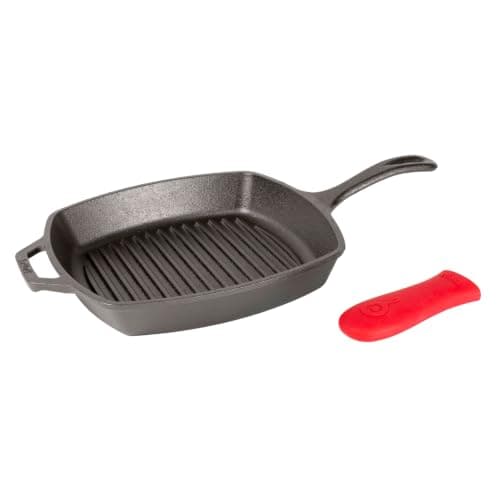
| Lodge square grill pan | Adds real grill marks and fat drainage | Chops and vegetables with marks |
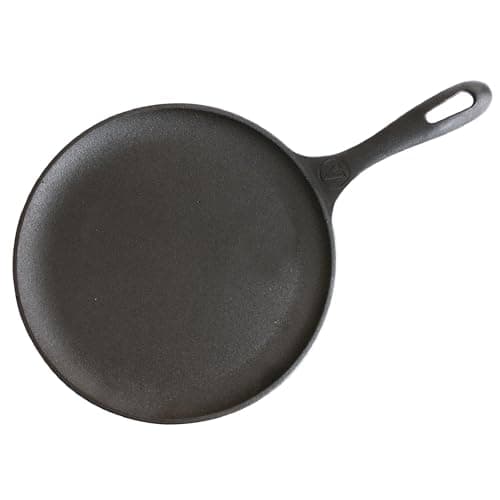
| Victoria comal griddle | Flat, low, round | Tortillas, quesadillas, fajitas grillside |
Start here: the Lodge 10.25-inch skillet
If you buy one piece of cast iron for the grill, make it a plain 10.25-inch Lodge skillet. On a grill its huge thermal mass sears a steak or scallops harder than the grates, and its walls let you cook everything that falls through or needs to be contained: shrimp, sliced vegetables, mushrooms, a pan sauce, even breakfast eggs. It is pre-seasoned, made in the USA, costs about what a couple of restaurant sides do, and it comes indoors to do everything else the rest of the year. A grill turns a good skillet into a great one because the fire can drive it hotter than most home burners.
Best for smash burgers and bacon: Lodge grill press
A cast iron grill press is a small, cheap tool that makes a real difference. Preheated and pressed onto food, its weight forces full contact with the hot surface, so bacon lies flat and crisps evenly, a smash burger gets that lacy, browned edge, and a panini or a spatchcocked chicken cooks faster and more evenly. It does not cook on its own — it is an accessory to a skillet or griddle — but for smash burgers and bacon it is the difference between good and great. A wood cool-grip handle keeps your hand off the metal.
Breakfast for a crowd: Lodge Pro-Grid reversible griddle
The reversible griddle turns a grill into a flat-top. Its smooth side is a big, flat surface for pancakes, eggs, bacon, and a batch of smash burgers all at once; flip it to the ridged side for grill marks. It spans a large area of the grill (or two stovetop burners indoors), and its mass keeps the temperature steady when you load it with cold food. It is big, heavy, and awkward to store and wash — the honest cost of that much cooking surface — but for feeding a group breakfast outside, nothing here matches it.
Grill marks and fat drainage: Lodge square grill pan
When you want defined grill marks and want rendered fat to drain away from the food, the square grill pan's tall ridges do both, and its square shape fits more chops or vegetables than a round pan. On the grill it adds a second, hotter searing zone and keeps small or delicate items from falling through. The ridges are the usual trade: they are harder to scrub clean than a flat pan, and they mark and sear rather than replicate live-fire flavor — which, on an actual grill, you already have.
Tortillas and fajitas: Victoria comal griddle
The flat, low-rimmed Victoria comal is the piece for the Tex-Mex end of grilling: it heats tortillas, chars quesadillas, and sizzles fajita vegetables and onions right beside the meat. Its open, rimless surface makes flipping and sliding easy, it is light for cast iron, and it is cheap. It has no sidewalls, so it is not for anything saucy, and it is a specialist rather than a do-everything grill pan — but for flatbreads and fajitas over fire it is exactly right.
How to choose cast iron for the grill
Bare iron only — never enamel
The single most important rule: use bare, seasoned cast iron on a grill, not enameled. A grill delivers fierce, uneven, often empty-pan heat, and enamel can craze, crack, or discolor under it, while bare iron simply gets better seasoned. Every piece here is bare for that reason. Save your enameled dutch oven for the kitchen.
Start with a skillet, then add specialists
A 10.25-inch skillet is the one piece that does the most on a grill, so start there. Add a grill press once you want smash burgers or flat bacon, a griddle when you cook breakfast or for a crowd, and a comal or grill pan for their specific jobs. Buy in that order and each piece earns its place instead of sitting in the shed.
Preheat on the grill, and mind the handles
Set the pan on the grill and let it preheat with the lid down until it is genuinely hot before the food goes on — cold iron on a grill just sits there. The whole pan, handle included, gets fire-hot, so keep heavy grill gloves or a handle sleeve to hand; there is no cool spot on a one-piece iron pan over live fire.
Cleaning off the soot
Grilling leaves a pan sootier than stovetop cooking. Let it cool enough to handle, then scrape and scrub with hot water and a brush or chainmail; a little soap is fine. Dry it thoroughly over the dying grill or a burner and wipe on a thin film of oil so it does not rust on the way back to the shelf. Outdoor cooking builds seasoning fast, so a grilled pan often comes out better than it went on.
Care and seasoning
Every piece here is cared for like any bare skillet: keep it seasoned, keep it dry, and let cooking fat build the surface over time. High-heat grilling is excellent for seasoning. The full routine is in our how to season cast iron guide, and if a pan ever surface-rusts after a wet clean, it is easily rescued.