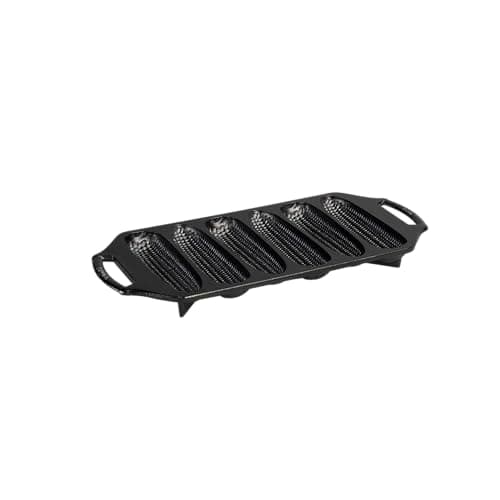
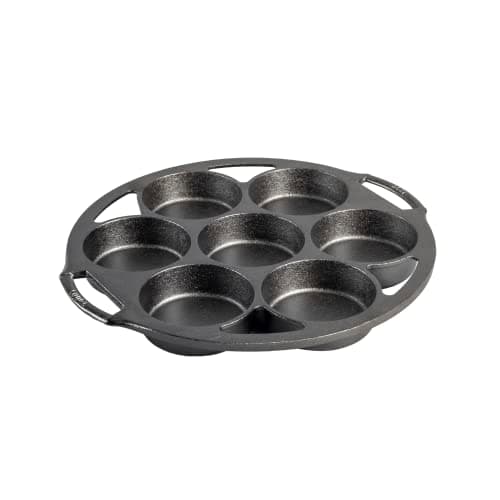
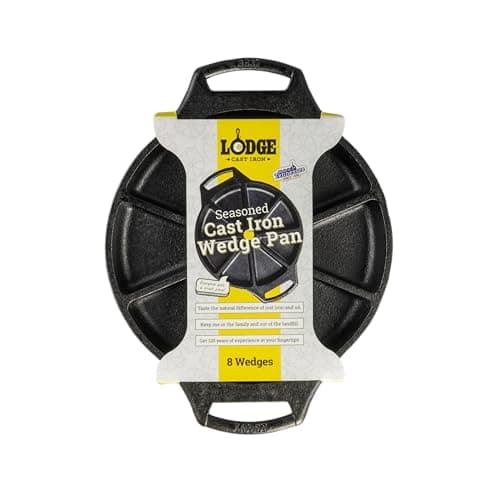
Great cornbread is about the crust, and the crust is about preheated cast iron: pour the batter into a screaming-hot, greased pan and the outside sets into a deep, crisp, browned edge while the middle stays tender. Any of these pans does that. The classic choice is the Lodgewedge pan — seven crisp-edged wedges from one preheated round. The cornstick pan is the heirloom-shaped fun. And the honest headline before you spend a cent: a plain cast-iron skillet you already own makes superb cornbread, so buy a dedicated pan for the shape and the portioning, not because you need it.
The reason cast iron owns cornbread is the same reason it owns searing: it holds a lot of heat in its body, so when cold, wet batter hits the hot metal, the pan does not lose its temperature the way a thin one would. That immediate, sustained heat is what crisps and browns the crust before the interior overcooks. A shiny aluminum pan makes pale, soft-edged cornbread; a preheated cast-iron pan makes the browned, crackly-edged cornbread people actually want. The trick is common to every pan here: get it properly hot in the oven first, grease it well, and pour. Our cast iron cornbread recipe walks the method.
Shape is the whole decision
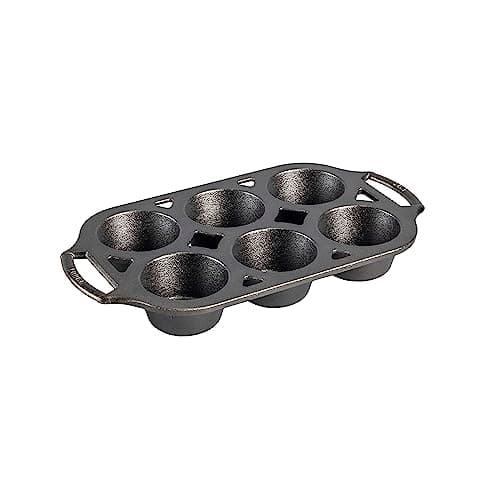
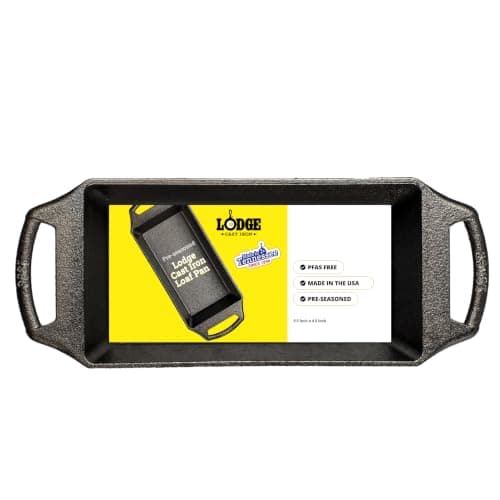
These pans cook cornbread identically — the choice is what shape you want it in. A wedge pan portions a round into seven crisp triangles, the traditional Southern serving. A cornstick pan molds little ears of corn, all crust and charm, and reads as a gift as much as a bake. A muffin pan makes handheld, max-crust corn muffins. A mini cake pan and a loaf panstretch the same batter into individual rounds or a sliceable loaf. Pick the format you will actually serve; the crumb is the same in all of them.
The honest alternative: your skillet
Before you buy anything, know this: a 10.25-inch cast-iron skilletmakes classic, crisp-edged cornbread as one big round you cut at the table — it is how most Southern cooks have always done it. If you already own a skillet, you already own a cornbread pan. Buy a dedicated pan when you want the wedges portioned, the cornsticks shaped, or the muffins handheld — that is, for the presentation, not the performance. For the wider baking range, see our best cast iron bakeware roundup.
Care: grease the details until the seasoning builds
Cornbread pans with fine molds — the cornstick and wedge shapes especially — need a generous grease in every crevice until the seasoning builds up in the detail. Skip that on a new pan and the corners stick. Preheat the pan with a little fat in it, brush the fat into every mold, then pour; after a few bakes the seasoning deepens and release gets easy. Full method in how to season cast iron.
How to choose a cast iron cornbread pan
Pick the shape you will serve
Wedges for the Southern classic, cornsticks for the heirloom shape, muffins for handheld, a loaf for slices. They all crust the same — buy for the format, not the flavor.
Preheat it, always
The crisp edge only happens if the pan is properly hot before the batter goes in. Heat the greased pan in the oven while it preheats, then pour into the hot metal. A cold pan makes soft, pale cornbread whatever its shape.
Grease the molds until the seasoning builds
Detailed molds stick on a new pan. Grease every crevice for the first several bakes; the seasoning deepens with use and release gets easy.
Or just use the skillet you have
A cast-iron skillet makes excellent cornbread as one round. Buy a dedicated pan only for the portioning and the shape — see the best skillet if you do not own one yet.