Skip to content
Hearth & Patina

The Skillets

Are Expensive Cast Iron Skillets Worth It?

A cheap skillet and a boutique skillet sear identically, because browning is physics. So here is the honest ladder: what changes as the price climbs, what never changes, and who should actually pay up.

By Stephen V.Updated How we research
#ad

We earn a commission when you buy through our Amazon links, at no extra cost to you. It never affects our rankings, and we say so when the cheaper pan is the better buy. How this works.

Top pick

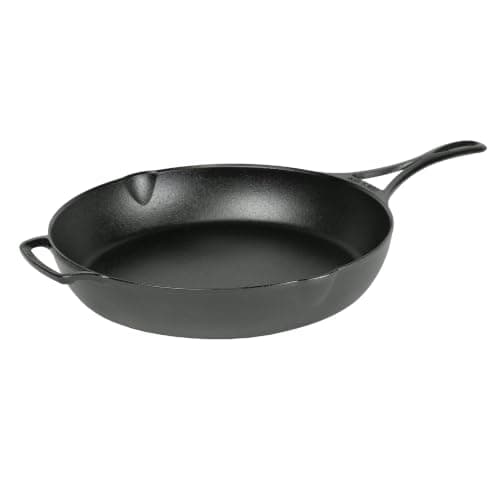
Lodge Lodge 10.25" Pre-Seasoned Cast Iron Skillet

Lodge 10.25" Pre-Seasoned Cast Iron Skillet

10.25 inPre-seasonedMade in USA5.66 lb
$24.42View on Amazon

Price as of October 31, 2026. Prices change — Amazon's is the one that counts.

#ad · we may earn a commission from this link to Lodge 10.25" Pre-Seasoned Cast Iron Skillet

For most people, no — and this is the pan that proves it. A pre-seasoned 10.25-inch Lodge is made in the USA, seasoned at the foundry and rated for any stovetop including induction, the oven, the grill or a campfire. It sears a steak exactly as hard as a pan costing eight times more, it is almost impossible to destroy, and it is the only skillet on this page we would hand to someone who has never cooked on iron.

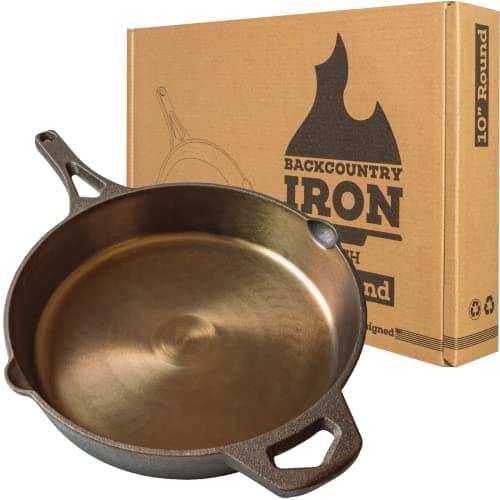
Already know you want a machined-smooth interior? Skip the ladder and go to the Stargazer 10.5-inch, which publishes its surface, its weight and the Pennsylvania town it is made in. Want milled iron for much less? Backcountry Ironis the cheapest genuinely milled surface we can find — but it is heavy.

Compare

The price ladder in published numbers, not adjectives

VesselSizeCooking surfacePublished weightPriceBuy
Lodge 10.25" Pre-Seasoned Cast Iron Skillet

Lodge

10.25 inAs-cast (pebbly)5.66 lb$24.42Check Price on Amazon
Stargazer 10.5" Cast Iron Skillet

Stargazer

10.5 inCNC-machined5.2 lb$155.00Check Price on Amazon
Backcountry Iron 10.25" Smooth Wasatch Cast Iron Skillet

Backcountry Iron

10.25 inMilled7 lb$110.00Check Price on Amazon
Lodge Blacklock 12" Lightweight Cast Iron Skillet

Lodge

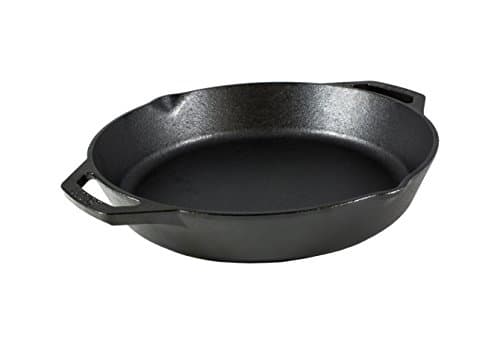
12 inAs-cast, triple seasonedNot published$79.95Check Price on Amazon
Field Company No. 6 Cast Iron Skillet (8.38")

Field Company

8.38 inMachined smoothNot published$135.00Check Price on Amazon
Finex 10" Cast Iron Skillet

Finex

10 inFiner than as-castNot published$199.95Check Price on Amazon

#ad · Live prices from the Amazon Creators API, as of October 31, 2026. Where we have no verified live price we show none rather than a stale number — we may earn a commission.

For most cooks, no. An expensive cast iron skillet does not cook better than a cheap one — it cannot, because a crust is the Maillard reaction firing on hot, dry iron, and both pans are hot, dry iron. What the money buys is a machined cooking surface that releases food in month one instead of year two, a better handle, sometimes a little less weight, published origin, and an object you enjoy owning. Those are real things. They are just not performance, and knowing the difference is worth a great deal of money in this category.

Cast iron is the rare category where the cheapest serious option is also one of the best. That is not an accident of marketing — it falls out of how the pans are made. Pouring molten iron into a sand mold is a cheap, high-volume process, so a company casting millions of skillets a year can sell a lifetime pan for about the price of a takeaway meal. Every dollar above that floor is buying a finishing step, a design decision, or a smaller company's overhead. This page walks the ladder rung by rung and tells you, honestly, which rungs are worth climbing.

One ground rule before we start: there are no prices in this prose. Price brackets move, sales land, and a remembered number is worse than no number. Every live figure on this page comes from our price feed on the day you are reading it, and every spec in the table above is a published manufacturer figure or marked as not published.

What genuinely changes as the price climbs

Five things, in descending order of how much you will notice them.

1. The cooking surface

This is the single biggest difference and the one most worth paying for. A mainstream pan leaves the as-cast texture in place; a boutique pan mills or polishes it flat. Stargazer publishes that it CNC-machines its cooking surface and finishes and seasons the pans in Allentown, Pennsylvania, and Smithey's own shorthand for its cast iron line is “Polished, Pre-seasoned, Perfected” . The practical payoff is immediate release: eggs behave on a machined pan from the first month.

The honest counterweight is that seasoning — polymerized oil gradually fills a pebbly surface until it is nearly as slick. A well-used Lodge is a long way from a new one. You are paying to skip the waiting, not to reach a place a cheap pan cannot go. We lay the mechanism out in smooth vs rough cast iron.

2. The handle

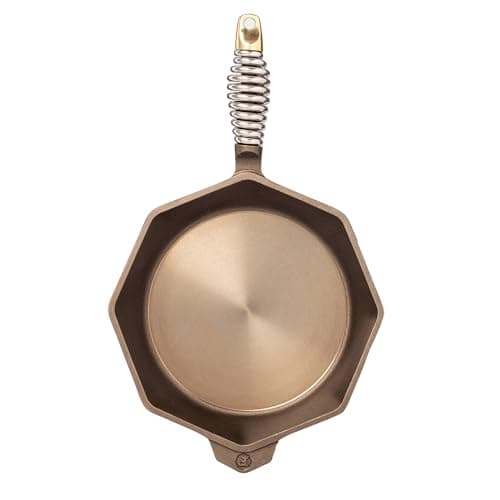
The second thing you will notice, every time you cook. A stock mainstream handle is short, which means less leverage and a hand closer to the burner. Premium makers lengthen it, angle it, or replace it outright — Finex wraps a coiled stainless spring around the core so your palm never touches solid hot iron, and Victoria sells a long curved handle at a far lower price point than any boutique pan. No cast handle stays cool, because iron conducts heat; the premium ones are just better shaped and slower about it.

3. Weight — sometimes

This is where the money most often fails to deliver what buyers think it does. The makers whose whole pitch is lighter, smoother iron are Field and Lancaster, casting thin in the pre-war idiom. But look at the table: the machined-surface Stargazer 10.5-inch publishes 5.2 lb against a 10.25-inch Lodge's published 5.66 lb — barely half a pound apart. And the cheapest milled pan on this page, the Backcountry Iron Wasatch, publishes 7 lb, which is heavier than the Lodge.

So: expensive does not mean light. If weight is your actual problem, shop for weight specifically — our lightest cast iron skillets roundup is the right page, and a smaller diameter saves more weight than any brand upgrade.

4. Published origin and support

At the top of the market you can usually find out exactly where your pan was cast and who stands behind it. Lodge publishes that it operates two foundries in South Pittsburg, Tennessee and has cast iron since 1896; Stargazer names its Allentown plant; Smithey publishes a lifetime quality guarantee. Notably, this is not something you only get by paying boutique money — Lodge publishes more than most, at the bottom of the ladder.

The opposite case is instructive. Backcountry Iron publishes real dimensions for the Wasatch but does not publish where the pans are cast. That is fine if you want a milled surface cheaply; it is not fine if made-in-USA is part of why you want one. If origin is the thing you care about, our best American-made cast iron page sorts it out properly.

5. The object

The last thing money buys is the least measurable and the most honest reason to spend it: you like the pan. A mirror-polished interior, an octagonal body with eight pour spouts, a handle shaped in the Griswold idiom, a maker's mark on the bottom. These are not performance claims and we will not dress them up as any — but a pan you enjoy reaching for is a pan you cook with, and the pan you cook with is the one that was worth the money.

What never changes, at any price

The sear. Browning depends on surface temperature and a dry surface. Cast iron of any price holds heat because of thermal mass, and the heaviest pan on this page is also one of the cheapest. Nobody has ever eaten a steak and identified the brand of the pan.

Heat distribution. All cast iron conducts heat slowly, so all cast iron develops hot spots over a small burner and needs a proper preheat. A boutique pan does not fix this; the fix is technique, which is why we wrote how to preheat cast iron and why cast iron heats unevenly.

Lifespan.Both ends of this ladder outlive you. Rust comes off, seasoning rebuilds, and a neglected pan comes back from the dead with a scrub and an oven cycle — see how to restore cast iron. “Buy it for life” is not a premium feature here. It is the entry-level spec.

The care routine. Dry it, oil it lightly, do not soak it. Identical on every pan on this page.

The ladder, rung by rung

Entry: the pan that makes the whole argument

A pre-seasoned mainstream skillet is the best value object in the kitchen. It is pebbly, slightly heavy, and the handle is short. It is also made in the USA, works the day it arrives, and will sear anything you put in it for the rest of your life. Nine out of ten people reading this page should buy one and spend the difference on a handle sleeve and a chainmail scrubber, which will improve their cooking more than any brand upgrade.

Step up: a smoother pan without the boutique premium

Between the bottom and the boutique tier sit two interesting options. The Lodge Blacklock line is lighter and slicker out of the box than a classic Lodge for a fraction of boutique money — but it is not machined, and Lodge does not claim it is. The Backcountry Iron Wasatch is the cheapest genuinely milled surface we can find, with the trade-off printed above: it publishes 7 lb. Pick Blacklock if you want lighter and a bit smoother; pick the Wasatch if you want the milled surface specifically and do not mind a properly heavy pan.

Boutique: machined surfaces and real design

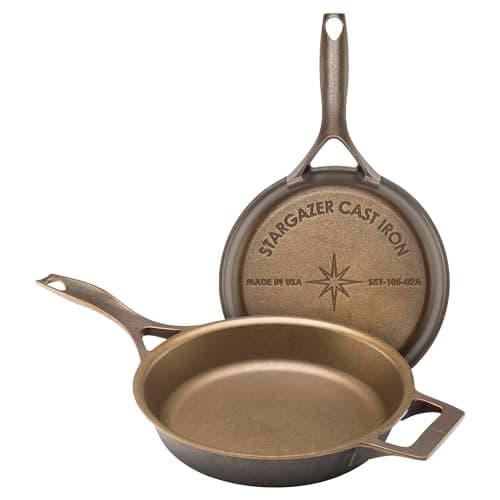
This is where a pan costs several times the entry tier and genuinely changes. Stargazer machines its interior across the whole cooking surface, publishes its weight and its 8.1-inch cooking surface, and gives you the best handle of the machined pans. Field casts thin in the vintage style, so its pans are the lightest smooth iron you can buy. Both are buying you year-one release and daily comfort.

Luxury: the object tier

At the top, you are buying design. Finex is octagonal with eight pour spouts and the coiled stainless spring handle, cast thick enough that it is among the heaviest pans in its size. Smithey is the polished Charleston heirloom. We put these two against each other in Finex vs Smithey, and the conclusion there is the conclusion here: wonderful objects, identical sear.

The three cases where paying more is genuinely right

1. You cook eggs or fish often, and you want it now. A machined surface releases delicate food in its first month. If scrambled eggs are a daily event in your kitchen, that is the strongest money-for-outcome case in cast iron. (Our best skillet for eggs page ranks for exactly this job.)

2. The handle is a physical problem, not a preference. If wrist or grip strength makes a short cast handle genuinely difficult, a longer, angled or sprung handle is an accessibility upgrade, not a luxury. Pay for it.

3. It is a gift or an heirloom.Nobody is thrilled to unwrap the cheapest pan on the shelf, and a boutique skillet is a genuinely lovely object with a maker's name on it. Our premium cast iron gifts and heirloom vs starter gift pages exist for this.

When paying more is a mistake

If this would be your first cast iron pan, buy at the bottom. Cast iron asks for a small habit, and a meaningful number of people find out they do not want it. Find that out cheaply. If you are buying because you have read that expensive pans sear better, stop — they do not. If you are buying to save weight, check the published figures first, because the table above shows the correlation between price and weight is weak to nonexistent. And if you are buying a big diameter at the top of the market, remember that a 12-inch boutique pan is a two-handed object you have to wash in a normal sink.

The verdict

Expensive cast iron is worth it for a surface you get to enjoy immediately, a handle that fits your hand, and an object you like. It is not worth it for cooking results, because there are none to buy. The sharpest version of the advice: buy the cheap pan first, cook on it for six months, and let the pan tell you which of the five upgrades above you actually want. Then buy exactly that one. That sequence is how people end up with a skillet they love instead of an expensive one they feel obliged to.

If you want the whole field ranked rather than the price argument, start at the best cast iron skillet, compare the spec tables in our skillet comparison, and if the pot version of this question is what you came for, it is are expensive dutch ovens worth it.

The short answer

Quick picks

#ProductBest forScorePrice
01
Lodge Lodge 10.25" Pre-Seasoned Cast Iron Skillet
Lodge 10.25" Pre-Seasoned Cast Iron Skillet

The honest first cast-iron pan for almost everyone. Cheap, indestructible, made in the USA.

The default first skillet
8.4
$24.42Amazon
02
Stargazer Stargazer 10.5" Cast Iron Skillet
Stargazer 10.5" Cast Iron Skillet

A machined interior in the size people actually cook in, cast and milled in Pennsylvania. The smooth pan to buy if you only buy one.

The best all-round smooth pan
8.6
$155.00Amazon
03
Backcountry Iron Backcountry Iron 10.25" Smooth Wasatch Cast Iron Skillet
Backcountry Iron 10.25" Smooth Wasatch Cast Iron Skillet

The cheapest genuinely milled cooking surface we can find on Amazon — as long as you can live with a properly heavy pan.

A milled surface on a budget
8.0
$110.00Amazon
04
Lodge Lodge Blacklock 12" Lightweight Cast Iron Skillet
Lodge Blacklock 12" Lightweight Cast Iron Skillet

Lighter and slicker out of the box than a standard Lodge for a fraction of boutique money — but it is not a machined pan, and Lodge never claims it is.

A smoother Lodge, not a milled one
8.0
$79.95Amazon
05
Field Company Field Company No. 6 Cast Iron Skillet (8.38")
Field Company No. 6 Cast Iron Skillet (8.38")

A light, smooth, heirloom-grade small skillet in the vintage Griswold tradition. A luxury, and honest about it.

A smooth-finish small pan
7.4
$135.00Amazon
06
Finex Finex 10" Cast Iron Skillet
Finex 10" Cast Iron Skillet

The design icon of American cast iron — octagonal, spring-handled, a genuine object. A luxury, and it doesn't pretend otherwise.

A design-led everyday pan
7.4
$199.95Amazon

#ad · Live prices from the Amazon Product API, as of October 31, 2026. Where we have no verified live price, we show none — we would rather leave a gap than print a number that has gone stale.

In detail

The picks, in full

01
Lodge Lodge 10.25" Pre-Seasoned Cast Iron Skillet

The default first skillet

Lodge 10.25" Pre-Seasoned Cast Iron Skillet

10.25 inPre-seasonedMade in USA5.66 lb
8.4/10

The honest first cast-iron pan for almost everyone. Cheap, indestructible, made in the USA.

Heat retention
9
Cooking surface
7
Handling
7
Versatility
9
Value
10

Pros

  • The 10.25" is the size that fits four eggs, two steaks, or a batch of cornbread — the most useful single size
  • Pre-seasoned from the factory, so it works the day it arrives
  • Costs a fraction of a boutique pan and will outlive you with basic care

Cons

  • The cooking surface is pebbly, not machined smooth — food releases better once you build your own seasoning on top
  • The short helper handle is small; a leather or silicone sleeve on the main handle is a near-essential add

Don't buy this if…

…you specifically want a glass-smooth machined surface out of the box. That is what Stargazer, Smithey and Field sell, at five to eight times the price — for most cooks the Lodge gets there with a few months of use.

$24.42View on Amazon

Price as of October 31, 2026. Prices change — Amazon's is the one that counts.

#ad · we may earn a commission from this link to Lodge 10.25" Pre-Seasoned Cast Iron Skillet

02
Stargazer Stargazer 10.5" Cast Iron Skillet

The best all-round smooth pan

Stargazer 10.5" Cast Iron Skillet

10.5 inCNC-machined interior5.2 lbMade in USA
8.6/10

A machined interior in the size people actually cook in, cast and milled in Pennsylvania. The smooth pan to buy if you only buy one.

Heat retention
9
Cooking surface
10
Handling
9
Versatility
9
Value
6

Pros

  • The interior is CNC machined across the whole cooking surface, so food releases from the first month instead of the second year
  • Cast, machined, finished and seasoned in-house in Allentown, Pennsylvania — a short supply chain the company states plainly
  • 10.5 inches across with a published 8.1-inch cooking surface is the size that covers weeknight cooking without becoming a lift

Cons

  • At a published 5.2 lb it is barely half a pound under a 10.25-inch Lodge's published 5.66 lb — buy it for the surface, not to spare your wrist
  • Costs several times a Lodge for a pan that cooks better rather than differently

Don't buy this if…

…you have never owned cast iron. Buy a Lodge, cook on it for six months, and come back only if the pebbly surface turns out to be the thing that bothers you.

$155.00View on Amazon

Price as of October 31, 2026. Prices change — Amazon's is the one that counts.

#ad · we may earn a commission from this link to Stargazer 10.5" Cast Iron Skillet

03
Backcountry Iron Backcountry Iron 10.25" Smooth Wasatch Cast Iron Skillet

A milled surface on a budget

Backcountry Iron 10.25" Smooth Wasatch Cast Iron Skillet

10.25 inMilled cooking surface7 lbDeep heat ring
8.0/10

The cheapest genuinely milled cooking surface we can find on Amazon — as long as you can live with a properly heavy pan.

Heat retention
10
Cooking surface
9
Handling
5
Versatility
8
Value
8

Pros

  • A genuinely milled cooking surface for well under what the boutique American smiths charge
  • Backcountry Iron publishes real dimensions — 10.25 in across, 11 in spout to spout, a 4.75 in handle
  • Ships seasoned in the company's own food-grade oil blend, so it cooks the day it arrives

Cons

  • At a published 7 lb it is heavy — well over a same-diameter Lodge, and nothing like the featherweight boutique pans
  • Backcountry Iron does not publish where the pans are cast, which matters if made-in-USA is part of why you want a smooth skillet

Don't buy this if…

…you want a light pan. The Wasatch buys you the surface and none of the weight saving — Field and Stargazer are the ones that do both, for more money.

$110.00View on Amazon

Price as of October 31, 2026. Prices change — Amazon's is the one that counts.

#ad · we may earn a commission from this link to Backcountry Iron 10.25" Smooth Wasatch Cast Iron Skillet

04
Lodge Lodge Blacklock 12" Lightweight Cast Iron Skillet

A smoother Lodge, not a milled one

Lodge Blacklock 12" Lightweight Cast Iron Skillet

12 inTriple seasonedLighter than classic LodgeMade in USA
8.0/10

Lighter and slicker out of the box than a standard Lodge for a fraction of boutique money — but it is not a machined pan, and Lodge never claims it is.

Heat retention
8
Cooking surface
8
Handling
7
Versatility
9
Value
8

Pros

  • Lodge engineers the Blacklock line to be lighter than its traditional iron, which is the upgrade most cooks actually feel day to day
  • Triple seasoned at the foundry, so it starts closer to slick than a standard Lodge does
  • Still a Lodge: American-cast, cheap to replace, and impossible to feel precious about

Cons

  • Lodge makes no machined-surface claim for Blacklock and neither will we — it is a thinner, better-seasoned sand casting, not a milled one
  • Thinner walls mean less stored heat than a classic Lodge of the same diameter

Don't buy this if…

…you specifically want the glassy, milled interior the boutique pans sell. Blacklock is lighter and better seasoned; it is not machined.

$79.95View on Amazon

Price as of October 31, 2026. Prices change — Amazon's is the one that counts.

#ad · we may earn a commission from this link to Lodge Blacklock 12" Lightweight Cast Iron Skillet

05
Field Company Field Company No. 6 Cast Iron Skillet (8.38")

A smooth-finish small pan

Field Company No. 6 Cast Iron Skillet (8.38")

8.38 in (No. 6)Machined smoothMade in USALightweight
7.4/10

A light, smooth, heirloom-grade small skillet in the vintage Griswold tradition. A luxury, and honest about it.

Heat retention
7
Cooking surface
10
Handling
9
Versatility
6
Value
5

Pros

  • Notably lighter than a comparable Lodge, cast thin in the pre-war style
  • Smooth, polished cooking surface releases food early in its life
  • Beautifully finished — the kind of pan that gets handed down

Cons

  • Expensive for a small skillet — you are paying for craft and made-in-USA thinness
  • The No. 6 is genuinely small (one to two servings); size up to a No. 8 or 10 for real cooking

Don't buy this if…

…you need one do-everything pan. This is a jewel-box small skillet, not a household workhorse — a 10.25" or 12" Lodge does more, for a tenth of the money.

$135.00View on Amazon

Price as of October 31, 2026. Prices change — Amazon's is the one that counts.

#ad · we may earn a commission from this link to Field Company No. 6 Cast Iron Skillet (8.38")

06
Finex Finex 10" Cast Iron Skillet

A design-led everyday pan

Finex 10" Cast Iron Skillet

10 inOctagonal, 8 spoutsSpeed Cool spring handleMade in USA
7.4/10

The design icon of American cast iron — octagonal, spring-handled, a genuine object. A luxury, and it doesn't pretend otherwise.

Heat retention
9
Cooking surface
8
Handling
7
Versatility
8
Value
5

Pros

  • The patented octagonal shape makes eight pour spouts, so you drain fat or pour a sauce from any side without twisting the pan
  • The coiled stainless "Speed Cool" spring handle runs cooler than a solid cast handle and is a genuine pleasure to hold
  • Finer cooking surface than a pebbly Lodge, pre-seasoned with flaxseed oil, so it releases food well early in its life

Cons

  • Heavy — Finex casts thick, so it is among the heaviest skillets in its size, the opposite of a light Field or Stargazer
  • Priced at a large multiple of a Lodge; you are paying for design and craft, not a better sear

Don't buy this if…

…you want the most capable pan for the money, or a light pan you can toss one-handed. A Lodge cooks just as well for a fraction of the price, and a Field or Stargazer is far lighter.

$199.95View on Amazon

Price as of October 31, 2026. Prices change — Amazon's is the one that counts.

#ad · we may earn a commission from this link to Finex 10" Cast Iron Skillet

How to spend your money in this category

Decide the size before the brand

Size changes your cooking far more than brand does, and it is the decision people get wrong most often. A 10 to 10.25-inch pan fits four eggs, two steaks or a round of cornbread and stays liftable; a 12-inch feeds more and weighs enough to matter. Our sizes guide and 10-inch vs 12-inch settle it. Buying a cheap pan in the right size beats an expensive one in the wrong size, every time.

Name the upgrade you want in one sentence

“I want a machined surface.” “I want a longer handle.” “I want a lighter pan.” If you cannot finish that sentence, you are not ready to pay a premium — you are shopping on vibes, which in this category costs real money for nothing. Each of those three sentences points at a different pan, and only one of them points at the boutique tier.

Treat published specs as the tiebreaker

Published weights, published cooking-surface diameters and published origin are the facts; everything else in a product description is atmosphere. The table at the top of this page shows what each maker will actually commit to in writing, including the ones that commit to nothing. Prefer the pan that publishes.

Budget for the two accessories that matter

A silicone or leather handle sleeve and a chainmail scrubber will improve your daily experience of any skillet more than moving up a price tier will. If your budget is tight, buy the entry pan plus both accessories rather than the mid-tier pan alone. Our accessories roundup and chainmail vs steel wool cover the choices.

Check for a vintage pan before you buy new at the top

If what you want is thin, smooth, pre-war iron, the second-hand market sells exactly that, often for less than a new boutique pan. How to buy vintage cast iron and how to identify vintage cast iron tell you what to look for and what to walk away from.

Buy once, and only up one rung

The expensive mistake is not buying premium — it is buying premium twice because the first upgrade was not the one you needed. Move up a single rung for a single named reason, cook on it for a season, and then decide whether anything else is missing. Usually nothing is.
How we picked

We do not run a testing lab

We researched published manufacturer specifications, materials and thermal properties, and aggregated owner reviews, then scored each pan against a published rubric. The scores are judgments from documented research — they are notmeasurements we took, because we do not have a lab and we are not going to pretend we do. Where a number came from a manufacturer's spec sheet or someone else's lab, we name it in Sources.

Questions

Frequently asked

Are expensive cast iron skillets better than budget ones?
Not for cooking. They sear and bake identically, because browning depends on hot, dry iron rather than on price. Expensive pans buy a machined surface that releases food sooner, a better handle, sometimes a published weight saving, clearer origin and a nicer object. Those are worth money to some cooks and nothing at all to others.
How much should I spend on my first cast iron skillet?
As little as you reasonably can. A pre-seasoned mainstream 10 to 10.25-inch skillet is made in the USA, foundry-seasoned and rated for any stovetop, the oven, a grill or a campfire, and it is the pan we recommend to every beginner in the best cast iron skillet for beginners. Find out whether you like the care routine before you spend more.
Do expensive cast iron skillets weigh less?
Not reliably. The published figures in the table on this page show a machined 10.5-inch premium pan at 5.2 lb against a 10.25-inch mainstream pan at 5.66 lb, while the cheapest milled pan we feature publishes 7 lb. Field and Lancaster are the makers built around lighter iron; for everyone else, dropping a size saves more weight than changing brand.
Is a machined smooth surface worth paying for?
If you cook eggs, fish or crepes regularly, yes — it releases delicate food from the first month instead of after a year or two of seasoning build-up. If you mostly sear, roast and bake, it is a pleasant extra rather than a reason to spend. A pebbly pan gets much closer than people expect once seasoning fills the texture.
Will a cheap cast iron skillet last as long as an expensive one?
Yes. Both last indefinitely with basic care, and both recover from rust and neglect — that is the nature of the material, not a premium feature. See how to restore cast iron for what “recover” actually involves.
Which cast iron brands are actually worth the premium?
The ones that publish what they are selling. Stargazer names its machined surface and its Allentown plant; Field sells genuinely lighter iron; Finex sells the octagonal body and the spring handle; Smithey sells the polish and a lifetime quality guarantee. Compare the top two in Finex vs Smithey, and see the full field in the best American-made cast iron.

Keep reading

Receipts

Sources

We do not run a testing lab, and we do not pretend to. Where a measured number came from a manufacturer's spec sheet or someone else's lab, we name them and link them. Where we could not verify something, we say so on the page rather than quietly leaving it out. Read our full method.