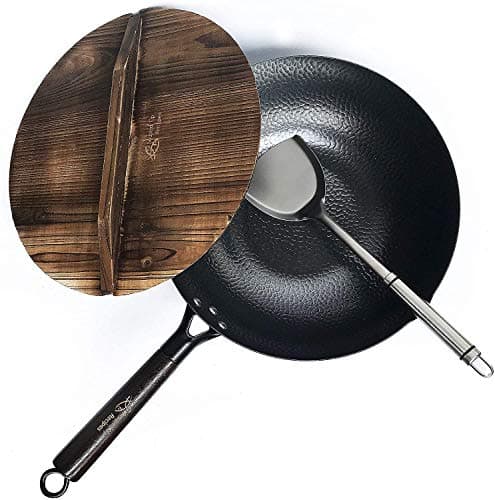
The best Yosukata alternative is the Souped Up Recipes 12.5-inch flat-bottom carbon steel wok, best for anyone whose hob is electric, smoothtop or induction rather than gas — which is the single commonest reason this search gets made. The budget pick is the Mammafong 14-inch hand-hammered round-bottom. Be clear first, though: if you cook on gas and you want a pre-seasoned round-bottom wok, the Yosukata is a good pan and you probably do not need an alternative at all.
What the Yosukata actually is, and what people want instead
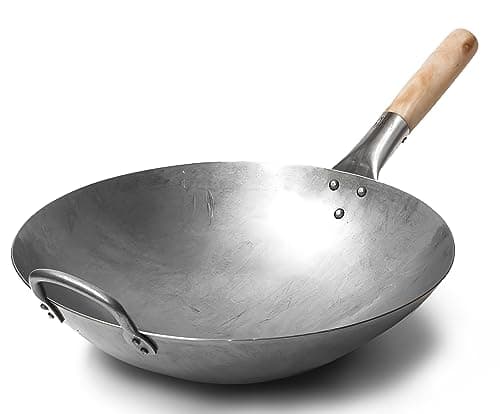
Yosukata makes pre-seasoned carbon steel woks, and the 14-inch round-bottom is the one most people buy: thin, light, factory seasoned so it is usable out of the box, and shaped the way a wok is supposed to be shaped — a round base that concentrates heat low down and sloping walls you push cooked food up onto.
That design is also the problem, and it is the problem almost every alternative search is really about. A round bottom needs a flame that can wrap around it. On a flat electric or smoothtop hob only a small tangent of metal touches the heat; on induction, where the hob heats only the metal in close flat contact, most hobs will not detect the pan at all. A wok ring does not fix it — it lifts the pan further away. So the first question to ask is not which wok is better but what you are cooking on.
If the problem is your stove: buy flat
The Souped Up Recipes 12.5-inch is the direct swap. Same material, same gauge behaviour, flat base, and a lid and spatula in the box. You lose the ability to park food up the side the way a true round wok lets you, because the walls on a flat-bottomed wok run cooler — a consequence of the fact that plain steel conducts heat sideways slowly and nothing but the base is being heated.
On induction specifically there is a better answer still, and it is not steel: a thick cast iron wok carries the base heat up its walls far better than 2 mm steel can. The best woks for induction cooktops makes that case in full, and the best woks for glass-top and electric stoves covers the radiant-smoothtop version of the same problem.
If the problem is that it is machine-made: buy hand-hammered
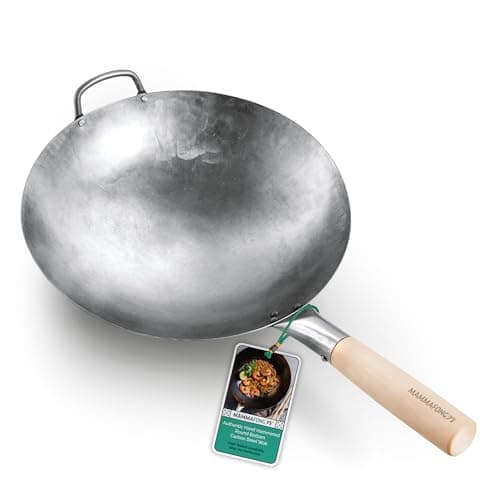
The Yosukata is formed by machine and arrives with a factory seasoning. Some cooks specifically want the other thing: a wok hammered by hand, so the inside carries the shallow dimples that give food something to sit against on the slope, and no coating at all so you build your own seasoning from the first session.
Craft Wok is the named answer, and the Mammafong is the cheaper one. Both are 14-inch round-bottom pans for a gas flame, both arrive bare, and both need a proper first seasoning before you cook in them — a real job, not a formality. How to season carbon steel covers it, and Yosukata versus Craft Wok is the head-to-head if those two are your shortlist.
If the problem is the material: buy iron
Carbon steel is thin, light and fast, which is wonderful for stir-frying over a real flame and less wonderful anywhere the heat is concentrated into a disc. Cast iron is the opposite trade: heavier, slower, and full of stored heat that keeps the surface hot for browning when cold vegetables land in it.
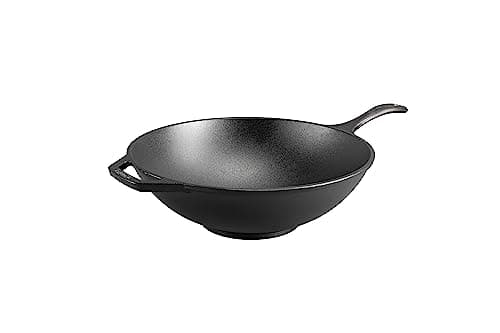
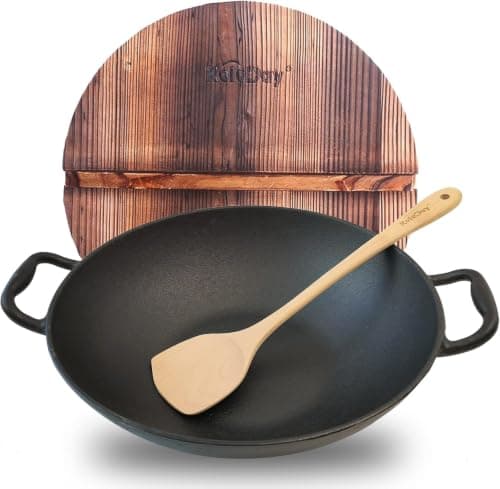
The Lodge 12.5-inch Chef Collection wok is American-cast, flat-based and finished smoother than Lodge’s classic iron, and the Keleday 14-inch is the cheapest big flat-bottom iron wok we carry, with a wooden lid that turns it into a braising pot. Cast iron wok versus carbon steel wok is the full argument, and are cast iron woks good answers the obvious objection.
If the problem is price
The Mammafong is the cheapest genuine 14-inch round-bottom wok here and the Lodge mini wok is cheaper still but tiny. Honestly, though: woks are the one category on this site where price is almost never the real constraint — every wok we carry is under a hundred dollars, and the gap between the cheapest and the dearest is smaller than the gap between two Lodge skillets. Buy for the stove and the shape, not the price.
What we are not telling you
We have not tested these pans side by side in a lab and we do not pretend to. Every comparison above comes from what the makers publish and from how the material physics plays out on a given burner. Where a maker does not publish a gauge or a weight, we say so rather than inventing one. Our methodology page spells out exactly what our scores are and are not.
How the prices on this page work
Every number comes from the live Amazon listing at the date stamped under the comparison table, read through this site’s price layer. No number is typed into our files, and a pick with no verified live offer shows no price at all.