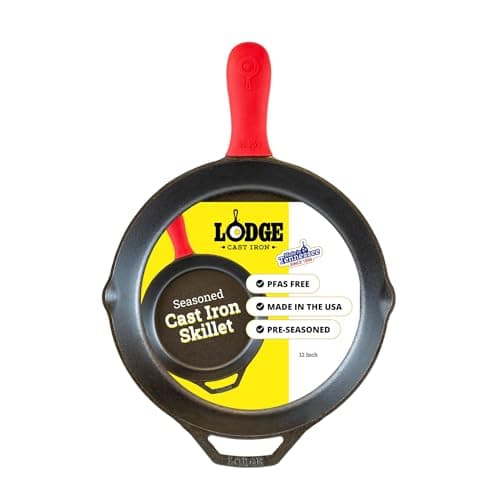
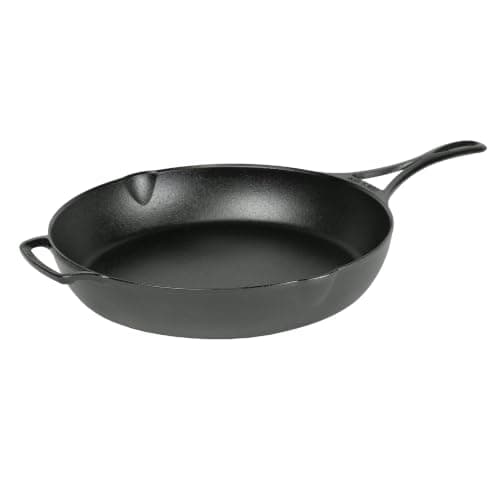
The best 12-inch cast iron skillet is the Lodge Blacklock 12-inch, best for a cook who wants family-sized cooking area in a pan they will keep reaching for — Lodge casts it thinner than its classic iron, so it gives up a little stored heat and takes away a lot of weight. The budget pick is the classic Lodge 12-inch, which costs a fraction as much and sears harder than anything else here. At this diameter the deciding spec is not finish or brand. It is what the pan weighs when it is full.
Why a 12-inch pan is a different purchase from a 10-inch one
Pan diameter is not a linear thing. Going from 10.25 to 12 inches adds about a third more cooking area, which is the difference between crowding four chicken thighs and browning them properly, or searing two big steaks instead of one. That extra area is the whole reason to buy the size, and our 10-inch versus 12-inch comparison works through which households genuinely need it.
The catch is that iron is heavy and area grows faster than you expect. Lodge publishes about 5.66 lb for its 10.25-inch classic and about 8 lb for the 12-inch — before anything is in it. Add a chicken and you are lifting a dozen pounds out of a hot oven, one-handed, with a towel. That is the single most common reason a 12-inch skillet stops being used, and it is why this page is ranked the way it is rather than by surface finish.
Why the Blacklock wins and the classic Lodge does not
Lodge engineers the Blacklock line to be lighter than its traditional iron at the same diameter, and triple-seasons it at the foundry. Both of those matter more at 12 inches than at 8. The thinner casting is the only way to get this much cooking area into a pan that still feels like a pan, and the extra factory seasoning shortens the months of sticky eggs that a big new as-cast pan otherwise puts you through while you build your own polymerized-oil layer on top.
Be clear about the trade. Thinner walls store less heat, and stored heat is what keeps the surface hot enough for Maillard browning when cold food lands in it. If your 12-inch pan exists specifically to sear a batch of steaks straight from the fridge, the heavy classic Lodge is the better tool and it is the budget pick on this page for that reason. Our three-way Lodge comparison has the full argument between the lines.
What a machined 12-inch costs, and when it is worth it
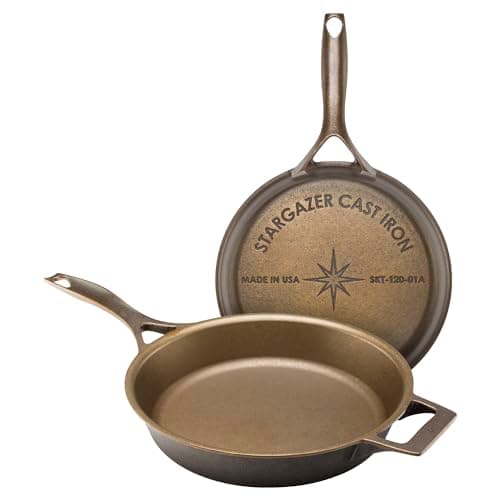
The Stargazer 12-inch is the only pan here with a genuinely CNC-machined cooking surface, and machined and as-cast surfaces really are different things — a milled interior releases a fried egg from day one instead of month four. It also has the best handle at this diameter, which is not a cosmetic point on a pan this heavy.
It costs several times what the classic Lodge does, and the honest line is the one this whole site takes: machining improves how a pan feels, not how hard it sears. If a glassy interior is what you are buying, the best smooth cast iron skillets ranks that axis across every diameter, and the under $200 band shows how much machined surface two hundred dollars buys.
The lid question at 12 inches
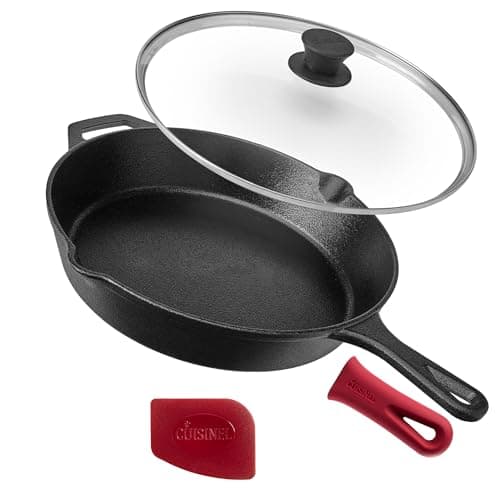
A lid changes what a big skillet is for: with one on, a 12-inch pan braises chicken thighs, holds a shallow stew and stops bacon fat redecorating your backsplash. The Cuisinel 12-inch is the value way to get there and it is the only covered pan on this page.
Its lid is glass, which is nicer to cook under and more limited than iron — glass caps the oven temperature you can use and can fail on thermal shock. If you want a covered 12-inch that goes into a 500-degree oven without a thought, read the best cast iron skillets with lids, and if the job is really deep frying rather than braising, the deep-frying page makes the case for a deep covered pan instead of a skillet.
Where the Finex fits
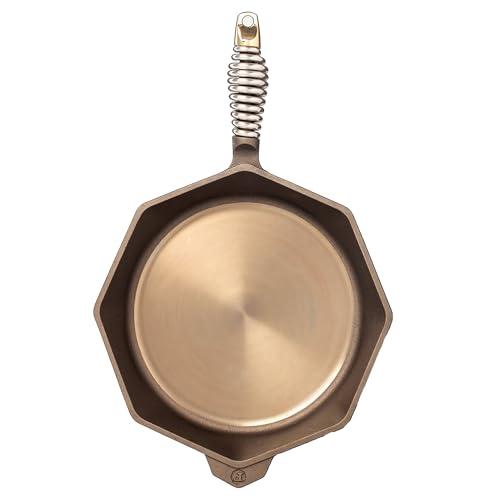
The Finex 12-inch is the most object-like pan on the page: octagonal, polished, eight pour spouts, a spring handle. It is a lovely thing and it is also the heaviest pick here, which means it loses the argument this page is actually about. We rank it last on that basis rather than on quality. If you want the Finex argument properly, Finex versus Lodge and is Finex worth it both take it apart.
Should you buy 12 inches at all?
For a household of one or two, probably not: a 10.25-inch pan does ninety percent of the same work and weighs a third less, which is why it is the default recommendation across this site. Buy 12 inches if you regularly cook for four or more, shallow-fry in batches, or bake a big skillet cornbread. Our guide to cast iron skillet sizes has the sizing table, and 12-inch versus 15-inch is the next fork if you think you need even more room. If weight is already your worry, the lightweight skillets page is the right place to start and cast iron skillet alternatives covers what to buy instead of iron entirely.
How the prices on this page work
Every figure here comes from the live Amazon listing at the date stamped under the comparison table, read through this site’s price layer rather than typed into a file. Where a listing has no verified live offer we print no number and the button still takes you to the listing.