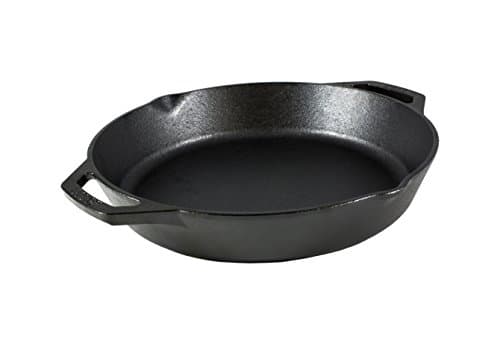
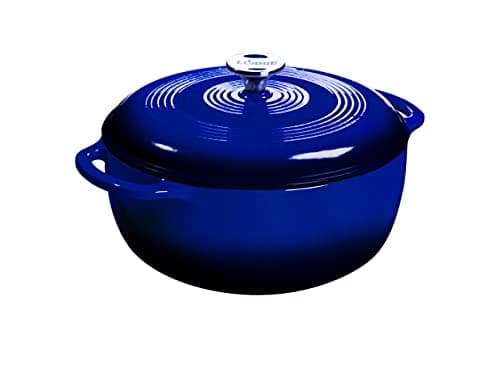
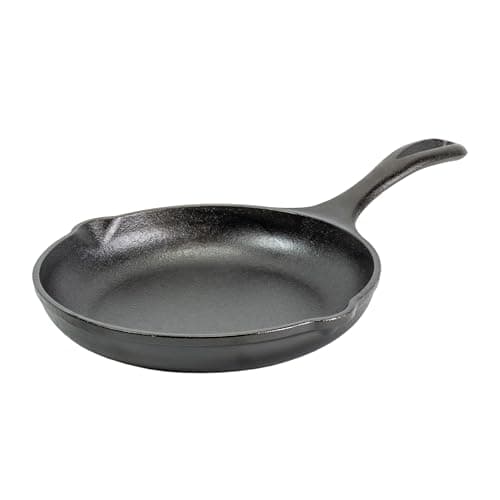
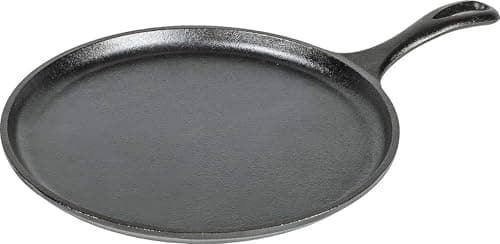
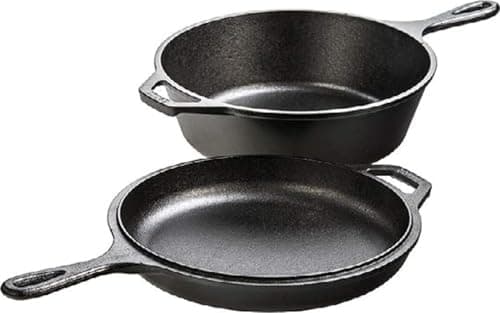
In a small kitchen the goal is not the most cast iron, it is the most versatilecast iron — a few pieces that each do several jobs. Our top pick is the Lodge combo cooker, because it is literally two pans in one: a shallow dutch oven whose deep lid is a full skillet. Add the 10.25-inch skillet as the do-everything pan, a small 3-quart enameled pot for braises and soups scaled to one or two, an 8-inch for eggs, and a flat round griddle for tortillas and pancakes. Five pieces, and between them you can cook almost anything without a cabinet full of single-use pans.
Cast iron is a natural fit for a small kitchen for a reason that is easy to miss: each piece replaces several. A skillet is a frying pan, a baking dish, a roasting pan and a searing pan; a dutch oven is a stockpot, a braiser, a fryer and a bread oven; a combo cooker is both at once. Because the pieces are oven-safe, broiler-safe and pretty enough to serve from, you do not need separate bakeware and serveware either. The trade is weight and the small ritual of seasoningand care, but for a space-constrained cook the versatility is exactly the point. The key is to choose pieces that overlap as little as possible — which is why this list favors a two-in-one combo cooker and a flat griddle over, say, three skillets of similar size.
Why these five
Each pick pulls its weight. The combo cooker covers bread, braising, frying and a second skillet in one stored piece. The 10.25-inch skillet is the pan you reach for daily. The 3-quart enameled pothandles soups and acidic braises scaled to a small household, with no seasoning to maintain — see the best small dutch ovens. The 8-inch skillet is the light everyday egg pan. And the flat round griddledoes tortillas, pancakes, quesadillas and grilled cheese without taking a drawer. Skip anything that duplicates these — a big 12-inch pan, a second pot — unless you have the space and the need.
Build up slowly, and skip the sets
In a small kitchen the biggest mistake is buying a boxed setto save money, then losing a whole cabinet to sizes you never reach for. Buy one versatile piece at a time and let your cooking tell you what to add next: almost everyone should start with the 10.25-inch skillet, then add the combo cooker if they bake or braise, the small pot if they make soup, and the griddle if they cook flatbreads and breakfast. If a piece has not earned its shelf in a month, it was the wrong buy. The reward for that discipline is a kitchen where five well-chosen cast iron pieces quietly do the work of a rack of single-use pans — and every one of them lasts a lifetime, so you buy them once and never again.
How to kit out a small kitchen with cast iron
Favor two-in-one pieces
A combo cooker is the small-kitchen hero because it stores as one piece and cooks as two. A reversible griddle, or a skillet you also bake and serve in, follows the same logic: buy the piece that does the most jobs per inch of shelf.
Buy one skillet, not a set
A boxed set is the enemy of a small kitchen — it fills a cabinet with sizes you rarely use. One 10.25-inch skillet does the work of most of a set; add an 8-inch only for eggs. See the best cast iron skillets.
Go enameled for the one pot
In a small kitchen you will not want to fuss, so make the pot the no-seasoning, dishwasher- easy enameled kind, in a small 3-quart size scaled to one or two. It braises, makes soup and bakes a small loaf without maintenance.
Mind the weight and the storage
Cast iron is heavy, so store it low and within easy reach, and keep a paper towel between stacked pans to protect the seasoning. A wall rack or a deep drawer keeps a few pieces accessible without cluttering limited counter space.