Lodge is the default recommendation across this entire site, and it is not close. It is cast in the same Tennessee town it has come from since 1896, it is nearly impossible to destroy, and it costs a small fraction of every boutique pan it beats on value. If you are buying your first cast-iron skillet or your first enameled dutch oven, buy a Lodge and put the savings toward groceries.
Most cookware "reviews" want to talk you into spending more. This one mostly wants to talk you out of it. There are pans on this site that are genuinely nicer than a Lodge — smoother, lighter, better-looking — and we say so plainly in the Stargazer and Field Companyreviews. But "nicer" and "worth the money for you" are different questions, and for the great majority of cooks the honest answer starts and ends with Lodge.
Why Lodge wins on value
Lodge has been pouring iron in South Pittsburg, Tennessee since 1896, which makes it the oldest surviving cast-iron manufacturer in the United States (Lodge's own history page walks through the timeline). In 2002 it became the first company to ship cookware pre-seasoned from the factory, which is the single reason a modern Lodge works the day it arrives instead of needing an afternoon of oven cycles first.
Scale is what makes the price possible. Because Lodge casts so much iron, a 10.25-inch skillet lands at a price that a small American foundry simply cannot match. You are not getting a worse pan for the money — you are getting a pan that does the physics of cast iron (store heat, release it slowly into a steak, hold a hard sear) exactly as well as pans that cost five to ten times more. The metallurgy does not care what the pan cost. For the mechanism behind that, the cast-iron cookware overview is a good primer.
The pebbly surface, honestly
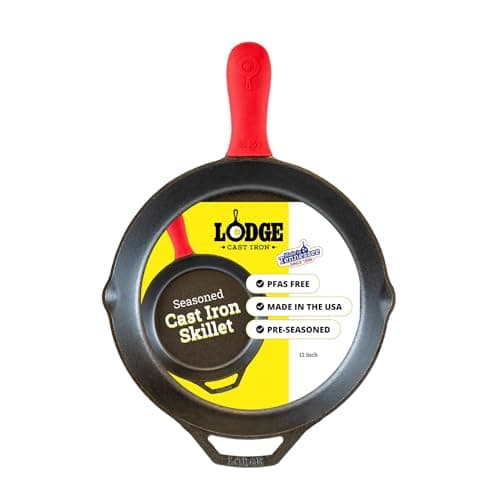
Here is the one real knock on a standard Lodge: the cooking surface is pebbly, not machined glass-smooth. Out of the box, a fried egg will grip it more than it would grip a Stargazer or a vintage Griswold. This is the thing boutique brands sell against, and it is a real difference on day one. If it is the reason you are shopping elsewhere, the pans that fix it (and the two complaints they do not) are ranked in the best Lodge alternatives.
It is also a difference that mostly disappears. Bare cast iron gets smoother and more non-stick as you use it, because every time you cook fat into a hot pan you lay down another microscopically thin layer of polymerized seasoning. A Lodge that has cooked bacon and cornbread for six months releases eggs cleanly. If you want that surface on day one instead of month six, that is a legitimate reason to spend more — and it is the whole argument of the Stargazer review. If you are willing to let the pan earn its slickness, the Lodge gets there for a tenth of the price. Our seasoning guide shows how to speed that break-in along.
The one accessory to add:the short helper handle on a Lodge stays hot and the main handle has no sleeve. A cheap silicone or leather handle cover turns the pan from "grab a towel" into "grab and go," and it is the first thing we would buy alongside the skillet.
Bare iron and enameled: Lodge does both well
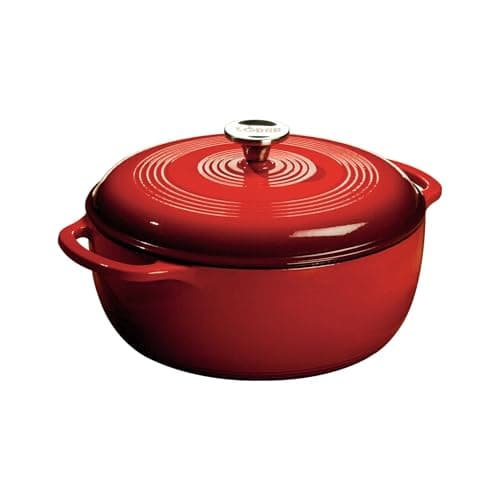
Lodge is the only brand on this site that is our top value pick in two very different categories. Its bare skillets are the beginner default, and its enameled dutch oven is our overall best-buy pot — it delivers roughly ninety percent of a French pot's finish for about a third of the money, which is why it wins the value argument in our enameled dutch oven guide. There is a third Lodge category worth knowing about, because it is quietly the broadest range the company makes: the flat and ridged pieces, laid out in Lodge cast iron griddles. And if you are choosing between Lodge's own three skillet lines rather than between brands, that is Classic vs Chef Collection vs Blacklock.
| Piece | Best for | Surface |
|---|
| 10.25" skillet | Your first pan — four eggs, two steaks, a cornbread | Bare, pebbly |
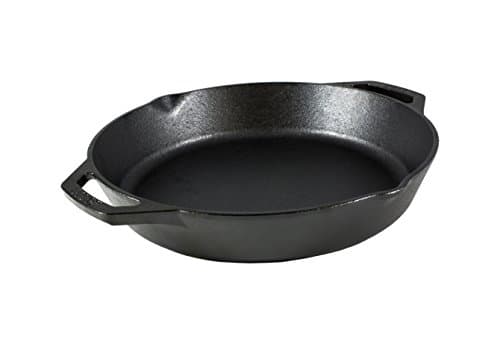
| 12" skillet | Family-size searing and shallow frying | Bare, pebbly |
| 6 qt enameled dutch oven | Braises, soups, no-knead bread, no seasoning needed | Enamel |
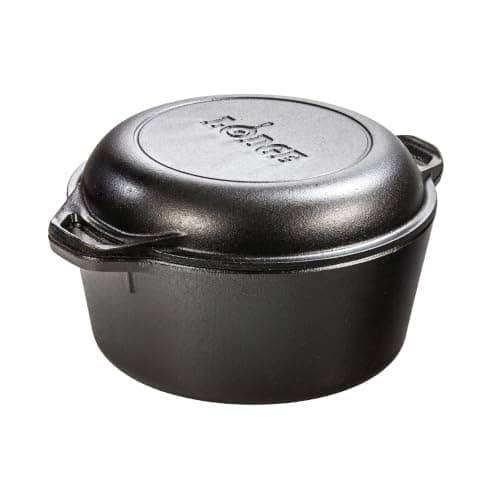
| 5 qt Double Dutch Oven | Bread and camping — the lid is a full skillet | Bare |
The Double Dutch Oven deserves a special mention: the lid is a 10.25-inch skillet, so you get two pans in one box, and the preheated pot with the skillet clapped on top is one of the best cheap sourdough vessels there is. If bread is your main goal, it competes directly with the picks in our best dutch ovens for sourdough guide.
Who should buy Lodge
- First-time cast-iron cooks.Start here. If the ritual sticks, you can always graduate to a smoother pan later — and if it does not, you are out very little.
- Anyone who prioritizes value.A Lodge is not the "budget compromise." It is a genuinely excellent pan that happens to be cheap.
- People who cook hard.High-heat searing, camping, oven-to-table, the occasional metal spatula — bare Lodge iron shrugs it all off.
When you are paying for something else
This review is where you go to avoid paying for a logo, so it is worth being clear about when it is reasonable to spend beyond a Lodge. You pay more for a machined-smooth surface on day one (Stargazer, Field), for a lighter pan that is easier on the wrist (both of those), for the heirloom object and lifetime warranty of a French enameled pot (the Le Creuset review covers exactly what that premium buys), or simply because you want a beautiful thing and that is allowed. What you do not pay more for is better cooking. On the food itself, the Lodge is already at the ceiling.
If you want to see the value argument laid out side by side against the most famous premium pot in the world, the Lodge vs Le Creuset guide is the head-to-head. Short version: buy the French pot for the reasons that are not about dinner.