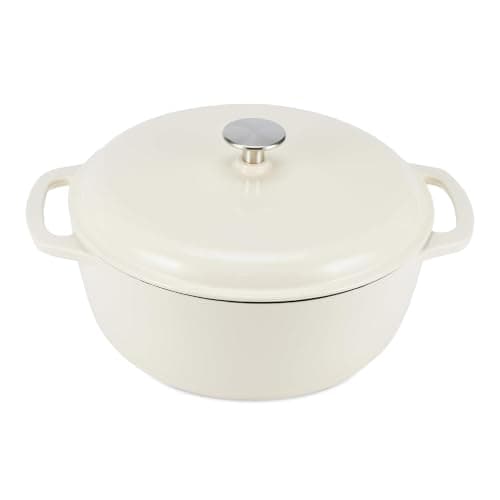
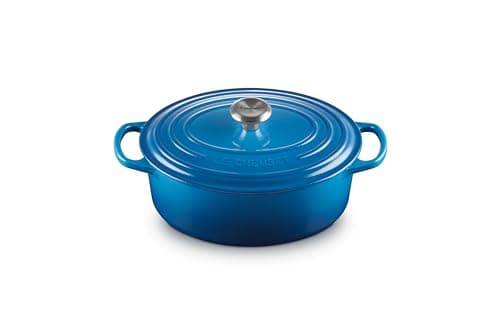
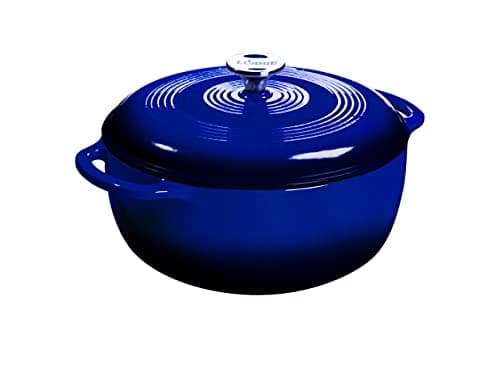
If you cook for one or two, a 5.5-quart pot is more than you need most nights, and a small 2-to-4-quart dutch oven is the one you will actually reach for. Our best-value pick is the 3-quart Lodge enameled — right-sized, with a 500°F knob that still bakes a small loaf of bread. The Amazon Basics 4-quart is the budget choice, and the Le Creuset 2.75-quart is the premium small pot if you want the French heirloom in a compact size. All three braise, bake and simmer just like their bigger siblings; they simply fit a smaller kitchen and a smaller dinner.
A dutch oven cooks well because of a heavy iron body that holds a low, even simmer and a tight lid that traps moisture, and that physics works the same at three quarts as at seven. What changes with size is capacity and weight. A small pot is lighter to lift, faster to heat, easier to store, and right for the scale of one or two servings — a braise for two, a small batch of soup, a single boule of bread, or a side dish alongside a bigger meal. The one thing it will not do is cook for a crowd, so if you regularly host or batch-cook, size up instead; our dutch oven size guide walks through matching capacity to your household.
Small does not mean compromised
A common worry is that a small pot is a lesser pot. It is not — the same enamel, the same heat retention, the same oven-safe build, just less of it. A small enameled dutch oven still turns a cheap, tough cut into a fork-tender braise, still bakes a bakery-grade small loaf, and still shrugs off an acidic tomato sauce that would strip a bare pan. The only real trade is capacity. If anything, a small pot is the more useful everyday size for a solo cook, because you are not heating and washing a giant pot to make dinner for one.
Where the price goes, even at small sizes
The price ladder holds at small sizes just as it does at large ones. A budget enameled pot cooks the meal; a Le Creuset adds a harder, more chip-resistant enamel, nicer hardware, a lifetime warranty and resale value — genuine things, but not better cooking. A small premium pot can actually feel like poor value on a per-quart basis, so buy the Le Creuset for the object and the warranty, and the Lodge or Amazon Basics for the meal. Our are expensive dutch ovens worth it guide breaks down exactly what the premium buys.
What a small dutch oven is great for
A small pot is not a compromise pot — it is the right tool for a whole set of jobs. It braises a couple of short ribs or a small pot roast without swimming them in a giant vessel; it makes a batch of soup or chili for two with leftovers, not for twelve; it bakes a single small boule of no-knead bread in a pot that actually fits the loaf; it steams rice, simmers a curry, or deep-fries a small batch safely because a 3-quart pot holds plenty of oil for one or two servings. For a solo cook or a couple, a small dutch oven often replaces both a saucepan and a stockpot for everyday cooking, which is exactly why it earns its place on the stove instead of in the cupboard.
When to size up instead
Be honest about how you cook before you buy small. If you regularly host, batch-cook for the freezer, make stock in volume, or braise large cuts like a whole pork shoulder or a big chicken, a small pot will frustrate you and you should buy a 5.5-to-6-quart potinstead — or, ideally, own both: a full-size pot for cooking ahead and entertaining, and a small one for the everyday dinner-for-two that a big pot makes into a chore. If you can only buy one and you sometimes cook for a crowd, size up; the big pot can cook small, but the small pot cannot cook big. Our size guide walks through matching capacity to your household in detail.
Caring for a small enameled pot
The good news with any of these picks is that an enameled pot asks almost nothing of you: there is no seasoning to build or protect, and the glass surface is nonreactive, so an acidic tomato or wine braise that would strip a bare pan is no problem at all. Wash it with soap and water — it is even dishwasher-safe, though hand-washing is kinder to the exterior color over the years — and it is ready for the next meal. The two things that actually harm enamel are impact and thermal shock, and both are easy to avoid: use wood or silicone tools rather than banging metal against the rim, and let a hot pot cool a little before it meets cold water so the enamel does not craze. The light interior will stain to a tea-brown over time, which looks like damage but is not — it wipes back with a little baking soda, as our enameled stain guide explains, and if it ever chips, our chipped-enamel guide covers what to do. Treated with that light touch, a small enameled pot is genuinely a buy-it-for-life piece, small size and all.
How to choose a small dutch oven
Size: how small is small
A 2-to-3-quart pot suits one person and light cooking; a 3.5-to-4-quart pot handles two people comfortably and a small family in a pinch. Below two quarts you are into single-serve territory that a saucepan often covers. For most one-or-two-person households, a 3-to-4-quart pot is the sweet spot.
Check the knob if you bake bread
A small dutch oven bakes a lovely small boule, but no-knead bread wants a hot oven, so check the lid knob's heat rating — a 500°F rating rules the pot in for high-heat bread, while some budget knobs cap lower. For bread specifically, see the best dutch ovens for sourdough.
Enameled is the easy choice
For a small everyday pot, enameled is the smart pick: no seasoning, nonreactive so acidic braises are fine, and dishwasher-easy. All three picks here are enameled. If you want to understand the alternative, our enameled vs bare guide covers it.
Round for versatility
A round small pot heats evenly and suits bread and most cooking; an oval is a niche shape better for a small roast but less even on the burner. For a first small pot, round is the more versatile choice — see round vs oval.