Cleaning cast iron takes about two minutes and, yes, you can use dish soap. Rinse the warm pan under hot water, scrub with a brush or a chainmail pad, dry it completely - ideally on a warm burner - and wipe a few drops of oil over the surface. The only real rule is this: never leave it wet.
First, the soap myth - because it stops people cleaning properly
"Never use soap on cast iron" is the most repeated piece of bad advice in the kitchen, and it comes from a real place. A century ago, household soap was lye soap - harsh, alkaline, and made to dissolve fat. That kind of soap really could strip seasoning, because it saponifies and lifts away oils.
Modern dish soap is a mild detergent, and it is a different animal. More to the point, cured seasoning is not grease - it is a polymerized layer bonded to the iron, chemically closer to a hard varnish than to the oil in the bottle. A squirt of Dawn cannot dissolve it any more than it can dissolve the finish on a hardwood floor. Cooks far more obsessive than we are have said the same for years - Serious Eats put the soap myth at the top of its cast iron myth list. Use soap if you want to, especially after cooking fish or anything strong-smelling. It is fine.
The everyday method, step by step
- Clean it while it is still warm. Food lifts off a warm pan far more easily than a cold one, where fat has congealed. Do not plunge a screaming-hot pan into cold water, though - that risks warping. Let it come down to warm.
- Rinse under hot water and scrub. Use a stiff brush or a chainmail pad. A drop of dish soap is welcome. Most meals need nothing more than this.
- For stuck-on food, loosen it - do not gouge it. Add an inch of water and simmer for a minute or two to soften the residue, or work a chainmail pad over it. A pan scraper handles crusty edges. There is no need to attack the pan.
- Never soak it, and never use the dishwasher. Standing water and dishwasher detergent are what actually harm cast iron - they cause rust and can strip a young coat. This, not soap, is the real rule.
- Dry it completely, right away. Towel it off, then set it on a burner over low heat for a minute until every trace of moisture is gone. A pan that air-dries in the rack can flash-rust overnight.
- Wipe on a thin coat of oil. A few drops of neutral oil buffed over the warm, dry cooking surface until it looks dry protects the pan and quietly deepens the seasoning.
The rust warning that matters: the fastest way to damage cast iron is to leave it wet. A pan left to drip-dry, soaked in the sink, or run through the dishwasher can grow a film of surface rust within hours. Dry on heat, every time, and rust never gets started.
The three tools that make it effortless
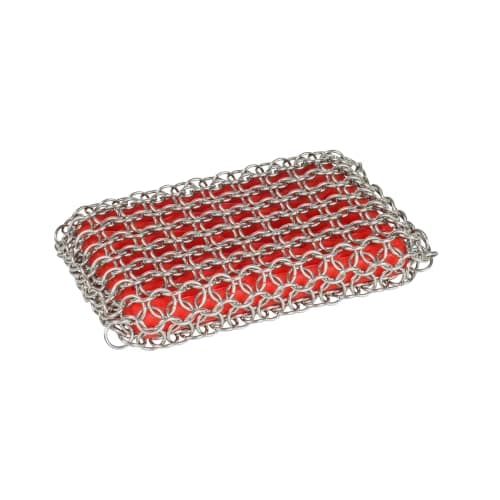
You do not need any gear to clean cast iron - hot water and a little muscle are enough. But three inexpensive tools genuinely help, and they are ranked above by how much difference they make. The Lodge Chainmail Scrubbing Pad is the one to own first: a mat of stainless rings that shears off stuck-on food and even light surface rust while leaving cured seasoning behind. It is the tool that rescues the pan you forgot overnight, which is why it earns our Best Cleaning Tool pick.
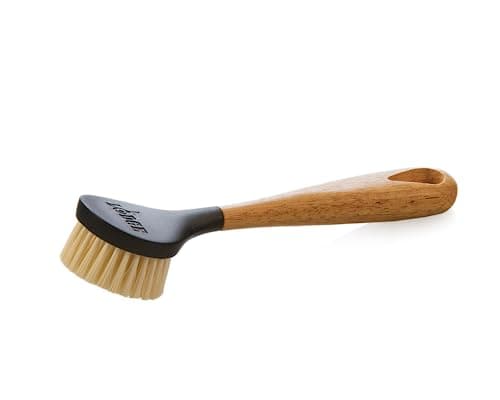
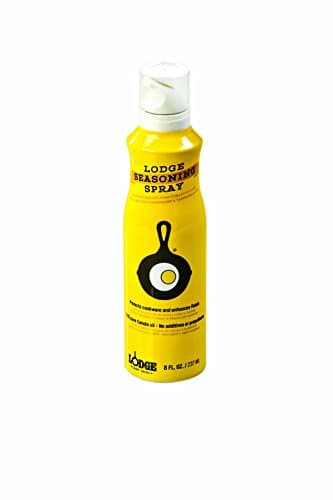
For daily use, the softer Lodge Cast Iron Scrub Brush is gentler and keeps your hand clear of hot water. And the Lodge Cast Iron Seasoning Spray (Canola Oil) is not really a cleaner at all - it is a convenient way to lay down the thin maintenance oil coat from step six, though a paper towel and any neutral oil you already own do exactly the same job for free.
How to choose a cast iron cleaning tool
The right tool depends entirely on how dirty the pan gets and how well you keep up with it. Match the tool to the mess:
| Situation | Reach for | Why |
|---|
| Everyday, cleaned promptly | Scrub brush | Stiff enough to lift food, gentle on the seasoning |
| Stuck-on food or a neglected pan | Chainmail pad | Shears off residue and light rust without gouging |
| Crusty, carbonized edges | Pan scraper | A hard plastic edge pops off baked-on carbon |
| The final oil wipe | Seasoning spray or a paper towel | Lays down a thin, even maintenance coat |
What to skip
- The dishwasher and long soaks. Both cause rust. This is the actual rule people should be shouting, instead of the one about soap.
- Heavy-handed steel wool on a good pan.It works for rust rescue, but on a well-seasoned everyday pan it strips the coat you worked to build. Save it for restoration — chainmail vs steel wool sets out which tool belongs on which job.
- Oven self-clean cycles. The extreme heat burns seasoning off entirely - only useful if you are deliberately stripping a pan to start over.
Clean it warm, dry it hot, oil it thin. Do that and your pan gets better every week. If a wash ever does dull the surface, a quick re-season puts it right.