Here is the short version: of the ten problems people bring to cast iron, eight are heat, oil or drying habits and cost nothing to fix on the pan in your cupboard. Only two — weight and a rough as-cast cooking surface — are properties of the pan itself, and those are the only two where buying a different skillet is a rational answer. If you are here because a pan is sticking, rusting, tacky, flaking or smoking, you do not need a new pan. You need one of the eight fixes below.
The reason cast iron generates so many complaints relative to, say, a stainless pan is that it has a working surface you maintain rather than one that arrives finished. Seasoning is a stick-resistant coating created by polymerized oils and fats — a layer you build, degrade and rebuild. Nearly every “problem” below is that layer, or the heat you applied to it, behaving exactly as physics says it should.
1. Food sticks
Cause: almost always an under-heated pan, not a bad pan. Cast iron conducts heat slowly, so it needs several minutes over medium to become evenly hot; food dropped onto a half-heated surface bonds to it. The second cause is a thin or new seasoning, especially on the pebbly as-cast surface of a budget pan.
Fix: preheat for four to five minutes over medium, add fat, wait until it shimmers, then add food and leave it alone until it releases on its own. Eggs and fish want more fat than you think. The full diagnosis is in why food sticks to cast iron, how to preheat cast iron and how to cook eggs in cast iron. And note the expectation problem: a cast iron pan is stick-resistant, not nonstick — see is cast iron non-stick.
2. The pan is sticky or tacky to the touch
Cause: too much oil, or not enough heat, at seasoning time. A thick film of oil cannot fully polymerize; the surface sets while the oil underneath stays soft, and you get varnish instead of seasoning.
Fix:wipe the pan with oil, then wipe it off again as though you made a mistake — what is left is the right amount — and bake it past the oil's smoke point. Lodge's own seasoning method is the thin-coat, high-heat one. Step by step: why is my cast iron sticky and how to season cast iron.
3. Rust
Cause: iron oxide needs water and oxygen. A pan put away damp, left in the sink, or stored in a humid cupboard with a lid trapping moisture will rust. It is chemistry, not neglect, and it is not fatal.
Fix:scour the rust off, re-season immediately in the same session, and change the drying habit — dry on the burner, not on a towel, then wipe a trace of oil in while the pan is warm, which is exactly what Lodge instructs. See remove rust from cast iron, how to keep it from rusting and is rusty cast iron safe to use (it generally is, once cleaned).
4. The seasoning is flaking or peeling
Cause:seasoning built up too thick, too fast, in layers that never bonded to each other — or a pan that went through a self-clean cycle or a very high-heat empty preheat. Thick seasoning behaves like old paint: it comes away in sheets.
Fix: do not panic and do not throw the pan away. Scrub the loose material off, cook in it, and rebuild in thin coats. If most of the surface is going, strip it back to bare metal and start over. Both paths are in why cast iron seasoning flakes and how to strip cast iron seasoning. Black specks coming off on a paper towel are usually just loose seasoning — is black residue on cast iron safe covers it.
5. Hot spots and uneven cooking
Cause: this one is genuinely the material. Cast iron's thermal conductivity is low — far below aluminum or copper — so heat spreads sideways through the iron slowly and the metal directly over the burner runs hotter than the rim. Its thermal mass is the compensation: once the whole pan is hot, it stays hot.
Fix: preheat longer than feels necessary and, on a small burner under a large pan, rotate the skillet a quarter turn once or twice while it heats. Our why does cast iron heat unevenly page has the numbers. This is also the one complaint where a different material is the answer: see cast iron vs carbon steel and cast iron vs stainless steel.
6. A metallic taste, or a sauce that turns gray
Cause: a long, wet, acidic cook on a bare or thinly seasoned pan. Food acids break through the seasoning and dissolve a little iron into the food. It is harmless — the amount is dietary iron, as the health-effects research measures in detail — but it tastes tinny and it costs you seasoning.
Fix: keep acidic cooking short in bare iron, and use enameled cast iron for long tomato or wine braises. See can you cook tomato sauce in cast iron, and does cast iron add iron to your food if you want the measured figures (and the one group who should avoid the effect).
7. It smokes, and the kitchen alarm goes off
Cause: the pan is above the smoke point of whatever is on it — often the oil you seasoned with rather than the oil you are cooking in, or residue burning off.
Fix: drop the heat (searing does not need maximum), use a higher smoke-point fat, start with a dry food surface, and run real extraction. Both why does my cast iron smoke and how to sear steak without smoke go through it, and the best oil for seasoning cast iron covers which fat to use.
8. Burnt-on food you cannot shift
Cause: sugar, dairy or a sauce left to carbonize, usually in a pan that went cold before it was cleaned.
Fix:hot water while the pan is still warm, a stiff brush, then chainmail for the stubborn film — and a plastic scraper for one welded patch. Soap is fine — the soap-ruins-seasoning myth belongs to the lye-soap era, not to modern dish detergent, and we take it apart with sources in can you use soap on cast iron. What to use and what to keep away from the pan is in chainmail vs steel wool and how to clean burnt cast iron.
9. It is too heavy
Cause:the pan. This is the first of the two complaints money can fix. Modern cast iron is cast thicker than pre-war iron, and a 12-inch skillet full of food is a two-handed lift for a lot of people — the single commonest reason a cast iron pan ends up at the back of a cupboard.
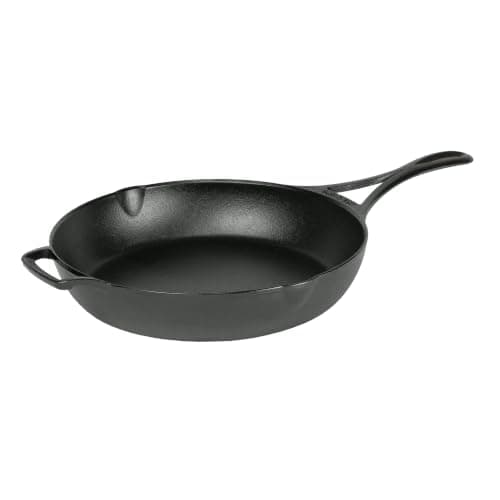
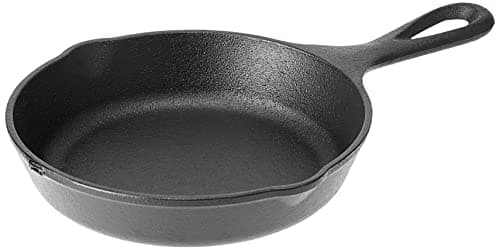
Fix:buy down in size or up in refinement. A 10.25-inch pan at a listed 5.66 lb is manageable for most people; Lodge's 6.5-inch is 1.94 lb and still a real cooking pan; and Lodge engineers the Blacklock line to be lighter than its traditional iron. The whole field ranked on the makers' own published weights is in the best lightweight cast iron skillets, and the best small skillets covers sizing down.
10. The handle is scalding, and other design annoyances
Cause: a short cast handle conducts stove heat straight into your hand, and a one-piece casting has no insulation anywhere. Also in this bucket: a rough surface that takes months to slick up, and a pan too wide for a small cooktop.
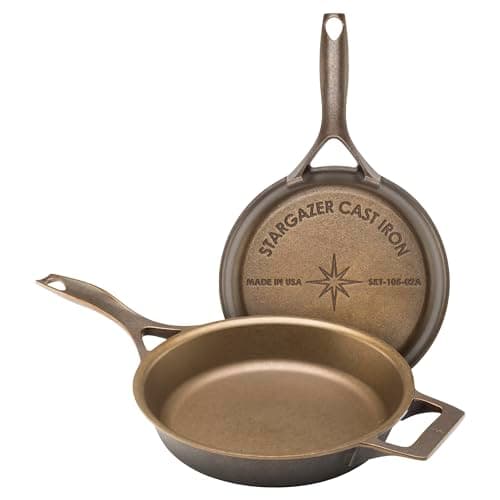
Fix:a silicone handle holder costs a few dollars and solves it permanently — see the accessories worth owning. If you would rather buy the problem away, the boutique smiths machine their interiors and design longer, cooler handles: Stargazer publishes a CNC-machined interior and a stay-cooler handle, which is why it is on the shortlist above. Smooth vs rough cast iron is honest about how much that is worth once seasoning has built up.
When buying a different pan is the right answer
We would rather tell you to fix the pan you own, because that is usually true. But there are four situations where the money is well spent, and the picks above map onto them one for one.
You cannot comfortably lift it
No technique fixes mass. If your pan is a 12-inch and your wrists object, move to a 10.25-inch, or to a 6.5-inch for one person, or to the lighter Blacklock casting. Do not “get used to it” — a pan you dread lifting is a pan you stop using, and the cheapest cast iron in this category is still only worth what you cook in it.
You are three months in and food still sticks
At that point either the seasoning is not building (too much oil, not enough heat — go back to problem 2) or you genuinely dislike the as-cast texture. A machined interior sidesteps the break-in entirely: it releases food earlier in the pan's life because there is less texture to key into. That is a real benefit for the first months and a shrinking one afterwards, which is why the smooth skillet roundup and Backcountry Iron vs Lodge both tell you to weigh it against weight and price rather than treating it as an upgrade in every respect.
Your cooktop is the constraint
On a glass-ceramic top the rule is to lift rather than slide the pan — Field Company's own guidance is “Do NOT shuffle or slide” — which makes a lighter pan genuinely safer, not just nicer. On induction you want a flat base and a diameter that matches the hob. Both cases are worked through in best cast iron for glass-top and electric stoves and best cast iron for induction.
You want to stop maintaining a surface altogether
Then bare cast iron is the wrong tool and we will say so. Enameled cast iron has no seasoning to build, strip or worry about — it just cannot sear or release like a seasoned pan. Enameled vs bare cast iron and the best enameled skillet lay out that trade, and cast iron vs nonstick handles the other obvious alternative.
What not to buy because of a problem
Do not buy a “pre-seasoned nonstick” cast iron pan — the two surfaces are different things and a coating cannot be rebuilt. Do not buy a second pan to avoid re-seasoning the first. And do not buy a $200 skillet to solve sticking without first fixing your preheat, because the $200 pan sticks too when it is cold. If you are shopping rather than troubleshooting, start from how to choose a cast iron skillet or the ranked best cast iron skillets.