Skip to content
Hearth & Patina

Guides & Comparisons

The Best Carbon Steel Skillets

Cast iron's lighter, quicker cousin - it seasons the same way, sears almost as hard, and flips like a restaurant pan. Here is the one to buy, and who should skip it.

By Stephen V.Updated How we research
#ad

We earn a commission when you buy through our Amazon links, at no extra cost to you. It never affects our rankings, and we say so when the cheaper pan is the better buy. How this works.

For most people the pan to buy is the De Buyer Mineral B in the 10.25-inch size: French-made, thick enough to sear hard, and it seasons into a slick, near-nonstick surface with a few weeks of cooking. Serious and professional cooks lean toward the Matfer Bourgeat; if you want a lighter, quicker pan pick De Buyer's thinner Blue steel; the Merten & Storck is the cheap way in; and the Mauviel M'Steel is the one to buy if you cook on induction. What no carbon steel pan does is beat cast iron on sheer heat retention — that is the trade you are making for a lighter, more responsive pan.

Carbon steel is cast iron's close cousin. It is an iron-and-carbon alloy pressed or spun into a thinner pan, so it seasons exactly the way cast iron does — thin coats of oil polymerized by heat into a bonded, slick, naturally nonstick film — but it weighs less and changes temperature faster. That is the whole personality of the material: less thermal mass than a heavy cast-iron skillet, so it is quicker to heat, quicker to cool when you pull it off the flame, and light enough to flip and toss one-handed. It still gets screaming hot and lays down a beautiful Maillard sear. If you are still deciding between the two materials, read cast iron vs carbon steel first — this page is for people who have already decided they want carbon steel and just need to know which one to buy.

Who carbon steel is for

Buy carbon steel if you want the searing power and lifetime durability of cast iron in a pan you can lift, swirl and flip like a professional line cook — for omelettes, crepes, stir-fries, quick sautes and searing steaks and fish. It is the everyday pan of French and restaurant kitchens for exactly that reason. It is the wrong pan if you want something nonstick out of the box, dishwasher-safe, or a heavy slab that holds a low, steady heat for a long cornbread bake — that is what a cast-iron skillet does better. And like all bare iron, carbon steel is reactive: it dislikes long, acidic tomato simmers and will rust if you leave it wet.

The French-brand reality

You will notice the list is dominated by French makers — De Buyer, Matfer Bourgeat, Mauviel. That is not favoritism; carbon steel is a European kitchen staple, and those foundries have made these pans for professional cooks for decades, so they are simply the best and most available options. The one budget pick that earns its place is the Merten & Storck, which ships pre-seasoned and costs about what a Lodge cast-iron skillet does. We looked for an American Lodge carbon-steel skillet to include, but could not confirm a reliable first-party Amazon listing at the time of writing, so we have left it off rather than point you at a listing we cannot stand behind.

The one job to do before you cook: season it

Every pan here needs seasoning to become nonstick, and two of them need a step first. The De Buyer pans arrive under a food-safe beeswax coating you scrub off with hot water before the first season; the Matfer and Mauviel ship bare and go straight to seasoning. The method is identical to cast iron — thin coats of oil, heated past the smoke point, repeated a few times — and it is laid out in how to season cast iron. Skip this and food will stick and the pan will look blotchy; do it and within a few weeks of normal cooking you will have a dark, slick, egg-releasing surface.

What carbon steel is not good at

Two honest limitations, and they are the same ones bare cast iron has. First, acidic food: a long simmer of tomato sauce, wine or citrus will strip the seasoning and can pick up a metallic taste, so keep those to an enameled pot — a quick pan-sauce deglaze is fine, an hour-long tomato braise is not. Second, water and neglect: leave a carbon-steel pan wet or soaking in the sink and it rusts, exactly like cast iron. Neither is a flaw so much as the price of a bare-metal pan that seasons and lasts forever. If either sounds like a dealbreaker, an enameled dutch oven or a stainless pan is the more forgiving tool, and our cast iron vs stainless steel guide lays out that trade.

The short answer

Quick picks

#ProductBest forScorePrice
01
De Buyer De Buyer Mineral B Carbon Steel Fry Pan (10.25")
De Buyer Mineral B Carbon Steel Fry Pan (10.25")

The enthusiast default: French-made, beeswax-finished carbon steel that seasons into a slick, near-nonstick pan.

The all-round best carbon steel pan
8.2
$89.00Amazon
02
Matfer Bourgeat Matfer Bourgeat Black Carbon Steel Fry Pan (11 5/8")
Matfer Bourgeat Black Carbon Steel Fry Pan (11 5/8")

The restaurant-kitchen standard — a single sheet of French carbon steel that professionals swear by.

Serious and pro cooks
8.0
$113.00Amazon
03
De Buyer De Buyer Blue Carbon Steel Fry Pan (10.25")
De Buyer Blue Carbon Steel Fry Pan (10.25")

De Buyer's thinner, blued-steel pan — lighter and more responsive than the Mineral B, if you value agility over mass.

A lighter, more responsive pan
8.0
$75.00Amazon
04
Merten & Storck Merten & Storck 12" Pre-Seasoned Carbon Steel Fry Pan
Merten & Storck 12" Pre-Seasoned Carbon Steel Fry Pan

The cheap way into carbon steel — pre-seasoned, big, and priced like a Lodge. Not heirloom, but honest.

The budget pick
7.6
$59.99Amazon
05
Mauviel Mauviel M'Steel Carbon Steel Fry Pan (11")
Mauviel M'Steel Carbon Steel Fry Pan (11")

A French carbon steel pan built for every cooktop — including induction — with a classic riveted iron handle.

Induction and all cooktops
7.6
$120.00Amazon

#ad · Live prices from the Amazon Product API, as of Jul 30, 2026. Where we have no verified live price, we show none — we would rather leave a gap than print a number that has gone stale.

In detail

The picks, in full

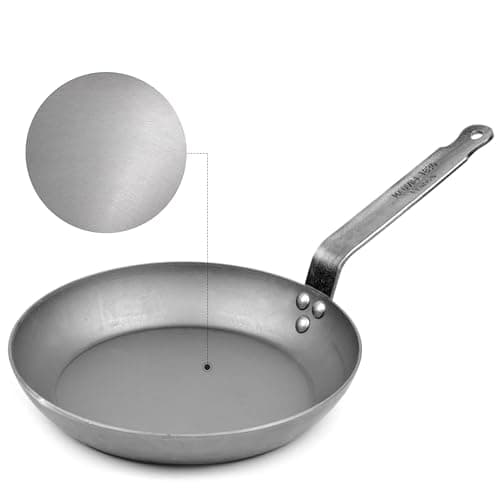
01
De Buyer De Buyer Mineral B Carbon Steel Fry Pan (10.25")

The all-round best carbon steel pan

De Buyer Mineral B Carbon Steel Fry Pan (10.25")

10.25 in / 7.3 in cook~3 mm steelBeeswax finishMade in France
8.2/10

The enthusiast default: French-made, beeswax-finished carbon steel that seasons into a slick, near-nonstick pan.

Heat retention
7
Cooking surface
9
Handling
8
Versatility
9
Value
8

Pros

  • Thick, even 3 mm steel takes a hard sear and holds heat better than most carbon steel
  • Seasons beautifully into a slick, egg-releasing surface with a few weeks of use
  • Iconic French build, oven-safe, and the 10.25-inch is the most useful single size

Cons

  • Ships with a beeswax protective coating you must scrub off and then season before first use
  • Heavy for its size and the steel handle gets hot — not a light toss-and-flip pan out of the box

Don't buy this if…

you want nonstick out of the box or a dishwasher pan. Carbon steel is reactive and must be seasoned and hand-dried like cast iron — see our cast iron vs carbon steel guide first.

$89.00View on Amazon

$105.0015% off

Price as of Jul 30, 2026. Prices change — Amazon's is the one that counts.

#ad · we may earn a commission from this link to De Buyer Mineral B Carbon Steel Fry Pan (10.25")

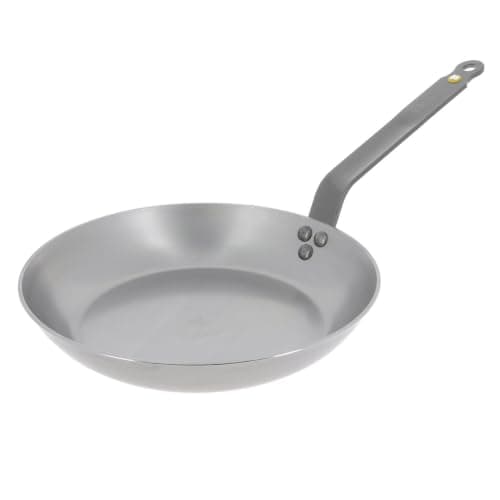
02
Matfer Bourgeat Matfer Bourgeat Black Carbon Steel Fry Pan (11 5/8")

Serious and pro cooks

Matfer Bourgeat Black Carbon Steel Fry Pan (11 5/8")

11 5/8 inCarbon steelMade in FrancePro favorite
8.0/10

The restaurant-kitchen standard — a single sheet of French carbon steel that professionals swear by.

Heat retention
7
Cooking surface
9
Handling
7
Versatility
9
Value
8

Pros

  • The pan professional kitchens actually reach for — even heat and a hard, clean sear
  • Sloped sides flip, toss and slide food out easily once the pan is seasoned
  • Simple, near-indestructible one-piece build that will outlast most cookware

Cons

  • Ships raw and must be seasoned before first use — more up-front fuss than a coated De Buyer
  • The riveted steel handle gets hot and its straight shape is not the most comfortable

Don't buy this if…

you want a pan that is ready to cook out of the box. Matfer rewards a cook who will season it properly; if that sounds like a chore, a pre-seasoned pan is friendlier.

$113.00View on Amazon

Price as of Jul 30, 2026. Prices change — Amazon's is the one that counts.

#ad · we may earn a commission from this link to Matfer Bourgeat Black Carbon Steel Fry Pan (11 5/8")

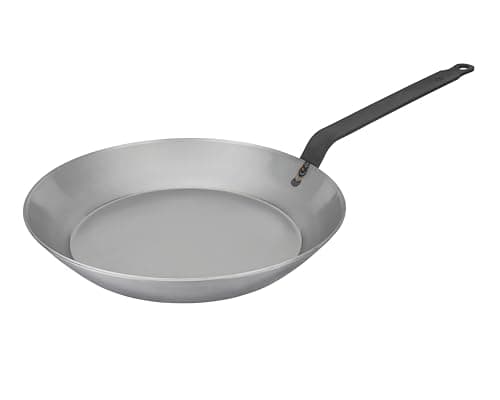
03
De Buyer De Buyer Blue Carbon Steel Fry Pan (10.25")

A lighter, more responsive pan

De Buyer Blue Carbon Steel Fry Pan (10.25")

10.25 in / 7.3 in cook2 mm steelBlued finishMade in France
8.0/10

De Buyer's thinner, blued-steel pan — lighter and more responsive than the Mineral B, if you value agility over mass.

Heat retention
6
Cooking surface
9
Handling
9
Versatility
8
Value
8

Pros

  • Thinner 2 mm steel heats fast and responds quickly, closer to a French omelette pan
  • Noticeably lighter than the 3 mm Mineral B, so it is easier to lift and toss
  • The blued (heat-treated) finish gives it a small head start on seasoning

Cons

  • Less thermal mass than the Mineral B, so it sears a touch less hard and drops temperature faster when cold food lands
  • Still bare carbon steel — it needs seasoning and hand-drying, and will rust if left wet

Don't buy this if…

you mostly do hard steak sears and want maximum heat retention. The thicker Mineral B holds temperature better; the Blue is for eggs, crepes and quick sautes.

$75.00View on Amazon

Price as of Jul 30, 2026. Prices change — Amazon's is the one that counts.

#ad · we may earn a commission from this link to De Buyer Blue Carbon Steel Fry Pan (10.25")

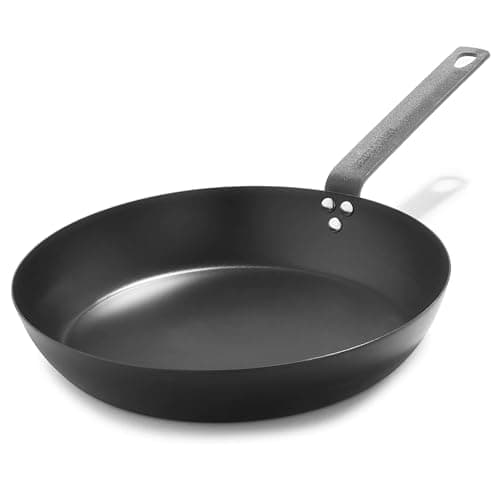
04
Merten & Storck Merten & Storck 12" Pre-Seasoned Carbon Steel Fry Pan

The budget pick

Merten & Storck 12" Pre-Seasoned Carbon Steel Fry Pan

12 inPre-seasonedOven safeBudget pick
7.6/10

The cheap way into carbon steel — pre-seasoned, big, and priced like a Lodge. Not heirloom, but honest.

Heat retention
6
Cooking surface
7
Handling
8
Versatility
8
Value
9

Pros

  • The cheapest legitimate carbon steel pan — a low-risk way to find out if you like the material
  • Ships pre-seasoned, so it works sooner than a raw French pan
  • A big 12-inch cooking surface for the money

Cons

  • Thinner, lighter build with less even heat than a French pan of the same size
  • Casting and finish are a clear step below De Buyer or Matfer; a less refined handle

Don't buy this if…

you want a lifetime heirloom or the most even heat. This is a low-risk way to try carbon steel; the French pans are the ones you keep for decades.

$59.99View on Amazon

Price as of Jul 30, 2026. Prices change — Amazon's is the one that counts.

#ad · we may earn a commission from this link to Merten & Storck 12" Pre-Seasoned Carbon Steel Fry Pan

05
Mauviel Mauviel M'Steel Carbon Steel Fry Pan (11")

Induction and all cooktops

Mauviel M'Steel Carbon Steel Fry Pan (11")

11 inAll cooktops incl. inductionIron handleMade in France
7.6/10

A French carbon steel pan built for every cooktop — including induction — with a classic riveted iron handle.

Heat retention
7
Cooking surface
8
Handling
7
Versatility
9
Value
7

Pros

  • Works on every surface, induction included, where some pans need checking first
  • Classic French build with even heat and a hard sear once seasoned
  • Seasons into a slick, durable, genuinely long-lived surface

Cons

  • Ships raw and needs seasoning before first use, like most French carbon steel
  • The iron handle heats up and the pan sits at the top of the everyday carbon-steel price range

Don't buy this if…

you cook on gas or electric and do not need induction compatibility — a De Buyer or Matfer gets you the same cooking for a little less.

$120.00View on Amazon

Price as of Jul 30, 2026. Prices change — Amazon's is the one that counts.

#ad · we may earn a commission from this link to Mauviel M'Steel Carbon Steel Fry Pan (11")

How to choose a carbon steel skillet

Thickness: mass versus responsiveness

This is the real decision. A thicker pan (around 3 mm, like the De Buyer Mineral B or Matfer) holds more heat, so it sears harder and recovers faster when cold steak hits it. A thinner pan (around 2 mm, like the De Buyer Blue) heats and responds faster and weighs less, which is what you want for eggs, crepes and quick sautes, at the cost of a little searing punch. Neither is "better" — match it to whether you sear big proteins or cook quick and delicate.

Size: 10 to 12 inches is the sweet spot

A 10-to-11-inch pan is the most useful single carbon-steel skillet: big enough for two steaks or a family omelette, light enough to toss. Go to 12 inches only if you routinely cook for a crowd and can handle the extra weight and diameter, and remember carbon steel pans quote a cooking-surface size that is a couple of inches smaller than the rim measurement, because the walls flare.

Pre-seasoned or raw?

A pre-seasoned pan (the Merten & Storck here) works sooner but still benefits from building your own seasoning on top. A raw or beeswax-coated pan (the De Buyer and Matfer) asks for an hour of setup up front and rewards you with a surface you built and understand. If you are new to bare-metal cookware, pre-seasoned is the gentler start.

Handles get hot

Carbon steel handles are steel or iron and conduct heat, so they get hot on the stovetop and in the oven — a cloth or handle sleeve is close to essential. This is the everyday trade for an all-metal pan that is oven-safe to any temperature and effectively indestructible.

Cooktop compatibility, including induction

Carbon steel is magnetic, so it works on induction — but a warped or very thin pan can rattle or heat unevenly on an induction hob. If induction is your cooktop, the Mauviel M'Steel is explicitly built for all surfaces and is the safe choice; the others generally work well too.

Care: treat it like cast iron

Cook, rinse hot, dry on the burner, wipe a whisker of oil. Do not leave it wet, do not run it through the dishwasher, and keep long acidic tomato braises to an enameled pot. Do that and a carbon-steel pan outlives you and gets better every year — the full routine in how to clean cast iron applies unchanged.

What you will pay

Carbon steel sits above a basic cast-iron skillet but well below boutique iron. The budget pre-seasoned pan lands around the price of a Lodge cast-iron skillet; the French classics from De Buyer, Matfer and Mauviel run into the mid-range, roughly two to three times that; and multi-piece sets or the thickest pro pans climb higher still. The good news mirrors cast iron: the cooking performance does not scale with the price the way it does with nonstick. A mid-priced French pan is close to the ceiling of what carbon steel can do, and the budget pan is a genuine way in — we show the live price on each pick so you can see exactly where each one sits today rather than trusting a number that has gone stale.
How we picked

We do not run a testing lab

We researched published manufacturer specifications, materials and thermal properties, and aggregated owner reviews, then scored each pan against a published rubric. The scores are judgments from documented research — they are notmeasurements we took, because we do not have a lab and we are not going to pretend we do. Where a number came from a manufacturer's spec sheet or someone else's lab, we name it in Sources.

Questions

Frequently asked

What is the best carbon steel skillet for most people?
The De Buyer Mineral B in the 10.25-inch size. It is thick enough to sear hard, seasons into a slick surface, is the most useful single size, and comes from the maker most home cooks and pros trust. Step up to a Matfer Bourgeat if you want the classic restaurant pan, or down to the Merten & Storck to try carbon steel cheaply.
Is carbon steel better than cast iron?
Neither is better; they are different tools. Carbon steel is lighter and more responsive — great for eggs, flipping and quick sautes — while cast iron holds more heat for a harder, steadier sear and long low bakes. Both season the same way and last a lifetime. The full breakdown is in cast iron vs carbon steel.
Do you have to season carbon steel?
Yes. Carbon steel arrives raw (or under a beeswax coating you remove) and only becomes nonstick once you season it — thin coats of oil polymerized by heat, exactly like cast iron. The method is in how to season cast iron. Skip it and food sticks; do it and the pan gets slicker every time you cook.
Is a carbon steel skillet good for eggs?
Once it is well seasoned, yes — carbon steel is a classic omelette and fried-egg pan in French kitchens. A thinner pan like the De Buyer Blue is especially good for eggs and crepes because it heats evenly and responds fast. Before it is seasoned, though, eggs will stick, so build the seasoning first.
What size carbon steel pan should I buy?
A 10-to-11-inch pan is the best single size for most cooks — enough room for two steaks or a family omelette, light enough to toss. Size up to 12 inches only if you cook for a crowd. Remember the usable cooking surface is a couple of inches smaller than the rim, because the sides flare.
Does carbon steel work on induction?
Yes — carbon steel is magnetic and works on induction cooktops. A very thin or warped pan can heat unevenly, so if induction is your only cooktop the Mauviel M'Steel, which is built for every surface, is the safest pick here.

Keep reading

Receipts

Sources

We do not run a testing lab, and we do not pretend to. Where a measured number came from a manufacturer's spec sheet or someone else's lab, we name them and link them. Where we could not verify something, we say so on the page rather than quietly leaving it out. Read our full method.