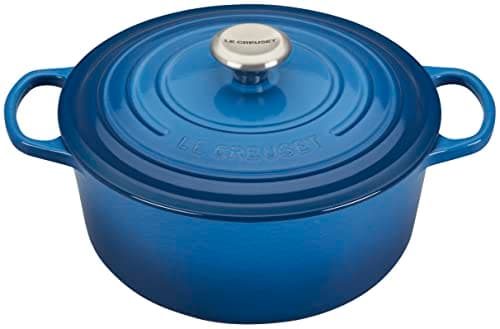
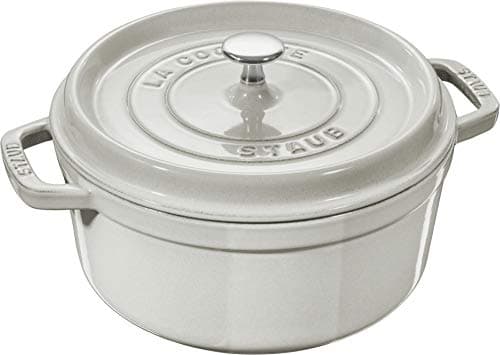
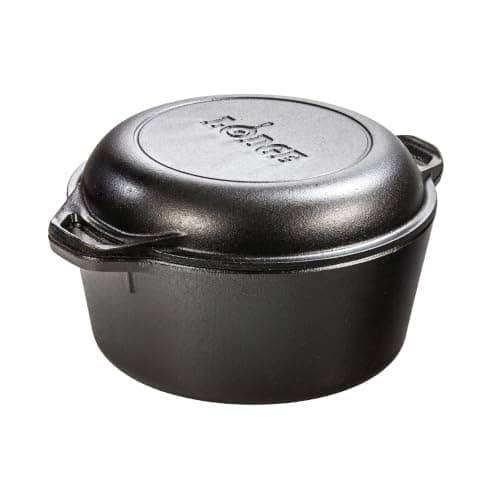
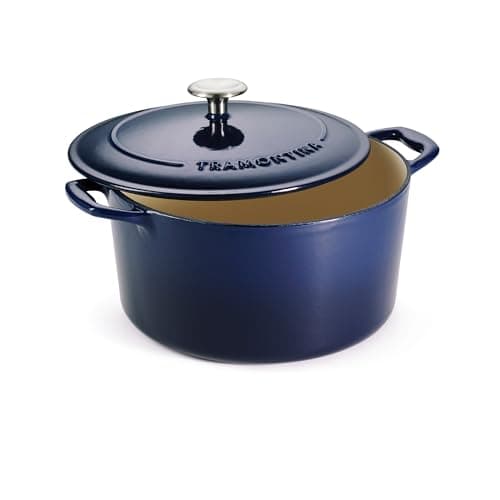
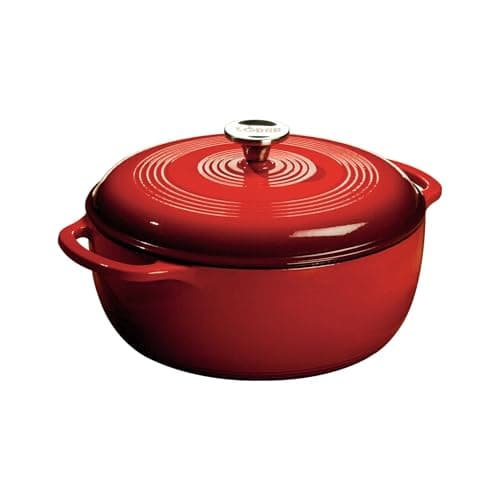
Buy the Lodge 6-quart enameled dutch oven. It braises, bakes and simmers within a whisker of a Le Creuset or a Staub that costs several times more, and for most cooks that gap is not worth the money. Spend up on a French pot only if you want the heirloom object, the finish and the resale value — those are honest reasons, just not cooking ones. And if you mostly bake bread or like to sear hard before you braise, a bare pot such as the Lodge Double Dutch is the smarter buy.
A dutch oven is really just a thick-walled pot with a heavy, tight-fitting lid, and its whole job is to hold heat steady and spread it evenly (the short version is on Wikipedia). Once you see the pot as a heat battery, the price ladder stops being mysterious. Almost every enameled pot below stores and releases heat well enough to turn out a superb braise. The money above the Lodge buys enamel finish, better knobs and handles, a warranty and good looks — not a noticeably better stew. If you are still deciding whether you even need one, start with what a dutch oven actually does.
Why the value pick wins
The Lodge enameled pot does the thing you bought a dutch oven to do — low, slow, even heat — as well as pots that cost three to five times as much. Blind, in a bowl, nobody is telling the Lodge braise from the Le Creuset braise. What you give up is refinement: the enamel and hardware are a step below the French pots, and the color range is a fraction of theirs. For the overwhelming majority of home cooks that is the right trade, which is why it is our best buy and the anchor of this list. We make the full case in the Lodge vs Le Creuset comparison.
| Pot | Capacity | Interior | Maker's knob / oven rating |
|---|
| Lodge enameled | 6 qt | Pale enamel | 500°F |
| Le Creuset (round) | 5.5 qt | Pale enamel | 500°F |
| Staub cocotte | 5.5 qt | Matte black enamel | 500°F |
| Lodge Double Dutch | 5 qt | Bare, seasoned iron | No knob — bare iron takes very high heat |
| Tramontina | 6.5 qt | Pale enamel | 450°F |
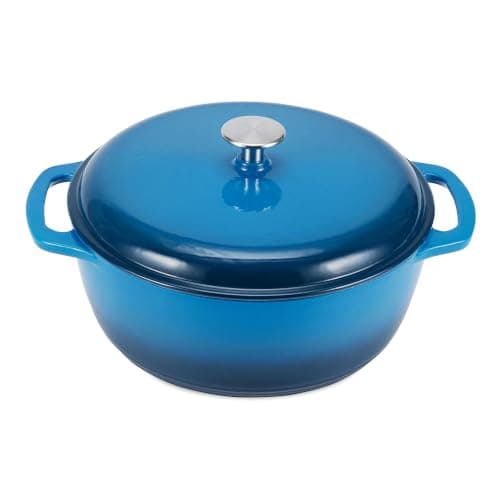
| Amazon Basics | 6 qt | Pale enamel | Oven-safe (rating not published) |
Every temperature above is the manufacturer's own published rating, not a number we measured. It matters most for bread, where you often want to preheat the empty pot hot.
When a French pot is worth it
The Le Creuset and the Staub are genuinely wonderful, and if you want one, buy it with a clear conscience — just know what you are paying for. Le Creuset's pale interior makes it easy to read the color of your fond, the knobs and handles are the most comfortable in the category, and the pot is oven-safe (knob included) to 500°F per Le Creuset. It also holds its resale value like almost no other cookware. The Staub cocotte goes the other way with a dark matte-enamel interior that browns aggressively and a spiked, self-basting lid that drips condensed moisture back onto a long braise. These are heirlooms you cook in for decades. They are not a cooking upgrade over the Lodge; they are a nicer-object upgrade, and that is a real thing to want.
When to go bare instead
Enamel is the wrong tool for two jobs: a screaming-hot sear, and preheating a pot to bread-oven temperatures. Bare cast iron shrugs off heat that would risk chipping or crazing enamel, and it develops a naturally non-stick seasoning that enamel never will. The Lodge Double Dutch is our pick here because its lid is a full 10.25-inch skillet — two pans for one price — and it makes a superb, cheap bread vessel. That high, dry heat is what drives the Maillard browning of a great crust. If bread is your main reason for buying, jump straight to the best dutch ovens for sourdough. And if you have already decided against enamel altogether, the bare-iron field has its own ranking: the best cast iron pots, where the lid design rather than the capacity does the separating.
The budget end
The Tramontina has been a value-review favorite for years: a big 6.5-quart pot that gets close to French-pot results at a Lodge-ish price. Its one catch is the knob, rated to 450°F, which is lower than the rest — fine for braising, worth noting if you preheat empty for bread. The Amazon Basics pot is the pick when price is the only axis that matters; it braises perfectly well and is often the lowest number on the page. Neither has the enamel durability or the support you get moving up to the Lodge.
The honest caveat:no enamel lasts forever. Thermal shock, metal utensils and stacking pots without protectors all chip or craze the glass coating over time, and the cheaper the pot, the sooner it shows. A little care doubles a pot's life — see how to care for enameled cast iron.
How to choose a dutch oven
Enameled or bare?
This is the first fork, and it is about how you cook, not how much you spend. Enamel is a layer of glass fused to the iron (vitreous enamel), so it needs no seasoning, shrugs off acidic tomato and wine braises, and cleans up with soap and water. Bare iron takes and holds seasoning, becomes naturally non-stick, and tolerates far higher heat — better for searing and bread, worse for a long tomato braise that can strip a thin seasoning. Most people want enamel as their one pot; bread bakers and hard-searers reach for bare. Our full enameled dutch oven roundup goes deeper on the enamel side.
Size: the 5-to-6-quart sweet spot
If you buy one dutch oven, buy something between 5 and 6 quarts. It is big enough for a whole chicken, a pot of chili for a crowd, or a large boule of bread, and still small enough to store and lift. Under 4 quarts and you are cooking for one or two and will outgrow it; past 7 quarts and it gets heavy and awkward, and shallow batches scorch more easily against all that hot metal. A 5.5-quart round is the single most useful size ever made, which is why nearly every pot on this list clusters right around it.
Round or oval?
Buy round unless you have a specific reason not to. A round pot sits centered over a round burner, so it heats evenly and simmers predictably. Oval pots exist to fit a long roast or a whole bird lengthwise, but on most stovetops one end of an oval overhangs the burner and runs cooler. For soups, stews, braises and bread — the things you will actually cook — round is the safer default. If you roast whole birds and long cuts often enough to want the shape anyway, see the best oval dutch ovens. And if soup and stew are almost all you will cook in it, the sizing and enamel questions are worked through pot by pot in the best dutch ovens for soup and stew. Settled on a pot but not on a retailer? Where to buy a dutch oven compares the routes, including the one reason a trip to a store is genuinely worth it.
The knob is the hidden spec
The maximum oven temperature of an enameled dutch oven is usually set by its lid knob, not the pot. Le Creuset, Staub and the Lodge enameled pot publish a 500°F rating; the Tramontina's knob is rated to 450°F. That difference is invisible for braising, which happens at 300–350°F, but it matters for bread, where recipes often call for preheating the empty pot to 450–500°F. If you plan to bake a lot of bread, buy a pot whose knob is rated for the heat you will use, or swap in a metal replacement knob.
Weight and handles
All of these pots are heavy — that mass is the whole point of a heat battery — but the handles decide whether the weight is a problem. Wide, tall loop handles that you can grab with a full oven mitt are far easier and safer to lift from a hot oven than the small, tight handles on many budget pots. This is one area where the French pots and the Lodge earn their reputation, and where the cheapest pots cut a corner you feel every time you move the pot full.