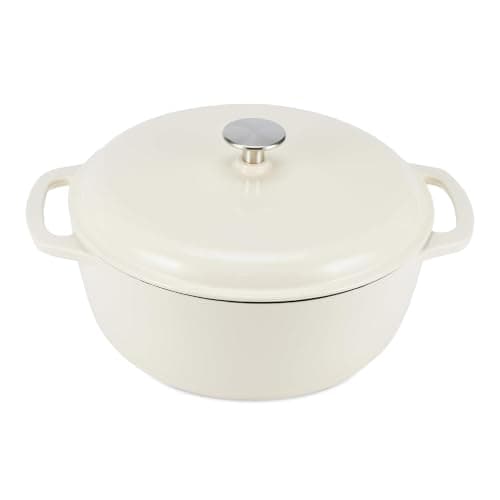
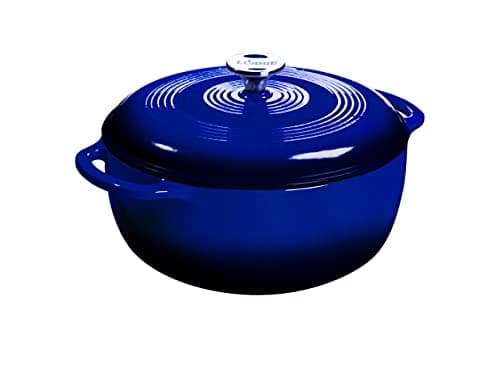
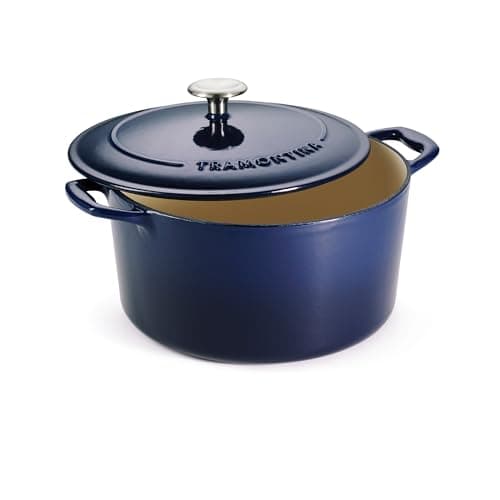
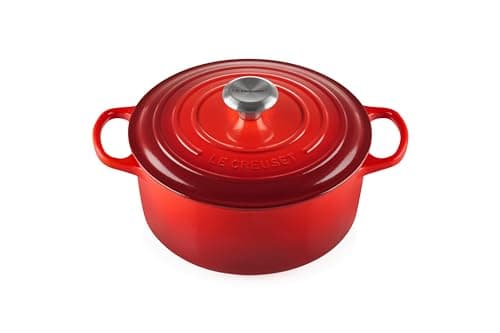
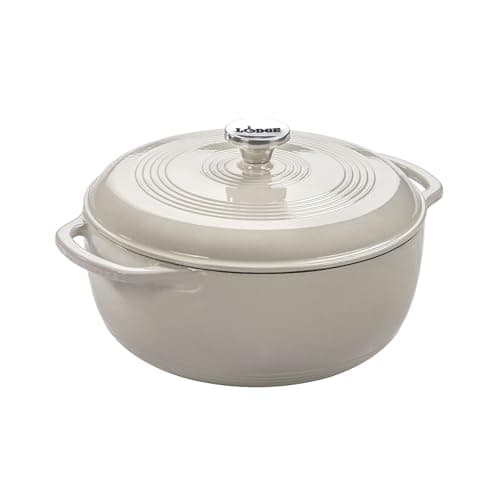
Give a mid-size enameled dutch oven — around six quarts — and you have covered almost everyone. It braises, bakes bread, makes soup for a family, goes from oven to table, and needs no seasoning knowledge. The Lodge enameled pot is the one we would buy for someone else: it does what a French pot does at a fraction of the cost, so if the recipient turns out not to want a big pot, nobody has lost much.
A dutch oven is a genuinely great present because it sits in the gap between want and buy. Most households know a good heavy pot would improve their cooking and have never quite justified the shelf space or the money. That is exactly the gap a gift should fill.
It is also the kitchen gift most often gotten wrong, and there is one dominant reason.
The size mistake
People buy too big. A large pot looks more generous, and a large pot full of food weighs an enormous amount — enough that a lot of recipients quietly stop lifting it out of the cabinet. Weight, not price, is what determines whether a dutch oven gets used.
- One or two people: 3 to 4.5 quarts. Genuinely enough for a braise for two with leftovers, and light enough to use casually. This is the size most often under-bought.
- Three to five people: 5 to 6 quarts. The default gift size, and the size that bakes a standard loaf of bread.
- Six or more, or a batch cooker: 7 quarts and up. Buy this only if you know they cook for a crowd routinely.
If you are between two sizes, take the smaller one. Our full sizing guide works through the capacity math, and small dutch ovens makes the case for the size nobody thinks to give.
Which tier is enough?
Honestly: the value tier is enough for cooking, and the premium tier is about longevity and looks. Both are legitimate gifts and they are legitimate for different reasons.
Budget enameled pots braise, bake and roast the same as expensive ones. Where they differ is enamel thickness, handle comfort in mitts, and warranty. Over a decade of hard use a cheap pot is more likely to stain or craze. Over five years of normal use, most people would not notice.
French pots buy you a lifetime warranty, harder-wearing enamel, larger and more comfortable handles, a resale market, and an object the recipient will be visibly pleased to own. As a milestone gift that is the whole point, and we would not pretend otherwise.
The full argument, without gift framing, is in Lodge vs Le Creuset and are expensive dutch ovens worth it.
Enameled or bare?
For a gift, enameled, in almost every case. No seasoning to learn, no rust risk, free use of tomato and wine, cleans with soap, and it looks like a present. Bare cast iron pots are excellent and are the right choice for campfires and for people who already cook in cast iron — but as a surprise gift they come with homework attached.
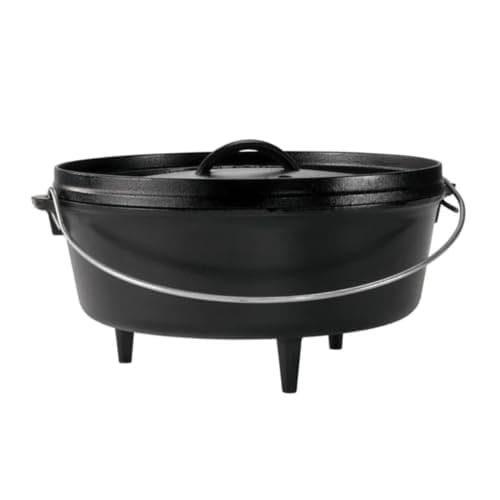
The exception is the camp dutch oven — the legged kind with a flat, rimmed lid for holding coals. For someone who camps, cooks over fire, or has a fire pit, it is a far more thoughtful gift than another enameled pot. It is also useless on a stovetop, so only buy it if you are sure. See bare vs enameled and the best cast iron for camping.
Colors, and the mistake to avoid
Enameled cookware is one of the few kitchen objects people display, so color is a real decision rather than a trivial one. Two rules that hold up:
Buy the color you think they like, not the one you like. This sounds obvious and is broken constantly. A bold color is a strong statement in someone else's kitchen for the next thirty years.
A pale interior is easier to cook in. Light enamel inside makes it much simpler to judge how far a fond has browned. Dark interiors look wonderful and are harder to read. If the recipient is a nervous cook, pale wins.
What not to gift
A pot they already own. The mid-size enameled pot is common enough that this is a real risk. If in doubt, give a smaller pot, a braiser, or a premium upgrade rather than a duplicate.
A pot with no lid knob rating for a bread baker. If the recipient bakes sourdough, the knob is the limiting part at high heat. Lodge publishes 500°F for its enameled cookware; not every brand publishes an equivalent figure. Our sourdough pot guide covers what a bread pot actually needs.
A nine-quart pot for two people. It will be admired once and used never.
Getting a pot gift right
Size down, every time
The most common failure in this category is a pot too heavy to use casually. A slightly small pot gets used weekly; a slightly large one gets used at Thanksgiving. If you remember nothing else from this page, remember that.
Round unless you know they roast whole birds
Round pots fit burners better, stir more easily and cost less. Oval pots exist for long joints and whole poultry, and they overhang a standard burner. Our round vs oval guide settles it.
Check the oven-safe rating if they bake bread
Bread baking is the most demanding thing a dutch oven does, and the lid knob is usually what limits it. Buy a pot with a published rating, or a pot with a metal knob.
The camp oven is a specialist gift, not a general one
Legs and a flat coal-holding lid make it superb over fire and awkward on a stovetop. Wonderful for a camper, wrong for a first pot.
Include one thing to cook in it
A bag of good flour, a jar of stock, a cut of beef. A pot with a first recipe attached gets used in the first week rather than the first season, and pots that get used in the first week keep getting used. Our short rib braise and no-knead bread are both good first cooks.