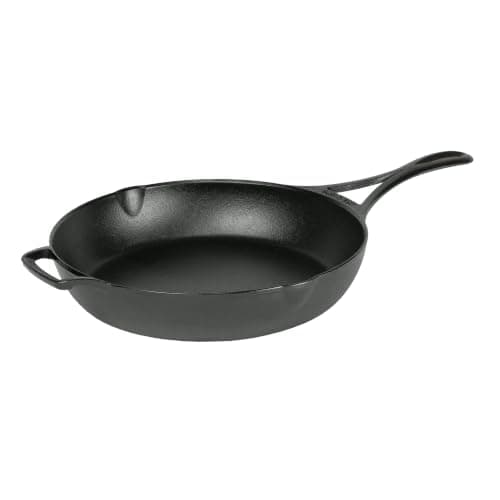
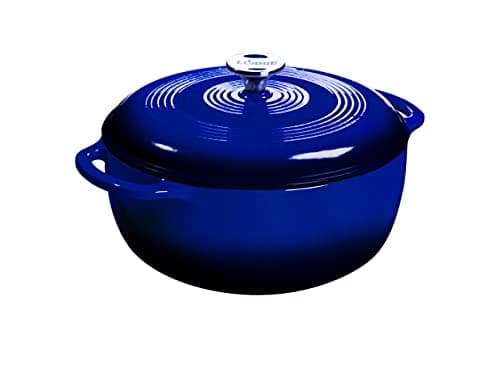
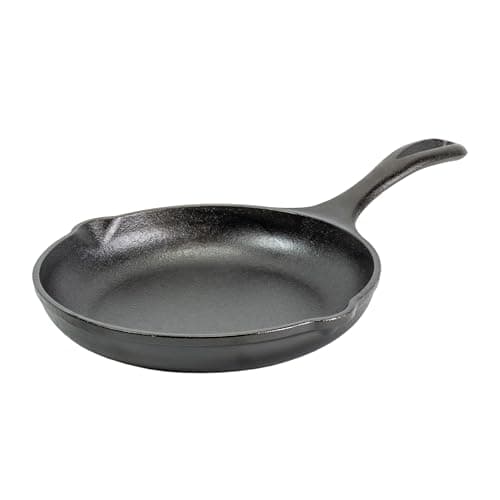
Yes, you can use cast iron on a glass top stove, and the best pan for it is a light one with a flat, burr-free base — which is why our pick is the 8-inch Lodge Chef Collection rather than anything expensive. The thing you are protecting is the cooktop, not the pan. Field Company, which sells cast iron, puts it as plainly as anyone: “Yes, but carefully”, and the single most important rule is “Do NOT shuffle or slide!”
First, a distinction that costs people money. A glass-ceramic smoothtop — the flat black radiant electric surface with painted element circles — heats by shining infrared up through the glass. It does not care whether your pan is magnetic. An induction top is also flat and also glass, but it heats by inducing currents in the pan itself, so it does care. Cast iron is excellent on both, for different reasons, and if your hob is induction the page you want is the best cast iron for induction, which ranks pots as well as pans. If you want the full “is this even allowed” explainer, it is here. This page is the shopping list for a radiant glass top.
What to look for on a glass cooktop
1. A flat base, with no heat ring
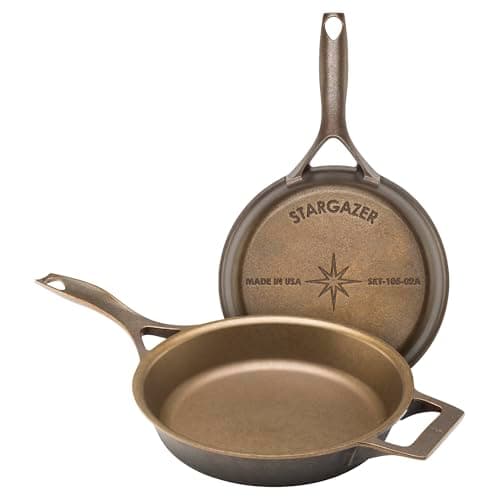
Older and cheaper castings often carry a raised heat ringaround the underside — a hangover from wood-stove days. On a glass top that ring means the pan rests on a narrow circle instead of its whole base, which concentrates both the weight and the heat transfer. Modern Lodge skillets, Blacklock, Stargazer and the Lodge round griddles are all flat-bottomed. Where a pan on this site has a deep heat ring — the Backcountry Wasatch is the clearest example — it is a fine pan that we deliberately did not rank here.
2. A base you would run your hand over
Glass-ceramic is hard and dimensionally stable, and it scratches from grit and from proud casting burrs rather than from weight alone. Field's own guidance is to pick a pan with a smooth base surface, because “excess rough spots can cause scratches.” Check the underside rim of any new pan with your fingertips; a single sharp nib knocked off with sandpaper before the pan's first use is five minutes that saves a cooktop.
3. Weight you can lift one-handed, every time
This is the criterion that actually ranks this page. The failure mode on a smoothtop is almost never a pan sitting still; it is a pan being nudged sideways because it is too heavy to lift comfortably. Field says it directly: look for skillets “lighter than heavy-duty options”, and do not drop a heavy pan, which “could potentially crack the surface.” If weight is a live problem for you, our lightweight skillet rankings carry the published figures.
4. A diameter that matches the element
Radiant elements are painted circles, and heat comes from inside the circle. A 12-inch pan on an 8-inch element will have a hot middle and cool edges — which people blame on the iron, when it is actually a mismatch. Match the pan to the ring, or accept that you are cooking in the center. This is one of the few places where the usual cast-iron advice (“buy the 12-inch”) is wrong for the appliance.
5. Enamel on the underside, if you want belt and braces
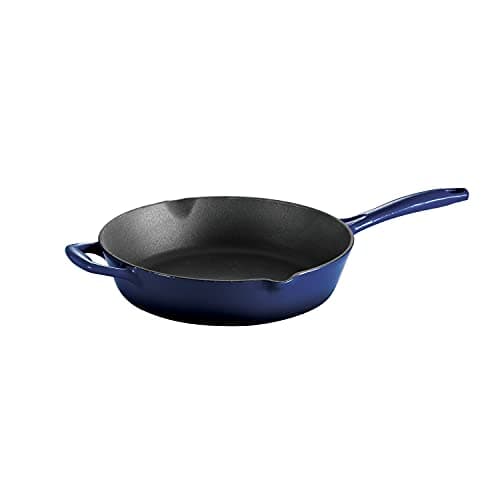
An enameled pan has a layer of glass fused to the iron, so what meets your cooktop is a smooth fired surface rather than raw casting. It is not magic — it still scratches glass if dragged, and chipped enamel is sharper than bare iron — but on a brand-new cooktop it is a reasonable preference, which is why two enameled pieces are ranked here.
The handling rules, which matter more than the pan
Lift, never slide. Field's wording is the one to remember: “If you need to adjust the cast iron skillet, lift it and set it down gently.” Every scratch story starts with a shuffle.
Wipe the cooktop and the pan base before each use. A grain of sugar or salt under four pounds of iron is an abrasive. This is the single highest-value habit on this page and it takes four seconds.
Come up to heat gradually, then push. Field again: “Let the cast iron warm on a lower heat, then raise the temperature”, and be patient, because a smoothtop takes longer to reach high heat than gas. Cast iron rewards that anyway — see how to preheat cast iron.
Move the pan off when you are done. A hot pan left on a cooling glass surface can leave marks, and the residual heat is doing nothing for you.
Check your own manual before anyone else's advice. Appliance makers differ, and a warranty argument is settled by the manual that came with your range, not by a buying guide.
Why the cheapest pan wins this category
On most of this site, spending more buys you something real: a machined surface, a thinner casting, better handles. On a glass cooktop the ranking criteria invert. The expensive machined pans are frequently heavier— Stargazer publishes 5.2 lb for its 10.5-inch, more than a standard 10.25-inch Lodge — and weight is the risk factor here. A light, flat, smooth-based 8-inch pan is both the safest option and the cheapest, which is a conclusion we are happy to reach and would not have chosen in advance.
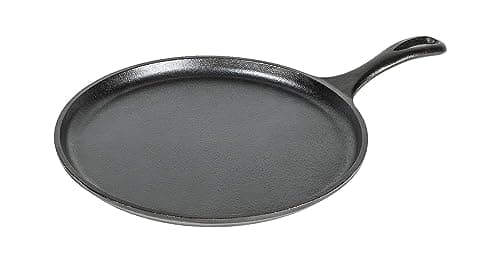
That is also why the 10.5-inch Lodge round griddle is on this list. A flat plate with no walls is the easiest thing in the world to set down squarely on glass, it matches a large element well, and it covers pancakes, tortillas, quesadillas and grilled cheese — the cooking most smoothtop households actually do. See the full griddle rankings if that is the shape you want.
What about a dutch oven on a glass top?
Same rules, more weight. An enameled pot has a fired base rather than raw casting, and the 3-quart Lodge enameled on this page is deliberately the small one: at full capacity a 6-quart pot of stew is genuinely heavy to lift squarely onto glass, and lifting squarely is the whole technique. If you want the pot rankings rather than the pan rankings, start at the best small dutch ovens, and if your hob is induction rather than radiant, read dutch oven on induction.
Honest limits of this page
We have not scratched a cooktop on purpose to rank these, and we are not going to claim testing we did not do. The criteria here — base flatness, base finish, published weight, diameter against element size — are drawn from manufacturer guidance and from the published specifications of each pan, and the handling rules are quoted from a cast-iron maker's own advice page. Our methodology is explicit that our scores are judgments from documented research rather than laboratory measurements.