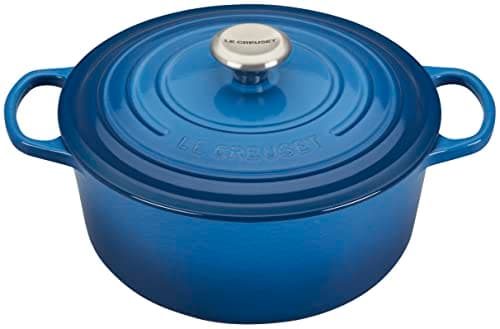
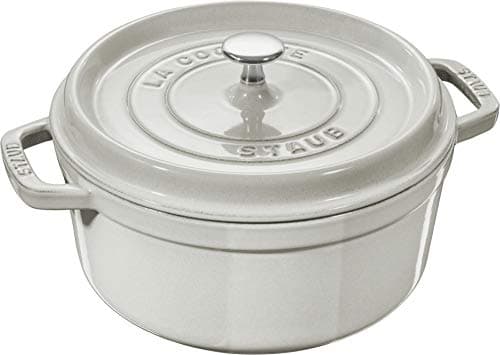
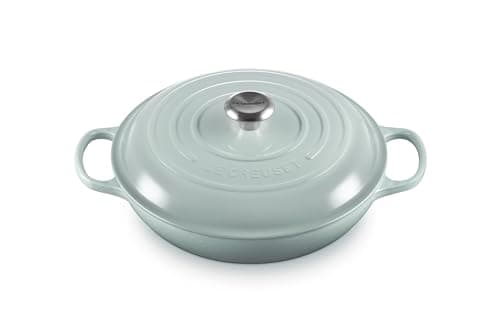
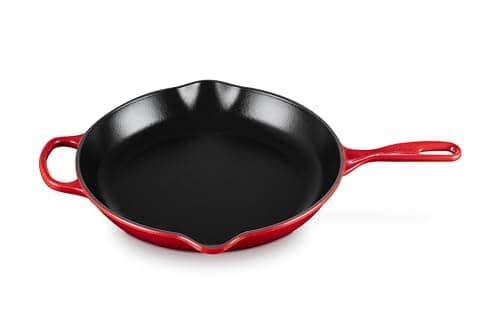
If you buy one piece of enameled cast iron, make it a dutch oven — and the value pick is the Lodge enameled, which braises, bakes and simmers nearly as well as a pot costing four times more. From there, a Le Creuset or Staub pot is the heirloom upgrade, a braiser is the wide pan for browning and reducing, and an enameled skillet is the nonreactive pan for acidic stovetop dishes. Enameled iron is the no-seasoning, dishwasher-easy, acid-proof side of cast iron — the forgiving choice — but it is not naturally nonstick, so for sear-and-release cooking a bare pan still wins.
Enameled cast iron is a cast-iron core coated in vitreous enamel — powdered glass fused to the metal at high heat. That glass surface gives it a completely different personality from bare iron: it needs no seasoning, it is nonreactive so acidic tomato and wine dishes are no problem, and it cleans up with soap and water. It keeps the heavy iron body's heat retention, which is why enameled dutch ovens are such superb braising and bread pots. What it gives up is the naturally nonstick, sear-and-release surface a well-seasoned bare pan develops, and it can chip if abused. The full trade-off is in enameled vs bare cast iron.
Which enameled pieces to own
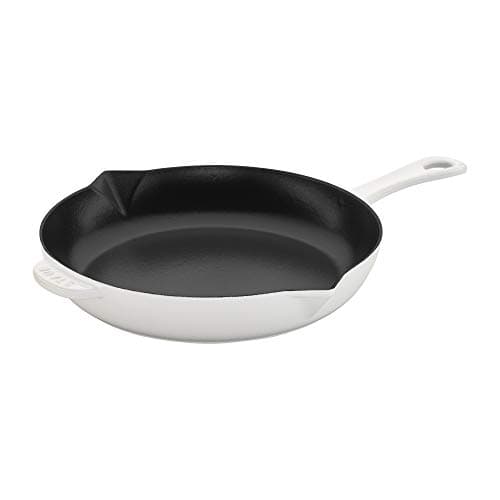
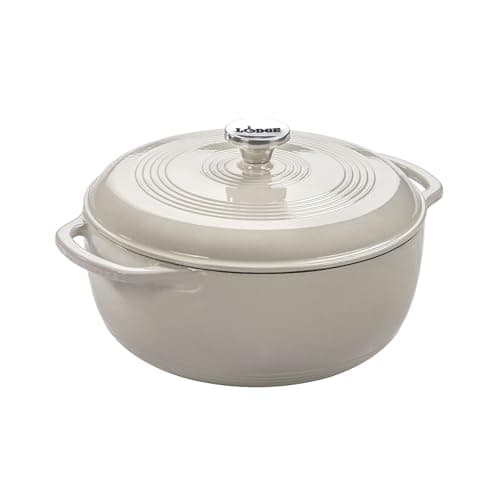
The category divides into three tools. The dutch ovenis the essential one — soups, braises, bread and more — and the piece to buy first; see the full enameled dutch oven ranking. The braiser, wide and shallow, is the second piece for browning meat and reducing sauces, ranked in the best braisers. The enameled skillet is the specialist third piece, a nonreactive pan for pan sauces and tomato-based cooking, covered in the best enameled skillets. Across all three, the same value logic holds: a Lodge cooks the meal, a French pot buys the enamel, hardware, warranty and looks.
How to choose enameled cast iron
Dutch oven first, then a braiser
The dutch oven is the most versatile enameled piece by far — buy it first. Add a braiser when you brown in batches and reduce sauces; add an enameled skillet only if you cook a lot of acidic stovetop dishes and want a nonreactive pan for them.
Value or heirloom
A Lodge enameled pot delivers the cooking for a fraction of the price; a Le Creuset or Staub buys harder enamel, nicer hardware, a lifetime warranty and resale value. Decide whether you are buying a tool or an heirloom — our are expensive dutch ovens worth it guide breaks it down.
Do not expect nonstick
Enamel is glass, not a nonstick or seasoned surface, so food needs enough fat and a careful hand — eggs and delicate fish are better in a seasoned bare pan. Buy enameled for braising, acid-proof cooking and easy care, not for slick release.
Treat the enamel gently
Use wood or silicone tools, avoid thermal shock and empty high heat, and enameled iron lasts decades. If it stains, our stain guide helps; if it chips, see chipped enamel.