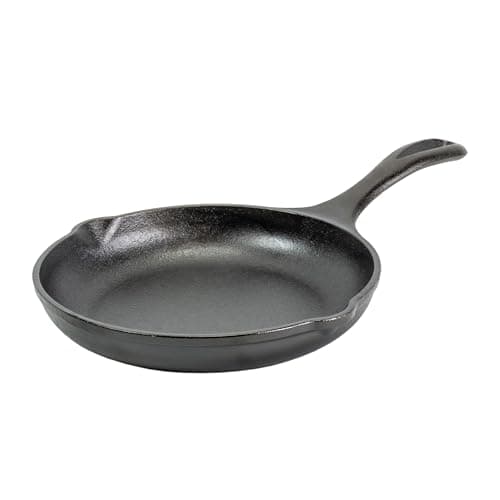
The best 8-inch cast iron skillet is the Lodge 8-inch Chef Collection, best for a cook adding a small second pan to a bigger everyday one — and it is also the budget pick, because at this diameter the right answer happens to be the cheap one. The upgrade worth paying for is the Field Company No. 6, which is genuinely machined. An 8-inch pan inverts the usual cast iron argument: almost nothing here is decided by stored heat.
Why an 8-inch pan is a different purchase
The case for cast iron in general is thermal mass — a heavy pan barely drops in temperature when cold food lands in it, so the surface stays hot enough for Maillard browning instead of stalling. That argument is overwhelming at 12 inches with four steaks in the pan. It is close to irrelevant at 8 inches with one egg, because one egg does not have the thermal heft to cool a pound of iron.
So the specs that decide a 12-inch purchase do not decide this one. Our 12-inch skillet roundup ranks entirely on loaded weight, because a big pan that is awkward to lift stops being used. At 8 inches every pan here is easy to lift with one hand. What is left is release, handle, and whether it has a lid.
Release is the whole ranking
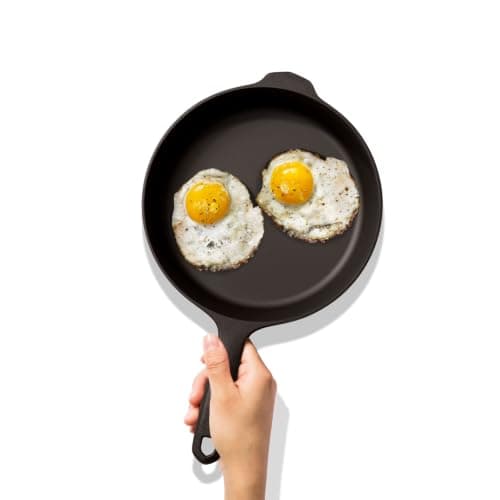
An 8-inch pan is an egg pan, and eggs are the single hardest thing to get off bare iron. A new as-cast skillet has the pebbly texture a sand mold leaves, and it takes months of cooking fat in it before your own polymerized-oil layer fills that texture in and the pan goes slick. As-cast and machined surfaces are genuinely different things, and machining skips most of that wait.
That is why the Field No. 6 is second rather than fifth despite costing several times the Lodge: it is a small American foundry pan with a machined interior and a thin casting, and at 8.38 inches it is the closest thing in our registry to a vintage egg pan. The Lodge still wins overall because the gap narrows on its own with use and the price gap does not. If a glassy interior out of the box is the point, read the best smooth cast iron skillets and is Field Company worth it.
Why the Chef Collection and not the classic Lodge
Lodge sells more than one 8-inch pan, and the Chef Collection version is the one we rank. Lodge finishes that line smoother than its classic iron and casts it a little thinner, and both help specifically at this size — a smoother start is worth more on an egg pan than anywhere else, and the thinner casting makes a small pan feel nimble rather than stubby. The classic 8-inch is a fine pan and costs about the same; we would take the Chef Collection. Our three-way Lodge comparison separates the lines properly.
The handle matters more than you would think
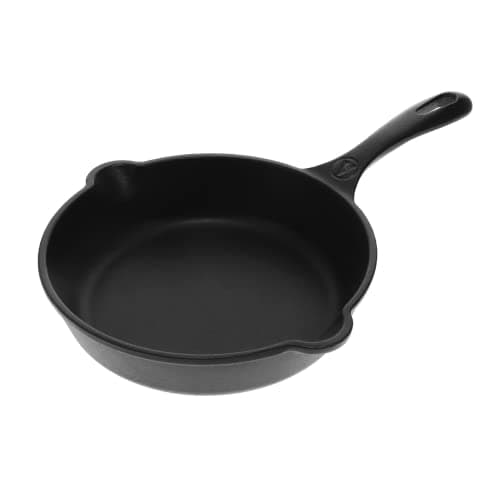
On a small pan you are constantly picking it up: tilting it to pool butter, sliding an egg onto toast, moving it off the heat. The Victoria 8-inch has the longest, most curved handle in this group, which puts your hand further from the burner and gives better leverage, and it is made in Colombia with a flaxseed-oil factory seasoning. It is the pick if the Lodge handle has ever felt like a stub to you.
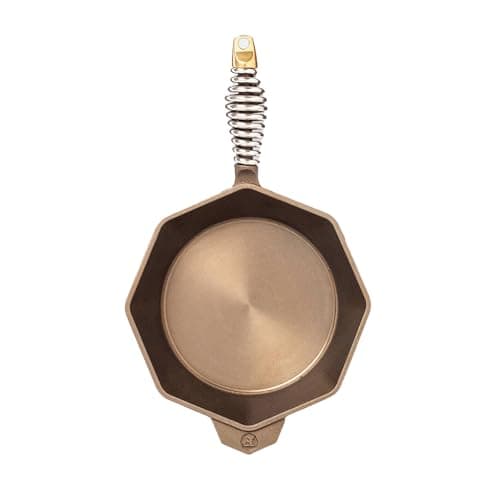
The Finex 8-inch is the other end of that idea: an octagonal body and a coiled stainless spring handle that stays cooler for longer. It is a beautiful object and the most expensive pan on this page by a wide margin, and it is also the heaviest 8-inch pan here, which is why it ranks last rather than first. If you want that argument properly, Finex versus Lodge and is Finex worth it both take it apart.
Do you want a lid at 8 inches?
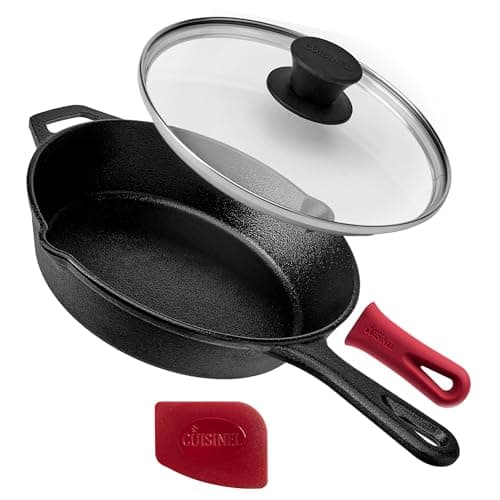
Sometimes, genuinely. A lid on a small pan lets you cover eggs to set the tops without flipping, steam the last minute of a vegetable, or hold one portion of a braise. The Cuisinel 8-inch is the only covered pan here and it is inexpensive.
Its lid is glass, which is nicer to cook under and more limited than iron: glass caps the oven temperature you can use and can fail on thermal shock, where a cast iron lid does not care. The best cast iron skillets with lids covers that trade across every size.
Eight inches, or something else?
Buy 8 inches as a secondpan. As a only pan it is too small for most households — it will not take a whole chicken, a cornbread or two steaks — and the standing recommendation across this site is that your first skillet should be a 10.25-inch. Our 8-inch versus 10-inch comparison is the direct version of that decision, and cast iron skillet sizes has the full table.
If you want something smaller still — a 5- or 6.5-inch pan for a single egg or for serving at the table — the best small cast iron skillets ranks that shelf by size, and it is a different page from this one: it sorts across diameters, where this one sorts within a single one. And if the reason you want a small pan is that iron feels heavy in general, cast iron skillet alternatives is the honest answer.
Honest cons, pan by pan
The Lodge arrives as-cast, so eggs will stick for the first few months while you build seasoning. The Field No. 6 costs several times as much and its thin casting stores noticeably less heat, so it is a worse pan for searing a chop. The Victoria is made to a lower consistency standard than Lodge and its availability on Amazon has been patchy. The Cuisinel is the roughest casting here and its glass lid is a real limit. The Finex is heavy and expensive, and it is cast fine rather than machined, which is a different claim from the Field’s.
How the prices on this page work
Every figure comes from the live Amazon listing at the date stamped under the comparison table, read through this site’s price layer rather than typed into a file. Where a listing has no verified live offer we show no number at all and the button still takes you to the listing.