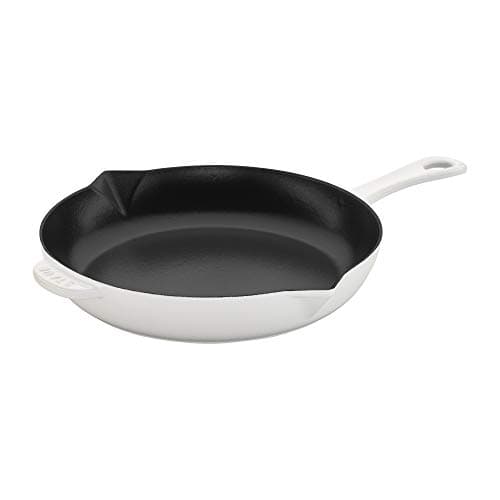
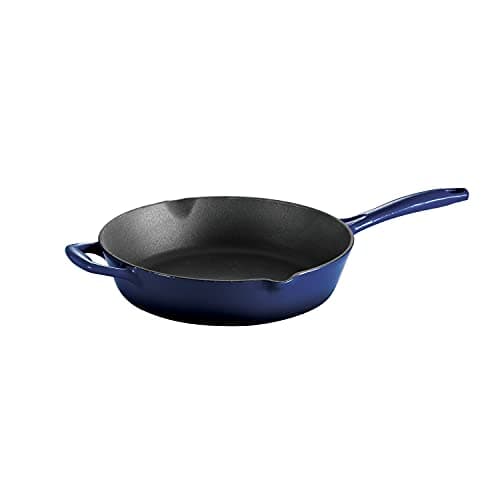
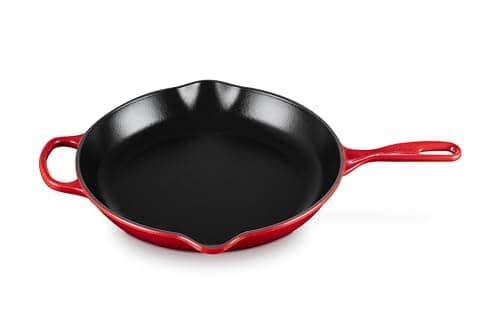
Buy an enameled cast-iron skillet if you want the heat retention of iron without seasoning, and the freedom to cook tomatoes, wine and citrus that bare iron dislikes. The Le Creuset is the premium pick, the Staub trades a lighter interior for a darker, mark-hiding one, and the Tramontina does most of the job for a fraction of the price. But be honest with yourself first: an enameled skillet is not naturally nonstick, so if you mainly want a sear-and-release egg-and-steak pan, a seasoned bare skillet is the better and far cheaper buy.
Enameled cast iron is a cast-iron pan coated in vitreous enamel — powdered glass fused to the metal at high heat. That glass surface changes the pan's personality: it never needs seasoning, it is nonreactive so acidic sauces are no problem, and it cleans up with soap and water. What it is not is a slick, naturally nonstick surface the way a well-seasoned bare pan becomes, so eggs and delicate fish need enough fat and a careful hand. It is also heavier and pricier than bare iron. The full trade-off is laid out in enameled vs bare cast iron.
Who should buy an enameled skillet
The enameled skillet makes the most sense as a second pan for a cook who already has a bare skillet and wants a nonreactive pan for pan sauces, tomato dishes, braised greens and shallow simmers — jobs where bare iron's reactivity is a nuisance. It is also the choice for anyone who simply does not want the seasoning ritual at all. If that is not you — if you want the best sear-and-release value pan — skip straight to our best cast iron skillets, where a bare pan does more for less.
Enameled skillet or enameled dutch oven first?
If you are buying your first piece of enameled cast iron, buy the dutch oven, not the skillet. The pot is the more versatile tool by a wide margin — it braises, bakes bread, makes soup and deep-fries, all jobs where the enamel's nonreactive surface and the heavy body genuinely shine. An enameled skillet is a more specialized purchase: it is at its best for pan sauces, shakshuka, braised greens and shallow tomato-based dishes, where you want a wide surface and no reactivity. Think of it as the second or third enameled piece a cook adds once the pot is covered, not the one to start with. Buying in that order gets you the most cooking for your money.
Colors, sizes and what to ignore
Enameled skillets come in a rainbow of colors, and the color is purely cosmetic — it changes nothing about how the pan cooks, so buy the shade you like and do not pay a premium for a "special edition." Size matters more: a 10-inch pan is far more manageable than a 12, because enameled iron is heavy and a big one with a short helper handle is a genuine two-handed lift when full. If weight is a concern, size down. One spec that does matter is the oven-safe rating — check the maker's limit if you plan to finish dishes under a broiler, since some knobs and handles cap lower than the pan itself. Beyond that, ignore the marketing: the cooking difference between a mid-priced enameled skillet and a top-tier one is small, and the durability difference, while real, only shows over years of hard use. Buy the size and color you will actually reach for, treat the enamel gently, and it will look good on the stove for a very long time.
Living with an enameled skillet
The whole appeal of enameled iron is how little it asks of you: no seasoning, ever, and no fear of acid, so a quick tomato pan sauce or a splash of wine deglaze that would strip a bare pan's seasoning is completely fine here. Wash it with soap and water like any dish; it is even dishwasher-safe, though hand-washing is gentler on the exterior color over years. The two things that actually damage an enameled skillet are impact and thermal shock — banging it with metal tools or against the sink can chip the glass, and running cold water into a screaming-hot pan can craze or crack the enamel. Use wood or silicone tools, let the pan cool before it meets cold water, and it will outlast most of your kitchen.
The light interiors will stain and dull to a tea-brown over time, which looks like damage and is not — it wipes back with a little baking soda or a gentle cookware cleaner, as our enameled stain guide walks through. What you should not do is attack it with steel wool or harsh abrasives, which scratch the glass permanently. And if the interior enamel ever chips down to bare metal, stop cooking on it and read our chipped-enamel guide before you decide whether the pan is still safe to use. Treated with that light touch, an enameled skillet is genuinely a buy-it-for-life pan.
How to choose an enameled skillet
Interior color: light or dark
Le Creuset's light sand interior lets you watch fond build and judge browning, but it stains over time; Staub's dark matte interior hides marks and browns food well but you cannot see the fond as clearly. Neither is better — it is a preference. Both clean up well; see removing stains from enameled cast iron.
Price tier: what the premium buys
A French pan buys a harder, more chip-resistant enamel, better hardware, a lifetime warranty and resale value — not better cooking. A budget enameled skillet cooks much the same for far less, with slightly rougher finishing and less durable enamel. Decide whether you are buying an heirloom or a tool. Our is Le Creuset worth it guide goes deeper.
Handle and weight
Enameled skillets are heavy and usually have a long handle plus a short helper handle. Lift with both; the metal handle gets oven-hot. If weight is a concern, a 10-inch is far more manageable than a 12.
Treat the enamel gently
Enamel is glass: it can chip if you bang it with metal or shock it with a sudden temperature change. Use wood or silicone tools, avoid empty high heat, and it will last decades. If it does chip, read chipped enamel cast iron.