Buy the 10.25-inch first. Buy the 12-inch second, and only once you have repeatedly found the 10 too small. Buy an 8-inch third, if eggs and single portions are a regular part of your week. Then stop buying skillets. The fourth pan almost never earns its space, and the money is better spent on a dutch oven — a different tool that does jobs no skillet does, rather than a fourth version of a job you already cover.
The site already has a sizing guide that maps diameters to what fits in them, and head-to-heads for the 8 vs 10, 10 vs 12 and 12 vs 15 decisions. This page is the other axis: sequence. What you buy in what order, and where the returns stop.
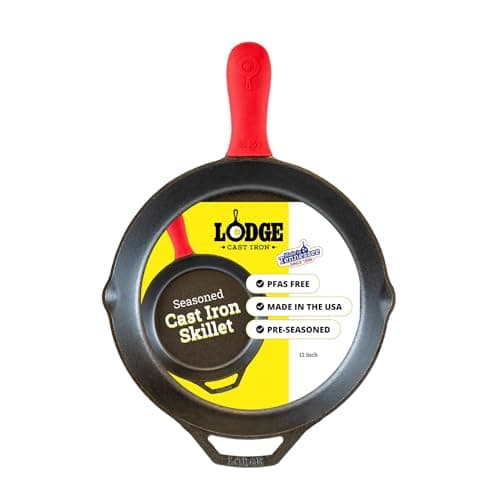
Rung one: the 10.25-inch
This is the pan, and it is not close. It takes four eggs, two steaks, a chicken cut into pieces, a batch of cornbread, a skillet of roast vegetables, or a pan of stuffing for four. It is heavy enough to hold a proper searing temperature and light enough to lift one-handed with food in it, which is the constraint people underestimate until they own a bigger pan.
If you buy one cast iron pan in your life, this is the one. Everything else on this page is an extension of it, and a great many households never need rung two at all.
Buy this rung even if you cook for one. The temptation is to buy small. A 10.25-inch pan cooks a single portion perfectly well; an 8-inch pan cannot cook for two. Erring large on the first pan is the one place where erring large is correct.
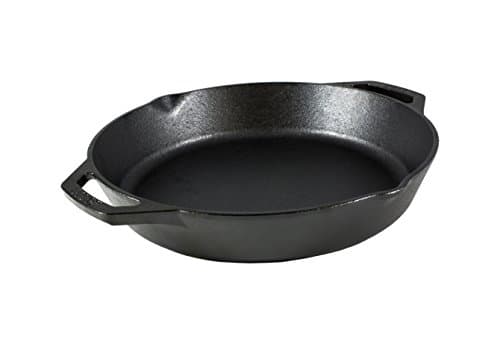
Rung two: the 12-inch
Buy this when you have actually, repeatedly, run out of room in the 10 — not in anticipation. The trigger is real: cooking for four or more, searing more than two pieces of protein at once, or a whole spatchcocked chicken or turkey breast that will not fit a 10.
The 12 is meaningfully heavier, and weight is the number-one reason cast iron stops getting used. It is also more than most single burners can heat evenly — a big pan on a small burner has a hot middle and cold edges, which is the whole subject of why cast iron heats unevenly. If your stove has one large burner, the 12 works. If it does not, preheat it in the oven or expect to move food around.
Buy this rung early if: you cook holiday meals, you cook for four or more routinely, or you bake in a skillet. Our holiday sides guide is essentially written around a 12-inch pan.
Rung three: a small pan
Now the ladder branches, and the honest answer is that rung three depends on what you cook rather than on size logic.
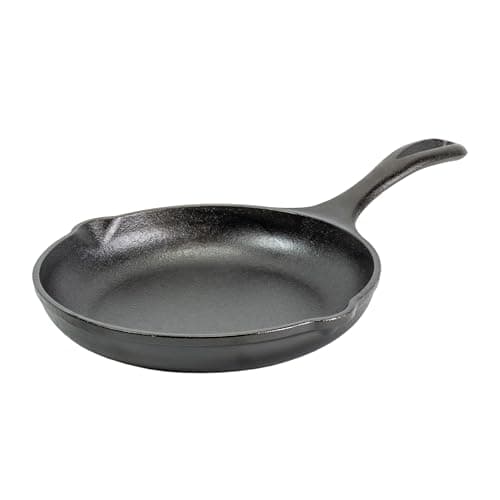
The 8-inch is the right third pan for most people. It is the eggs-and-one-portion pan: fast to heat, easy to handle, and it lives on the stovetop rather than in a cabinet. Our eggs guide makes the case in detail.
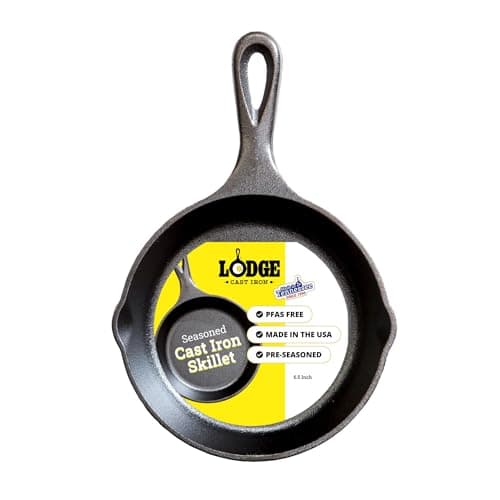
The 6.5-inchis a genuine specialist — a single fried egg, a small cornbread, toasting spices, serving something hot at the table. It is charming, it is cheap, and it is the pan most likely to be bought for the wrong reasons. Buy it if you know what you will cook in it.
Where to stop, and what to buy instead
A fourth skillet is where most collections start accumulating rather than improving. If you own a 10, a 12 and a small pan, adding a 15-inch or a second 10 gives you very little that you did not already have, and it gives you a storage problem — cast iron is heavy and does not stack politely.
The pieces that genuinely add capability, roughly in order:
- An enameled dutch oven. The single biggest upgrade available to a skillet-only kitchen. Braises, soups, bread, deep frying, and it handles acid freely, which bare iron does not. This is what to buy instead of a fourth skillet. See what size dutch oven.
- A griddle or a grill pan. Only if you cook pancakes, tortillas or indoor grill marks regularly. A two-burner griddle doubles your flat cooking surface, which matters at the holidays.
- A lid for the pan you already own. Cheap, and it turns a skillet into a shallow braiser. Our covered skillet roundup covers both routes.
- Care gear. A chainmail scrubber, a scraper and a handle sleeve improve every pan you own for a fraction of the price of another pan.
Two ladders that are not this one
If you cook for one or two in a small kitchen, the ladder is shorter: a 10.25-inch, then a small pot, then stop. Our small kitchen guide is built for exactly that constraint.
If you are furnishing a kitchen from zero,a set can be a genuine head start rather than a trap — but it is a narrow case, and we argue the boundaries in set vs individual pieces.
A note on upgrading versus adding
At some point most people ask whether to buy a nicer 10-inch instead of a second size. Our view: add the size first. A machined boutique pan is a real upgrade in surface and weight, but it does the same job as the pan you already own, and a second size does a job you cannot currently do. Upgrade once the ladder is built, not before — the argument is in smooth vs rough cast iron.
Building the ladder well
Buy on demonstrated need, not anticipated need
The rule that keeps a collection useful: buy the next pan when you have hit the current pan's limit more than twice. Almost every unused cast iron pan in America was bought for a meal its owner imagined cooking.
Weight is the real limit, not price
Cast iron is cheap enough that money rarely stops anyone. What stops people is lifting a loaded pan out of a low cabinet. Factor in where the pan will live and who will be lifting it before you size up.
Match the pan to your biggest burner
A 12-inch pan on a small burner heats unevenly, and no amount of preheating fully fixes it. If your stove has one big burner, that is your maximum practical skillet size for stovetop work — the oven is more forgiving.
Pre-seasoned is fine, and saves a step
Every pan on this page arrives seasoned from the foundry, so it cooks the day it lands. Bare, unseasoned pans exist and are for people who want to build their own seasoning from scratch, which is a hobby rather than a requirement.
The fourth purchase should be a pot, not a pan
If you take one thing from this page: after three skillets, buy an enameled dutch oven. It does things a skillet structurally cannot — long moist cooking, acidic braises, bread — and it is the piece most households are genuinely missing.