Skip to content
Hearth & Patina

The Dutch Ovens

The Best Challenger Bread Pan Alternatives

A $344 cast iron bread pan is a real object with real advantages. Most of them turn out to be reproducible for under sixty dollars - and one of them is not.

By Stephen V.Updated How we research
#ad

We earn a commission when you buy through our Amazon links, at no extra cost to you. It never affects our rankings, and we say so when the cheaper pan is the better buy. How this works.

Top pick

Lodge Lodge Cast Iron Combo Cooker, 3.2 qt

Lodge Cast Iron Combo Cooker, 3.2 qt

3.2 qt deep pan10.25" skillet lidPre-seasonedMade in USA
$59.90View on Amazon

Price as of November 19, 2026. Prices change — Amazon's is the one that counts.

#ad · we may earn a commission from this link to Lodge Cast Iron Combo Cooker, 3.2 qt

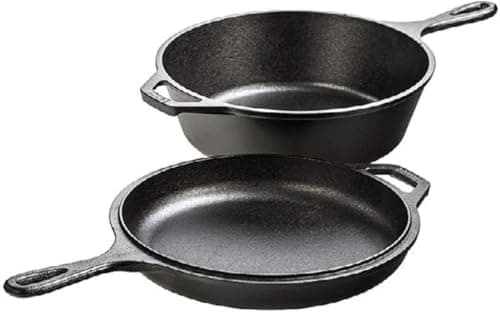
Buy the Lodge Combo Cooker. The single biggest thing the Challenger does is put a shallow base under your loaf — its own page calls it “a Base for easy loading and unloading” — so you lay a shaped boule in flat and score it at waist height instead of lowering it blind into a deep pot. The Combo Cooker is that geometry exactly: the 3.2-quart deep pan inverted as the lid, the 10.25-inch skillet as the base. It preheats fast, traps steam the same way, and it costs a small fraction of the Challenger's published $344. Best for a baker who wants the loading advantage and nothing else from the premium tier. It is also our budget pick, because it is both.

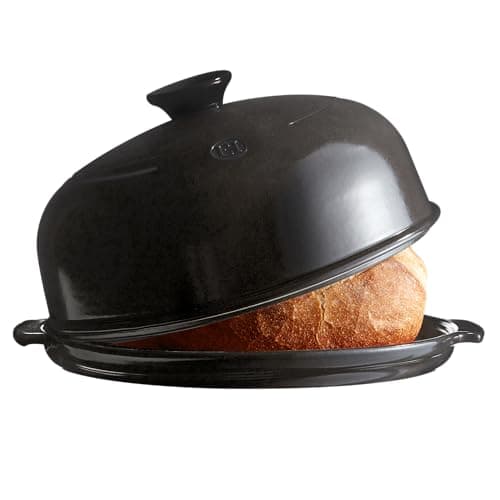
Easiest loading of all: the Emile Henry bread cloche— lighter than any iron on this page and built around a loaf rather than adapted from a pot. Want one vessel that bakes bread and braises? The Lodge 6-quart enameled. Want the two-tool trick with more headroom? The Lodge Double Dutch.

Compare

How you load a loaf, and what you give up

VesselMaterialHow you load itAlso good forPriceBuy
Lodge Cast Iron Combo Cooker, 3.2 qt

Lodge

Bare cast ironFlat, into a shallow skilletTwo separate skillets$59.90Check Price on Amazon
Lodge Cast Iron Double Dutch Oven, 5 qt

Lodge

Bare cast ironInto a 5 qt pot, lid is a skilletBraising, camping$59.90Check Price on Amazon
Emile Henry Bread Cloche

Emile Henry

Glazed ceramicFlat, into a shallow baseBread only$199.24Check Price on Amazon
Lodge 6 qt Enameled Cast Iron Dutch Oven

Lodge

Enameled cast ironDown into a 6 qt potEverything else you cook$74.99Check Price on Amazon
Lodge 3-Quart Enameled Cast Iron Dutch Oven

Lodge

Enameled cast ironDown into a 3 qt potSmall braises, one loaf$49.99Check Price on Amazon

#ad · Live prices from the Amazon Creators API, as of November 19, 2026. Where we have no verified live price we show none rather than a stale number — we may earn a commission.

The best Challenger Bread Pan alternative is the Lodge Combo Cooker, best for a baker who wants the shallow-base loading that makes the Challenger worth wanting. It is also the budget pick. The Emile Henry clocheis the pick if lifting 20 lb of hot iron is the objection, and the Lodge 6-quart enameled is the pick if you want one pot that bakes bread and then cooks dinner. One thing on this page is honest rather than helpful: nothing we can buy reproduces the Challenger's long footprint, and if you bake bâtards or baguettes that is the whole reason to buy the real thing.

The Challenger Bread Pan is a serious object, and it is worth saying what it is before saying what replaces it. It sells direct at a published $344, in stock as we write this, and it is the pan a lot of home bakers put on a wish list and then start searching for a substitute for. That search is the reason this page exists.

What the Challenger is known for

Four published things, and they are not all equally reproducible.

The shallow base. Challenger's own copy leads with “A Base for easy loading and unloading”, and anyone who has dropped a proofed loaf down the throat of a tall pot knows why that is the headline feature. You lay the dough in flat, score it where you can see it, and lift the lid over the top.

The footprint. The pan is published at 15.5 inches long by 10.5 wide by 5.5 high, which is why its own list of shapes runs “bâtards, boules, baguettes”. A round pot bakes a round loaf. This one does not have to.

The handles, and the mass. “Patented side handles make oven transfers easy and secure”, on both halves — which matters more than it sounds, because the published total weight is 20.0 lb, with an 11.3 lb lid and an 8.7 lb base. The thick casting is the point: “thick cast iron construction that ensures steady high heat” is the same thermal mass argument that makes any cast iron vessel a good bread oven.

Ready to bake. It arrives “seasoned with grapeseed oil for ready-to-bake performance”, is “Crafted in the U.S.A.”, and is rated “Up to 500°F (260°C)”— the same ceiling as the Lodge enameled pots, and enough for every no-knead recipe written.

The brief an alternative has to meet

Strip that down and there are four tests. Can you load a shaped loaf flat? Does it trap steam for the first half of the bake? Does it have enough mass to hold a high oven temperature when cold dough lands in it? And can you get it in and out of a 500°F oven safely? Three of those four are cheap. The footprint is the one that is not, and no amount of shopping changes that.

Matching it on loading: the Combo Cooker and the cloche

The Lodge Combo Cooker is the direct structural answer. Used upside down — skillet on the bottom, deep pan as the dome — it gives you the identical workflow: dough onto a flat surface at counter height, score, cover, bake. Twenty minutes in you lift the dome off and finish the crust uncovered, exactly as Challenger describes for its own pan. Its honest limits are size and material: 3.2 quarts is one standard loaf, not a double batch, and it is bare iron, so you season it and keep it dry.

The Emile Henry cloche is the alternative for a different objection. It is glazed ceramic rather than iron, which means it is far lighter to maneuver, needs no seasoning, and was designed around a loaf instead of adapted from a cooking pot. If what puts you off the Challenger is lifting 20 lb of hot metal twice a bake, this is the pick. The trade is real: it is a single-purpose tool, it is more fragile than iron, and it has less stored heat to give a loaf its initial spring. Our dutch oven vs bread cloche comparison settles that one properly.

Matching it on versatility: the two enameled Lodges

A good share of people searching for a Challenger alternative are really asking whether a $344 single-purpose pan makes sense at all when a general-purpose pot bakes a decent loaf. It is a fair question and the answer is often no.

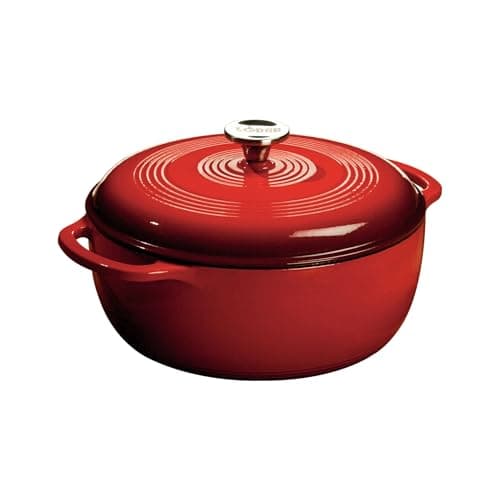
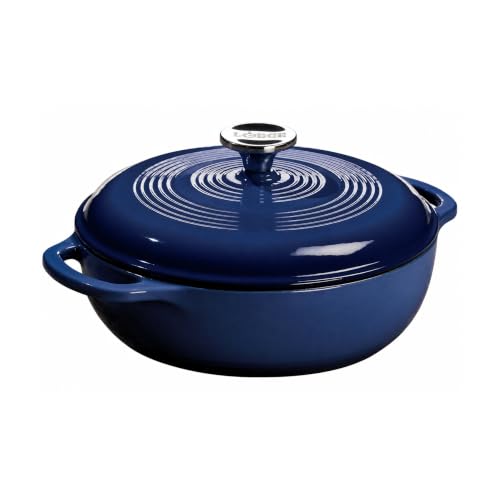
The Lodge 6-quart enameled is the pot we recommend most often on this site: it braises, simmers and bakes a boule indistinguishably from pots costing three times as much, and Lodge publishes its enameled cookware as oven-safe to 500°F, which is the number that matters for bread. The 3-quart is the same idea for one or two people and a single small loaf. What you give up against a Challenger, in both cases, is the loading: you are lowering a proofed loaf into a deep pot, which takes a sling of parchment and a steady hand. Enamel also means no seasoning and no reaction with an acidic braise afterwards, which bare iron cannot offer.

The two-tool trick, if you want more headroom

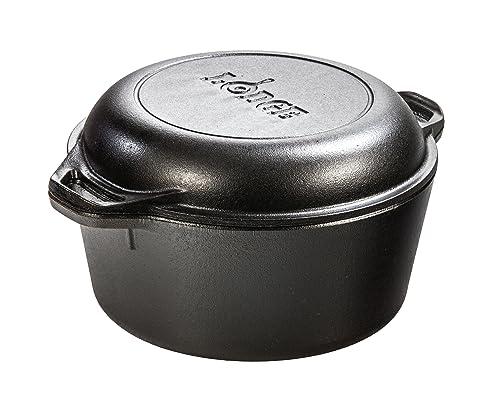
The Lodge Double Dutch is the Combo Cooker's bigger sibling and worth naming separately: a 5-quart bare dutch oven whose lid is a full 10.25-inch skillet. You can bake in it either way up, which means you can choose between tall walls for a high-hydration loaf and the flat-base loading of the Combo Cooker, and it still costs a fraction of a Challenger. Bare iron again, so the same care applies, and there is no pouring lip.

What none of these fixes

The footprint, and we are not going to pretend otherwise. The Challenger is published at 15.5 inches long; everything on this page is round and between 10.25 and about 11 inches across. If you bake bâtards, baguettes or a long fougasse, the honest options are to shape shorter and rounder, or to bake on a stone or steel under a cover and manage your own steam, or to buy the Challenger. Nothing in this registry is a 15.5-inch covered iron pan, so nothing here is going to be sold to you as one.

Two smaller things, too. None of these is pre-seasoned to a Challenger's standard out of the box except the ceramic cloche, which does not need it — bare iron wants its seasoning built over the first few bakes. And none of the iron on this page has handles on both halves, so a thick pair of oven mitts is not optional. Our how to bake bread in a dutch oven guide covers the preheat-and-transfer sequence that makes any of them workable.

The short answer

Quick picks

#ProductBest forScorePrice
01
Lodge Lodge Cast Iron Combo Cooker, 3.2 qt
Lodge Cast Iron Combo Cooker, 3.2 qt

The cheapest great sourdough vessel there is — a deep skillet and a shallow one that lock together.

Sourdough on a budget
8.8
$59.90Amazon
02
Lodge Lodge Cast Iron Double Dutch Oven, 5 qt
Lodge Cast Iron Double Dutch Oven, 5 qt

Two tools in one: a 5 qt bare dutch oven whose lid is a 10.25" skillet. Brilliant for bread and camping.

Bare-iron versatility
8.8
$59.90Amazon
03
Emile Henry Emile Henry Bread Cloche
Emile Henry Bread Cloche

Not cast iron at all — a glazed ceramic bread dome. Lighter, easier to load, purpose-built for one thing.

A dedicated bread baker
6.8
$199.24Amazon
04
Lodge Lodge 6 qt Enameled Cast Iron Dutch Oven
Lodge 6 qt Enameled Cast Iron Dutch Oven

90% of the French pots' performance for a third of the money. The value pick, and our overall best buy.

The best-value dutch oven
8.8
$74.99Amazon
05
Lodge Lodge 3-Quart Enameled Cast Iron Dutch Oven
Lodge 3-Quart Enameled Cast Iron Dutch Oven

The best small enameled pot for the money - right-sized for one or two, with a 500F knob that still bakes bread.

A small everyday enameled pot
7.8
$49.99Amazon

#ad · Live prices from the Amazon Product API, as of November 19, 2026. Where we have no verified live price, we show none — we would rather leave a gap than print a number that has gone stale.

In detail

The picks, in full

01
Lodge Lodge Cast Iron Combo Cooker, 3.2 qt

Sourdough on a budget

Lodge Cast Iron Combo Cooker, 3.2 qt

3.2 qt deep pan10.25" skillet lidPre-seasonedMade in USA
8.8/10

The cheapest great sourdough vessel there is — a deep skillet and a shallow one that lock together.

Heat retention
9
Enamel durability
8
Everyday usability
9
Oven & stovetop range
8
Value
10

Pros

  • The shallow pan on the bottom makes loading and scoring a boule far easier than a tall dutch oven
  • Preheats fast and traps steam for a great oven-spring crust
  • Doubles as two separate skillets for everyday cooking

Cons

  • 3.2 qt is sized for a single standard loaf, not a big double batch
  • Bare iron — season it and keep it dry

Don't buy this if…

…you bake large or high-hydration loaves that need tall walls. A round dutch oven gives more headroom; the combo cooker wins on ease of loading and price.

$59.90View on Amazon

Price as of November 19, 2026. Prices change — Amazon's is the one that counts.

#ad · we may earn a commission from this link to Lodge Cast Iron Combo Cooker, 3.2 qt

02
Lodge Lodge Cast Iron Double Dutch Oven, 5 qt

Bare-iron versatility

Lodge Cast Iron Double Dutch Oven, 5 qt

5 qtLid = 10.25" skilletPre-seasonedMade in USA
8.8/10

Two tools in one: a 5 qt bare dutch oven whose lid is a 10.25" skillet. Brilliant for bread and camping.

Heat retention
9
Enamel durability
8
Everyday usability
8
Oven & stovetop range
9
Value
10

Pros

  • The lid is a full skillet, so you get two pans in one purchase
  • Bare cast iron takes and holds seasoning, so it becomes naturally nonstick — unlike enamel
  • A superb, cheap sourdough vessel: preheat, drop the dough in, cover with the skillet lid

Cons

  • Bare interior needs seasoning and care — no dishwasher, dry it promptly
  • No pouring lip and heavy, like all bare cast iron

Don't buy this if…

…you want a hands-off, soap-and-water pot for acidic tomato braises. Enamel is the better tool there. This shines for bread, searing and everyday bare-iron cooking.

$59.90View on Amazon

Price as of November 19, 2026. Prices change — Amazon's is the one that counts.

#ad · we may earn a commission from this link to Lodge Cast Iron Double Dutch Oven, 5 qt

03
Emile Henry Emile Henry Bread Cloche

A dedicated bread baker

Emile Henry Bread Cloche

Glazed ceramicShallow baseMade in FranceBread only
6.8/10

Not cast iron at all — a glazed ceramic bread dome. Lighter, easier to load, purpose-built for one thing.

Heat retention
7
Enamel durability
8
Everyday usability
7
Oven & stovetop range
6
Value
6

Pros

  • Much lighter than a cast-iron dutch oven and far easier to load a shaped loaf into
  • The shallow base and domed lid are designed around the loaf, not adapted from a pot
  • Glazed, so no seasoning and easy cleanup

Cons

  • A single-purpose tool — it bakes bread and does nothing else
  • Ceramic is more fragile than iron; no stovetop use

Don't buy this if…

…you want one vessel that bakes bread AND braises. A dutch oven is the multi-tasker; this is the specialist that does bread a little more easily.

$199.24View on Amazon

Price as of November 19, 2026. Prices change — Amazon's is the one that counts.

#ad · we may earn a commission from this link to Emile Henry Bread Cloche

04
Lodge Lodge 6 qt Enameled Cast Iron Dutch Oven

The best-value dutch oven

Lodge 6 qt Enameled Cast Iron Dutch Oven

6 qtEnameledOven safe to 500°FGreat value
8.8/10

90% of the French pots' performance for a third of the money. The value pick, and our overall best buy.

Heat retention
9
Enamel durability
7
Everyday usability
9
Oven & stovetop range
9
Value
10

Pros

  • Cooks braises, soups and bread indistinguishably from pots costing three times as much
  • A generous 6 qt — room for a big batch or a large boule
  • The most sensible first enameled dutch oven for almost everyone

Cons

  • Enamel and hardware are a step below Le Creuset/Staub in finish refinement
  • Not made in France, if that matters to you (it doesn't affect the food)

Don't buy this if…

…you specifically want the heirloom object, the French finish, or the resale value of a French pot. On pure cooking, this is where the smart money goes.

$74.99View on Amazon

$89.9017% off

Price as of November 19, 2026. Prices change — Amazon's is the one that counts.

#ad · we may earn a commission from this link to Lodge 6 qt Enameled Cast Iron Dutch Oven

05
Lodge Lodge 3-Quart Enameled Cast Iron Dutch Oven

A small everyday enameled pot

Lodge 3-Quart Enameled Cast Iron Dutch Oven

3 qtEnameled500F knobServes 2-3
7.8/10

The best small enameled pot for the money - right-sized for one or two, with a 500F knob that still bakes bread.

Heat retention
8
Cooking surface
7
Handling
8
Versatility
7
Value
9

Pros

  • The right size for one or two people, a small braise, or a single boule of bread
  • The knob is rated to 500F, so it handles high-heat no-knead bread the way pricier pots do
  • Enameled, so no seasoning, nonreactive, and easy to clean, at a real value price

Cons

  • Too small for a family or batch cooking - a 5.5-6 qt pot is the household size
  • Lodge's enameled line is made overseas rather than in Tennessee like its bare iron

Don't buy this if…

…you cook for four or more - size up to a 5.5-6 quart pot so you are not cooking in rounds.

$49.99View on Amazon

$59.9017% off

Price as of November 19, 2026. Prices change — Amazon's is the one that counts.

#ad · we may earn a commission from this link to Lodge 3-Quart Enameled Cast Iron Dutch Oven

Work out which Challenger feature you are actually buying

This is the whole decision, and it is easy to get wrong because the pan is sold as one thing. If the appeal is loading, the Combo Cooker or the cloche is the answer and you will not feel the downgrade. If the appeal is shape— you bake bâtards — no alternative here is honest and you should save for the real pan. If the appeal is simply a better crust than my current pot, the problem is usually the preheat rather than the vessel, and our dutch oven bread burning on the bottom page is cheaper than any of this.

The oven-temperature number to check before you buy anything

Most no-knead bread recipes start at 450-500°F, so the vessel's published ceiling is a hard constraint rather than a nice-to-have. The Challenger publishes 500°F; Lodge publishes 500°F for its enameled line; bare iron has no practical ceiling at bread temperatures. Where an enameled pot has a plastic knob, check whether the maker publishes a lower figure for it before you commit — that is the spec that quietly rules a pot out for bread.

Bare iron or enamel for a bread pot

Bare iron takes the higher heat without a thought, costs less, and becomes naturally non-stick as it seasons, which matters when a loaf sticks. Enamel never needs seasoning, cleans up with soap, and lets you braise something acidic in the same pot on a weekday. For bread specifically the bare pots have a slight edge; for a household with one pot, enamel usually wins. Our bare vs enameled dutch oven page is the full version of that argument.

The limits of what we can tell you

We have not baked in a Challenger Bread Pan and we do not have a test kitchen. Every figure above — the price, the dimensions, the 20 lb, the 500°F, the shapes it lists — is quoted from Challenger Breadware's own published pages, read on the date in the sources list, and we link none of these picks to a Challenger listing because it sells direct and we have no verified first-party listing to point at. Our methodology page says so in those words. Prices for the picks come from the live Amazon API with an as-of date under every table.
How we picked

We do not run a testing lab

We researched published manufacturer specifications, materials and thermal properties, and aggregated owner reviews, then scored each pan against a published rubric. The scores are judgments from documented research — they are notmeasurements we took, because we do not have a lab and we are not going to pretend we do. Where a number came from a manufacturer's spec sheet or someone else's lab, we name it in Sources.

Questions

Frequently asked

What is the best alternative to a Challenger Bread Pan?
The Lodge Combo Cooker. It reproduces the Challenger's single most useful feature — a shallow base you lay a shaped loaf into flat, with a dome over the top — for a small fraction of the Challenger's published $344, and it doubles as two usable skillets.
Is the Challenger Bread Pan worth the money?
If you bake bâtards or baguettes, it is the only thing on this page that does it, because its published footprint is 15.5 inches long and every alternative here is round. If you bake round boules, a $60 Combo Cooker gets you the same workflow and a very similar crust.
Can you bake sourdough in a regular dutch oven instead?
Yes, and most people should. A preheated covered pot traps the steam that gives a loaf its spring; the only real difference is that you lower the dough into a deep pot rather than laying it flat. See our best dutch ovens for sourdough roundup for the field ranked on that job.
Is a bread cloche better than a cast iron bread pan?
It is easier to handle and easier to load, and it needs no seasoning. It also stores less heat than a thick iron casting, which slightly reduces initial oven spring, and it does nothing but bake bread. Pick the cloche if weight or loading is your objection.
Where is the Challenger Bread Pan sold?
Direct from Challenger Breadware, which publishes $344 and lists it in stock. We do not link it because there is no verified first-party Amazon listing, which is also why shoppers end up on pages like this one. We handle Smithey the same way, for the same reason.

Keep reading

Receipts

Sources

We do not run a testing lab, and we do not pretend to. Where a measured number came from a manufacturer's spec sheet or someone else's lab, we name them and link them. Where we could not verify something, we say so on the page rather than quietly leaving it out. Read our full method.