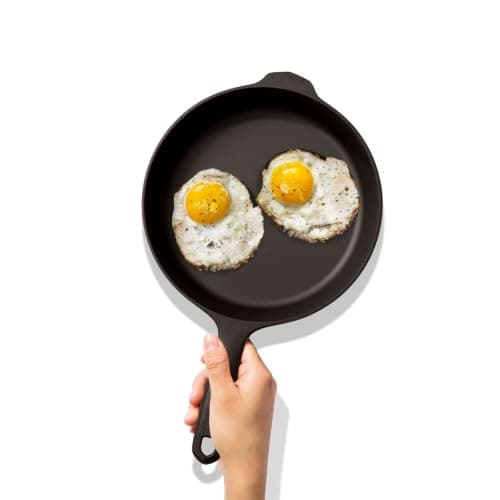
Field Company makes a light, glass-smooth, American-made skillet in the tradition of the great pre-war foundries like Griswold and Wagner — and it costs many times what a Lodge does. If you want a heirloom-grade pan with a polished cooking surface and vintage-thin walls, and the price does not scare you, Field is a lovely thing to own. If you want the best pan for the money, that is still a Lodge. Field is a luxury, and to its credit, it is honest about being one.
The No. 6 we cover here is Field's smallest everyday skillet at 8.38 inches — a one-to-two-serving pan. It is a jewel, and it is worth being clear about what kind of buyer it is for before you spend.
What Field does better than a Lodge
Two things, and they are real. First, the surface. A modern Lodge is pebbly; a Field is machined and polished nearly glass-smooth, so it releases food well early in its life instead of after months of seasoning. Second, the weight. Field casts its pans thin, in the style of vintage American iron, so a Field is noticeably lighter than a same-size Lodge and far easier to lift and toss one-handed (Field's own skillet page explains the thin-wall, smooth-finish approach).
Both of those trace back to a specific piece of history. From roughly the 1890s to the 1950s, foundries like Griswold made thin, smooth, beautifully finished cast iron that collectors still hunt for today. Post-war mass production dropped the machining step to cut cost, which is why a standard modern pan is rough. Field — along with Stargazer, Smithey and Finex— is part of a small revival that brings that finish back, at boutique prices.
Where the price lands
There is no getting around it: a Field No. 6 costs a large multiple of what a bigger, more versatile Lodge costs. You are paying for small-batch American manufacturing, the machined surface and the vintage-thin casting — craft, in other words, not extra cooking ability. The physics of the sear is the same as any other cast iron. What you get is a pan that is a pleasure to handle and the kind of object that gets handed down.
Size reality check:the No. 6 is genuinely small — right for eggs, a single steak, toasting spices or a personal cornbread, but not for cooking for a household. If it would be your only pan, it is the wrong size; a 10.25-inch or 12-inch pan does far more. Treat the No. 6 as a beloved second (or third) skillet, or size up within the Field line to a No. 8 or No. 10 for real cooking.
Field vs the other smooth pans
If a machined-smooth surface is what you are after, Field is not your only option, and the differences matter.
| Pan | Character | Best if… |
|---|
| Field No. 6 | Light, thin, vintage-smooth small pan | You want a jewel-box heirloom and love a light pan |
| Stargazer 12" | Machined-smooth with a best-in-class handle | You want one smooth pan to actually cook family meals in |
| Lodge 10.25" | Pebbly but unkillable and cheap | You want the most pan per dollar, full stop |
For most people who want a smooth pan they will really cook in, the Stargazer 12-inchis the more practical buy — it is a full-size pan with the best handle in the category. Field wins on lightness, on that vintage feel, and as an object of desire. Both show up in our roundup of the best cast iron skillets.
Who should buy a Field
Buy a Field if you already love cast iron, you have a workhorse pan covered, and you want to add a light, beautiful, smooth small skillet that you will keep for life — and the price is one you are happy to pay for craft. Do not buy a Field as your first pan or your only pan. Start with a Lodge, learn how you cook, and if the ritual sticks and you want to treat yourself, this is a wonderful way to do it. Just go in knowing you are buying beauty and heritage, not a better sear.