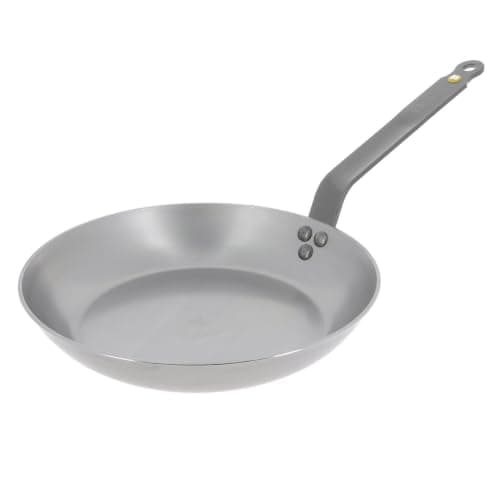
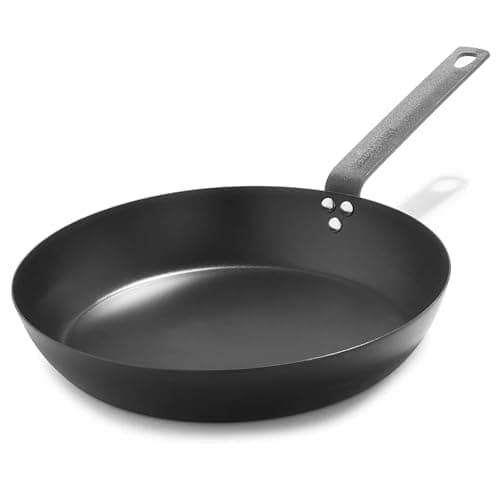
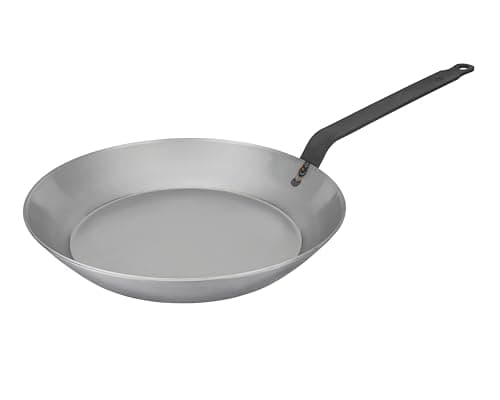
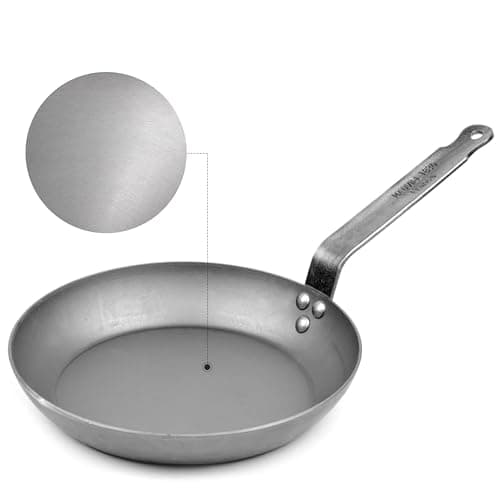
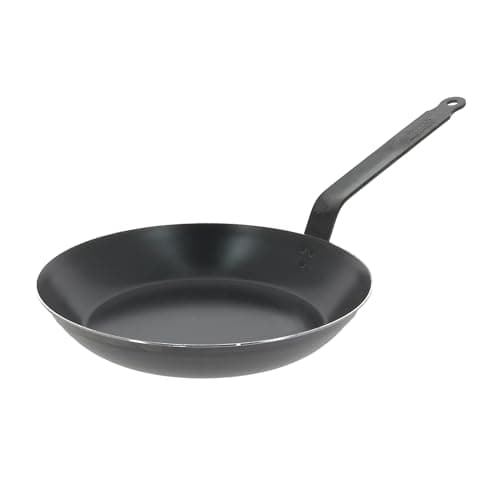
The best carbon steel pan for eggs is the De Buyer Blue, best for a cook who makes eggs most mornings and wants a thin, fast, light pan dedicated to them. The budget pick is the Merten & Storck 12-inch, best for a cook who wants to find out whether they like carbon steel before spending real money. Eggs are the one job where thin beats thick and light beats heavy, which is why this ranking is almost the reverse of a steak-pan ranking.
Why eggs want a thin pan
Almost every argument for heavy cookware is an argument about thermal mass — a thick pan stores enough heat that a cold steak cannot cool it down, so the sear keeps going. An egg weighs about two ounces and contains almost no water compared with a steak. It cannot cool a pan down. What it can do is overcook in the four seconds between “set” and “rubbery”, and a heavy pan is exactly the wrong tool for that, because it keeps cooking after you turn the burner off.
A thin carbon steel pan gives you the control back. Turn the heat down and the pan follows within a few seconds. That matters most for the gentler fried-egg styles, where the whole distinction between sunny-side-up, basted and over-hard is how long and how hot the egg sits. It also matters for a French omelette, which wants a pan hot enough to set the curd and cool enough not to color it.
Weight is the other half of it
An omelette does not get served with a spatula. It gets rolled or folded by tilting the pan and letting gravity do the work, and that only happens if you can comfortably hold the pan at an angle with one hand. A blued-steel pan is the lightest thing in this category; the Mineral B line, by contrast, is a heavier plate with a riveted steel handle and a beeswax factory finish and is noticeably more pan to hold out at arm's length. If your egg routine is scrambled-in-the-pan, weight does not matter. If it is omelettes, it is the deciding spec.
Carbon steel versus cast iron for eggs
Both are bare iron-based metals that build a polymerized-oil seasoning layer and get more stick-resistant the more you cook on them. Carbon steel is steel alloyed essentially only with carbon, rolled into a thin sheet and pressed; cast iron is poured thick. So carbon steel wins every spec eggs care about — faster, lighter, more responsive — and cast iron wins the ones eggs do not, like holding a sear through a pound of cold protein. If you want the iron answer to the same question, our best cast iron skillet for eggs page ranks that field, and cast iron vs carbon steel covers the material argument in full.
None of these are non-stick out of the box
This is the honest part. A new carbon steel pan sticks. The release comes from the seasoning you build on it over the first several weeks, and eggs are the single worst food to test a new pan with — the protein bonds directly to bare metal. The sequence that works: season the pan, then cook a few fatty things in it (bacon, sausages, potatoes in oil) before you ever try an egg. Our how to season carbon steel guide has the method, and how to cook eggs in cast iron covers the technique, which is identical on steel: preheat gently, add fat before the egg, and do not touch it for the first twenty seconds.
The pro-kitchen pans, and why they are ranked lower here
The Matfer Bourgeat is a one-piece 12 5/8-inch black carbon steel pan and a genuine restaurant standard; the Mauviel M'Steel is the induction answer. Both are excellent and both are ranked below the thinner pans on this page for one reason: they are built for a line cook doing the same thing two hundred times a night, which means robustness first. For a home breakfast, the lighter pan is simply the better tool. If you want the pans ranked on overall merit rather than on this one job, that is the best carbon steel skillets roundup.