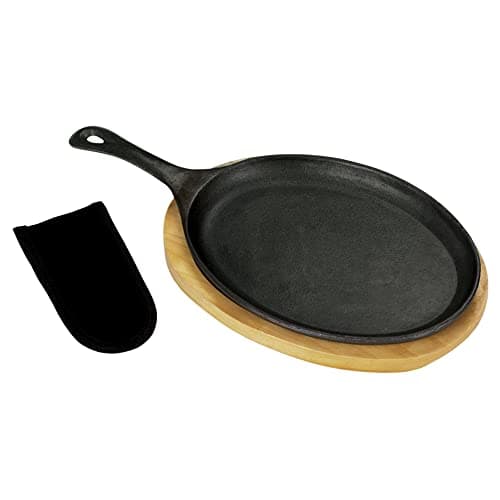
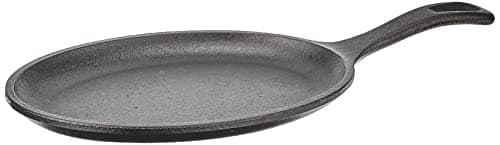
A fajita pan is a serving tool, not a cooking one, and understanding that is the whole guide. The restaurant sizzle comes from a small, heavy cast-iron platter heated screaming-hot, then loaded with already-cooked fajita filling that hisses and steams the entire trip to the table. The classic is the Lodge oval serving griddle; the Bayou Classic is the same idea with its wooden trivet included in the box. You still sear the meat and peppers in a full skilletfirst — the platter is for the drama and the presentation, and it does that beautifully.
Here is how the restaurant version actually works, because it changes what you buy. The kitchen preheats a small cast-iron platter until it is genuinely dangerous-hot — far hotter than the food. It sears the fajita filling separately in a big skillet or on a flat-top, then piles that hot filling onto the even-hotter platter, which is what produces the loud, theatrical sizzle and the cloud of steam. The platter is not cooking the fajitas; it is a heat battery for presentation. That is why these pans are small, low-walled and oval: they are sized for one serving of drama, not for cooking a batch. Try to cook a full pan of fajitas on one and you will crowd it and steam the meat instead of searing it.
What you actually need: the platter and the trivet
A fajita setup is two pieces. The cast-iron platter holds and radiates the heat; the wooden underliner(trivet) catches it so the platter does not scorch your table. Buy them together or make sure you have both — a screaming-hot iron platter set straight on a table will mark it. The Lodge platter is sold on its own (add a wood underliner), while the Bayou Classic set ships with its trivet, which is the simplest way to get everything at once. Everything else — tongs, a folded towel to carry it — you already own.
The round comal, and the grill-pan option
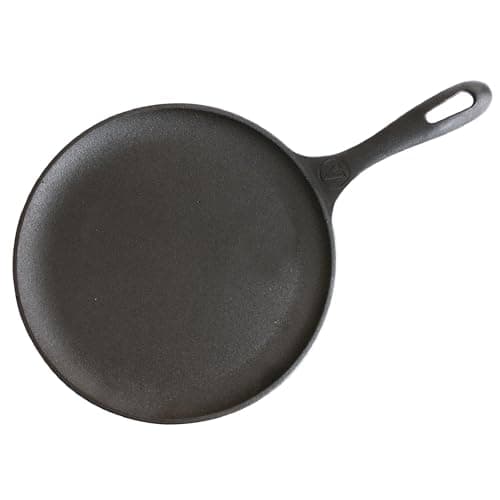
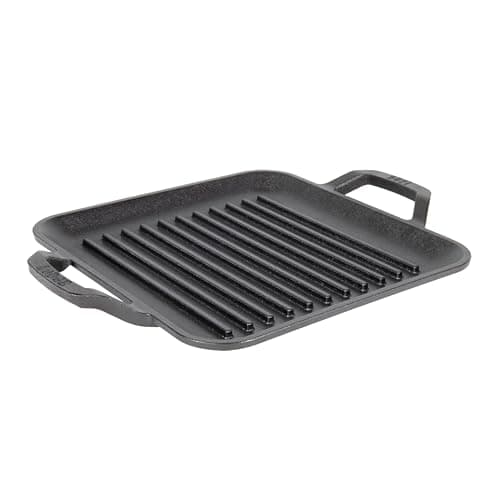
Two of our picks solve adjacent problems. The Victoria comalis the flat round griddle for warming and charring the tortillas that go with the fajitas — the traditional tool for it, and useful far beyond taco night; see our best cast iron griddles. And a grill panis the pick if what you actually want is char marks on the meat and peppers — it sears the filling with grill lines before you serve, doing the cooking the platter cannot; see the best cast iron grill pans. Between a skillet or grill pan to cook and a platter to serve, you have the whole fajita night covered.
Care and safety: hot iron, wooden trivet, no thermal shock
These are bare cast iron, so they season and clean like any skillet — wipe, dry, keep them lightly oiled. Two safety notes matter more here than usual: always set the hot platter on its wooden trivet, never bare wood or stone, and never plunge the screaming-hot pan into cold water, which can crack it through thermal shock. Let it cool, then wash. Handled that way, a fajita platter is a near-indestructible piece that turns an ordinary dinner into an event.
How to choose a cast iron fajita pan
Buy the platter and the trivet together
You need both the cast-iron platter and a wooden underliner. The Bayou Classic set includes its trivet; the Lodge platter needs one added. A hot iron platter on a bare table will scorch it.
Remember it serves, it does not cook
Sear the fajita filling in a full skillet or grill pan first, then load it onto the preheated platter. The platter is a heat battery for the sizzle, sized for one serving.
Add a comal for the tortillas
A flat round comal warms and chars tortillas the traditional way and earns its keep beyond fajita night.
Preheat hard, and never thermal-shock it
The sizzle only works if the platter is far hotter than the food. And never run cold water over the screaming-hot pan — let it cool first, or you risk cracking it. See can cast iron crack.