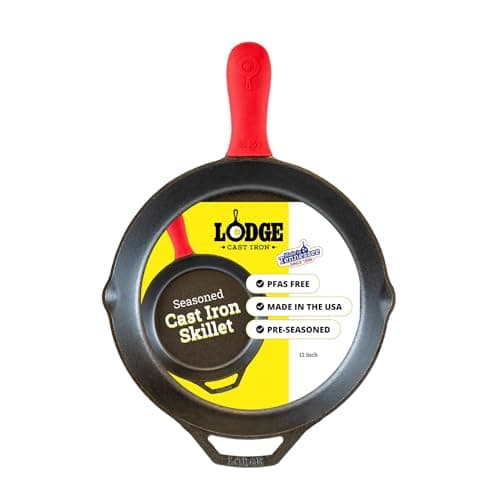
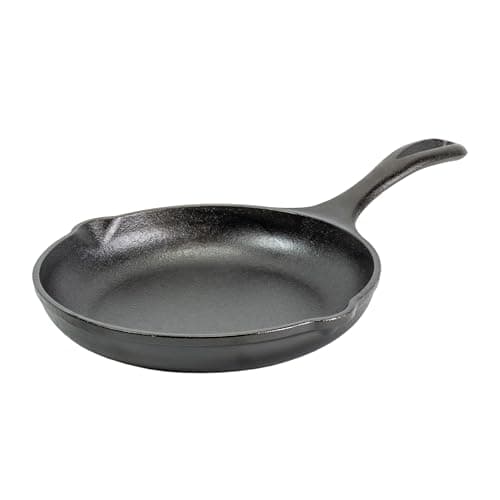
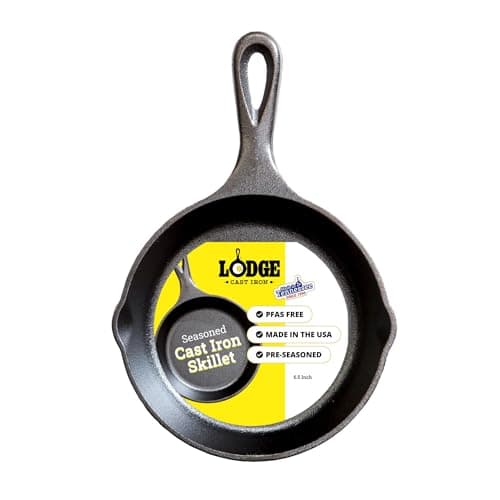
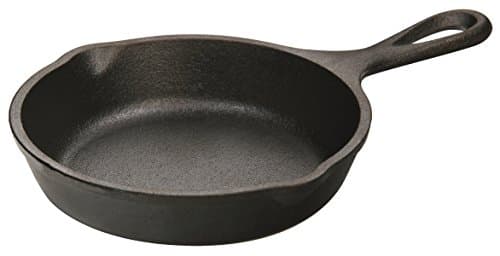
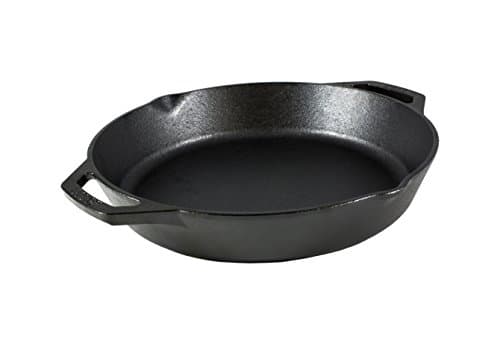
The Lodge skillet is the highest-value cookware most people will ever buy, and the whole decision is the size. Buy the 10.25-inch first — it is the do-everything pan that fries four eggs, sears two steaks, bakes a cornbread and roasts a chicken. Size up to the 12-inch if you cook for a family, down to the 8-inch for eggs and single servings, and to the little 6.5-inch or 5-inch pans for sides and serving. Every one is American-made, pre-seasoned, near-indestructible, and costs a fraction of a boutique pan that sears no harder.
Lodge has cast iron in South Pittsburg, Tennessee since 1896 (its history page walks the timeline), and the reason a Lodge skillet is the site-wide default is simple: the physics of cast iron — store heat, dump it into a sear — does not care what the pan cost, so a $25 Lodge cooks exactly as well as a pan that costs ten times more. The one honest knock is the surface: a standard Lodge is pebbly, not machined smooth, so a fried egg grips it more on day one than it would a boutique pan. That difference mostly disappears, because bare iron smooths with seasoning: a Lodge that has cooked bacon and cornbread for a few months releases food beautifully. For the whole Lodge lineup beyond skillets, see the best Lodge cast iron.
Which Lodge skillet size to buy
The 10.25-inchis the one to own if you own only one — the most useful single size for almost everyone. The 12-inch is the family pan, searing six chicken thighs where the 10 does four, at the cost of real weight. The 8-inch is the dedicated egg-and-single-serving pan, light enough to handle one-handed. The little 6.5-inch and 5-inch pans are for toasting spices, a single egg, sides and oven-to-table serving. Most cooks end up with the 10.25 plus one smaller pan; our 10 vs 12-inch and skillet sizing guides settle the size question in detail.
Getting the most from a Lodge skillet
A new Lodge arrives pre-seasoned and works the day it lands, but it becomes genuinely nonstick over the first months as you cook fat into it and build your own seasoning on top of the factory layer. Cook bacon, sear steaks, fry eggs in enough fat, and the pebbly surface slicks up on its own. Keep it simple on care: hot water and a brush or chainmailafter cooking, a thorough dry on the burner, a wipe of oil, and never a long soak. If food starts to stick or the surface looks dull, a maintenance seasoning round resets it. A Lodge treated this way outlives its owner — the same pan your grandchildren could cook on — which is exactly what makes a $25 skillet the best value in the kitchen.
How to choose a Lodge skillet
Start with the 10.25-inch
It is the do-everything size and the one you will reach for daily. Do not buy a boxed set instead — a set spreads your money across sizes you rarely use. Buy one great pan and add sizes as you feel the need. See the full best cast iron skillets ranking for how it compares to rivals.
Size to your household and your grip
A 12-inch feeds a family but is genuinely heavy full; an 8-inch is light and perfect for eggs. Match the pan to what you cook and what you can comfortably lift — a pan too heavy to bother with is worse than a smaller one you reach for.
Standard or Chef Collection?
Lodge's standard pans are pebbly; its Chef Collection pans are a little smoother and lighter for a bit more money. Neither cooks better; the Chef finish just starts slicker. A standard pan gets there with seasoning.
Add a handle holder
Every bare Lodge handle gets hot. A leather or silicone handle holder is a couple of dollars and fixes the one real ergonomic weakness of a cheap pan.