If you are comparing cast iron skillets on paper, the only four specs that separate them are diameter, published weight, interior finish and where the pan was cast — and the tables above carry all four for every pan this site covers. The short version: a 10.25-inch Lodge Classic is the baseline everything else is measured against, a machined pan from Stargazer or Field buys you a lighter casting and a slicker start, and nothing in the premium tier cooks better than the baseline once both pans are seasoned.
Every number above is the maker's own published figureor the figure on the live retail listing, and we say which. We do not own scales calibrated for this and we do not run a lab — see our methodology. Where a maker publishes nothing, the cell says what the listing says and no more. That is deliberate: inventing a weight to make a table look complete is exactly how spec pages become useless.
Read the cooking surface, not the diameter
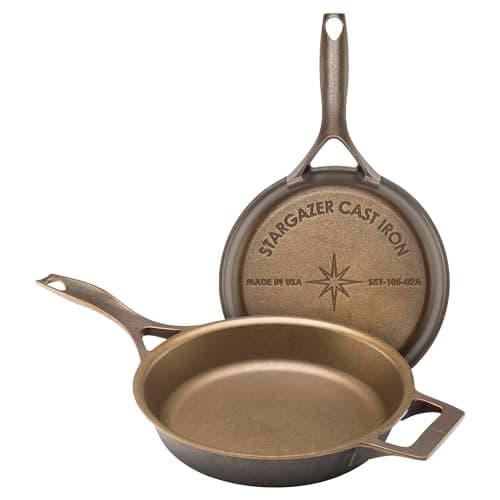
Quoted diameter is measured across the top rim, and the flat cooking surface is always meaningfully smaller because the walls flare. Field publishes an 8⅜-inch top diameter with a 7-inch cooking surface, and Stargazer's 10.5-inch pan publishes an 8.1-inch cooking surface. That is a 20–25% haircut in both cases.
Most mainstream brands publish only the rim figure, which is why cross-brand comparison on diameter alone misleads. Where you can get the cooking-surface number, use it — it is what decides how many chicken thighs fit without steaming each other. Full chart: cast iron skillet sizes.
Weight is the spec people regret ignoring
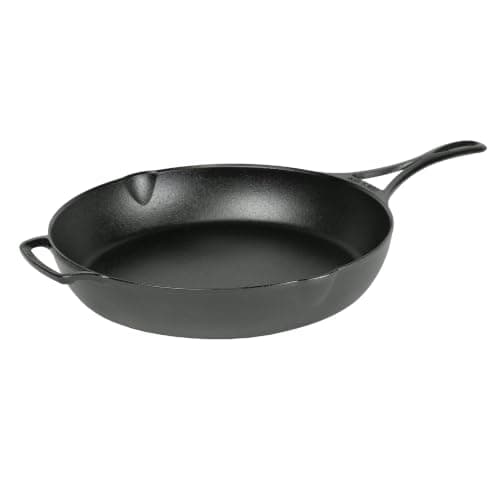
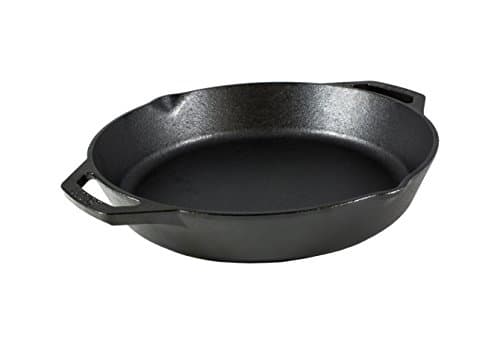
The tables make the spread obvious: at 12 inches you are choosing between roughly eight pounds of Lodge Classic and a Blacklock that Lodge publishes as engineered lighter than its traditional iron. At 10 inches, the machined Stargazer is listed at 5.2 lb against the Lodge's 5.66 lb, while the budget-milled Backcountry Wasatch is a genuine 7 lb.
Modern pans are cast thicker than pre-war ones, so none of these is light by vintage standards. If weight is your constraint, the two answers are to buy a smaller size or to pay for a thinner casting — ranked in best lightweight cast iron skillets. Buying a big heavy pan and resolving to get used to it does not work.
Finish: three categories, not a spectrum
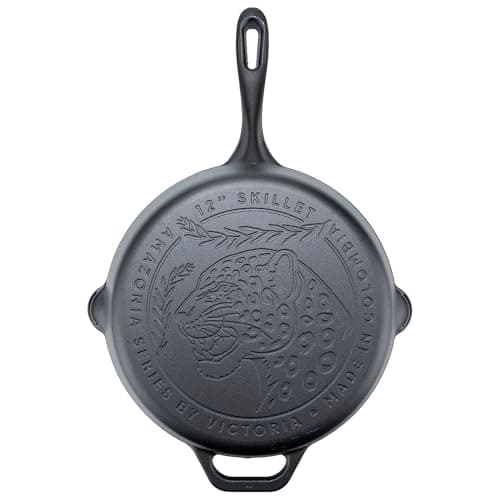
- As-cast. Straight out of a sand mould, slightly pebbly. Lodge, Victoria, Finex. The texture fills in with seasoning over a few months of real use.
- Machined or polished. The texture is physically removed. Stargazer publishes CNC machining across the entire interior; Field publishes a polished surface. Releases food earlier in the pan's life.
- Finer as-cast.Smoother than standard but not milled — Lodge's Chef Collection and Blacklock. Easy to mistake for machining in photos. It is not, and the three-line comparison spells out what each Lodge tier does and does not claim.
Whether the upgrade is worth it is the one genuinely contested question in this category: smooth vs rough cast iron and Backcountry Iron vs Lodge are the two pages that argue it out with the numbers from these tables.
What this table deliberately does not compare
Heat performance. Every pan here is grey cast iron of broadly similar thickness, so they all have high thermal mass and the same poor thermal conductivity. They preheat slowly, spot while heating, and hold temperature superbly. Differences between them are small next to the difference between any of them and an aluminium pan — cast iron vs cast aluminum and cast iron vs hard anodized have that comparison.
Non-stick behaviour. Not a property of the pan; a property of its seasoning and your heat control. See is cast iron non-stick, and if you are choosing against a coated pan, cast iron vs nonstick or enameled cast iron vs nonstick.
Ratings and test results. There are none here, because we did not run tests. The scores on our ranked pages are judgments from documented research against a published rubric, and we say so every time.
How to use these tables to actually decide
- Pick the row band first.Size is the decision that determines whether you enjoy the pan. One pan for a household: the 10–10.5-inch band. Cooking for one or adding a second pan: the small band. A family: 12 inches, and read the weight column twice.
- Then set a weight ceiling. Decide what you will happily lift one-handed, full, over a sink. Cross off everything above it. This eliminates more pans than price does.
- Then decide if finish is worth money to you. If you will cook on the pan several times a week, as-cast catches up. If you want it slick from day one, or you want a nicer object, pay for machined.
- Then look at the price column. Last, not first. Every price in these tables is live from the price layer with its own as-of date, so it reflects today rather than whenever this page was written.
Where provenance sits in the comparison
It is checkable and it is not the same as quality. Lodge publishes two foundries in South Pittsburg, Tennessee; Stargazer publishes casting and finishing in the USA; Field publishes US manufacture; Victoria publishes manufacture in Colombia. Several budget brands publish nothing at all about where their pans are cast, which is itself information. If this is the deciding factor, best American-made cast iron sorts the field on exactly that question, and the brands page covers who makes what.
If you want the argument rather than the numbers
This page is deliberately a reference, not a recommendation. The pages that take a position are the best cast iron skillets (ranked), the buying guide (the decision sequence), common problems (for a pan you already own) and is cast iron worth it (for anyone still deciding whether to buy any of this at all).