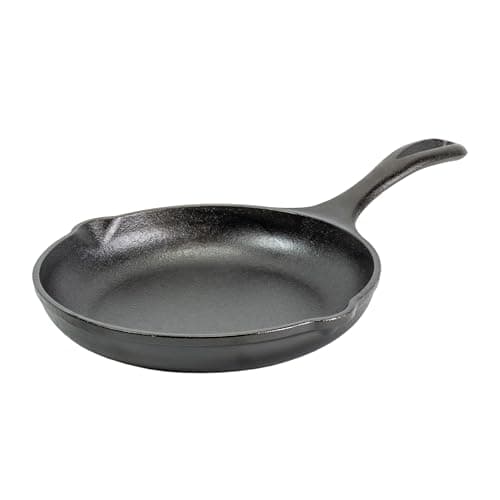
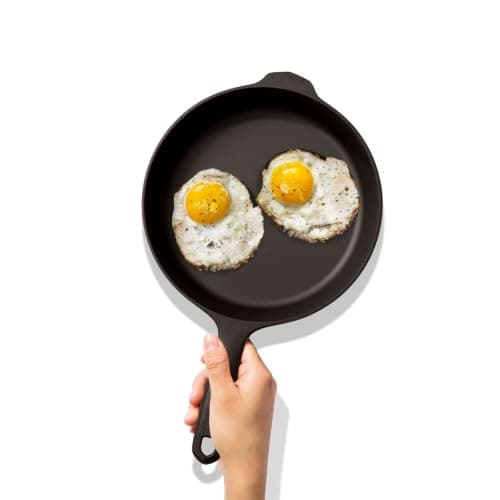
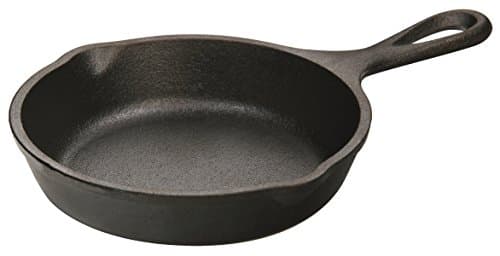
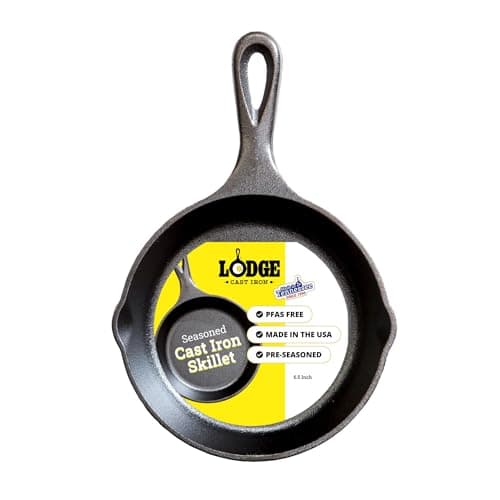
Buy the 6.5-inch Lodge. It is the best small cast iron skillet for most people: the right size for a fried egg, a grilled cheese, a small side, or toasting spices, and it is the cheapest cast iron on this entire site. Go smaller only for single eggs and serving; go up to 8 inches if it will be a solo cook's main pan. Just know a small skillet is a complement, not a household's only pan.
"Small" covers a real range, from an 8-inch that a single person can cook most meals in down to a 3.5-inch novelty. The trick is matching the size to the job: a skillet's diameter decides how much it holds and how easily food crowds, and a pan too small for the job steams instead of searing. We ranked these by how much genuine use you get for the size and the money, with honest notes on where each stops being useful.
The small skillets at a glance
| Pan | Size | Best for |
|---|
| Lodge 6.5-inch | 6.5 in | The best true small skillet, and cheapest |
| Lodge 8-inch Chef | 8 in | A solo cook's everyday pan |
| Field No. 6 | 8.38 in | The smooth, light small upgrade |
| Lodge 5-inch mini | 5 in | Single eggs and hot serving |
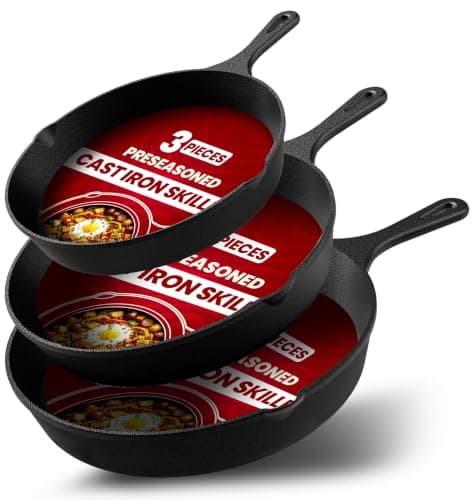
| Utopia 3-piece set | 6 / 8 / 10 in | Several small sizes for the least money |
Best small skillet: Lodge 6.5-inch
The 6.5-inch Lodge is the small pan we'd hand almost anyone. It is big enough to be genuinely useful — a couple of eggs, a single grilled cheese, a personal cornbread, a small batch of sauce, toasting nuts and spices — and small enough to lift one-handed, store easily, and take from oven to table as a serving dish. And it is the cheapest cast iron anywhere on this site, often costing less than a fast-food lunch. Like any standard Lodge it arrives pre-seasoned with the usual pebbly surface that turns slick as you build seasoning. It is too small to be a household's only skillet, but as a small pan it is close to perfect.
A solo cook's everyday pan: Lodge 8-inch Chef Collection
If "small" for you means the one pan you cook most meals in as a single person, size up to the 8-inch. Lodge's Chef Collection8-inch has a lighter, slightly smoother casting than the standard line, so it is easy to handle, and 8 inches fits a two-egg breakfast, a single chop, or a personal stir-fry without crowding. It is the largest of the "small" pans and the most versatile of them — the sweet spot for one person who wants a single go-to skillet rather than a set.
The smooth small upgrade: Field No. 6
When you want a small pan that is a pleasure rather than just a workhorse, the Field No. 6 is the pick. At 8.38 inches it is cast thin in the pre-war style, polished glass-smooth, and noticeably lighter than a comparable Lodge, so food releases early in its life and the pan is a joy to lift and pour. It is a genuine luxury — many times the price of the Lodge 6.5-inch — and worth it only if you love cast iron and want a beautiful, heirloom-grade small skillet. For the difference in surface, see smooth vs rough cast iron.
Single eggs and serving: Lodge 5-inch mini
The 5-inch Lodge mini is a specialist, and buying it as a cooking pan is the mistake to avoid — it holds one egg, a spoon of melting butter, a single cookie, or a small handful of spices, and that is the point. Where it shines is serving: bring a dip, a baked egg, or a personal dessert sizzling from the oven straight to the table. It is charming and made in the USA, but it is pricier for its size than the far more useful 6.5-inch and stock can be thin, so treat it as a fun extra, not a first small skillet.
Several small sizes for the least money: Utopia 3-piece set
If you want a spread of small sizes at once, the Utopia three-piece set gives you 6-, 8-, and 10-inch skillets for less than a single premium pan — the cheapest way to cover the small end and find out whether you enjoy cast iron. The casting is rougher and less consistent than Lodge and the factory seasoning is thin, so expect a longer break-in, but as a low-cost way into a few small sizes it is a sensible value play. If you only want one small pan, the Lodge 6.5-inch is the better buy.
How to choose a small cast iron skillet
What counts as "small"
Small cast iron runs from about 8 inches down to 3.5. An 8-inch is a solo cook's main pan; a 6.5-inch is the classic small skillet for eggs, sides, and single servings; a 5-inch is a single-egg and serving mini; anything smaller is essentially a serving dish. Match the size to what you actually cook, because a pan too small for the job crowds the food and steams it instead of searing.
Small is a complement, not a main pan
For a household, a small skillet should sit alongside a 10.25- or 12-inch pan, not replace it. A small pan is the one you reach for to fry two eggs without heating a big skillet, to toast spices, or to melt butter — the daily little jobs. If you need one pan to do everything, buy the bigger one first from our best cast iron skillets guide and add a small pan later.
Smooth or standard
In small sizes, a machined-smooth pan like the Field releases food sooner and is lighter, but a standard Lodge becomes just as slick with seasoning for a fraction of the price. For a small pan you use occasionally, the cheap Lodge makes the most sense; for a small pan you cook on daily and want to feel special, the smooth upgrade is easier to justify. See smooth vs rough.
Handling and serving
A small skillet's big advantage is that it is light enough to lift one-handed, which most cast iron is not — but the handle still runs hot, so keep a cloth or a small handle sleeve nearby, especially on minis where the handle sits close to the pan. Retained heat also makes small pans lovely stove-to-table serving dishes; just warn everyone the dish is hot.
Care
Small skillets are cared for exactly like big ones: keep them seasoned, dry them promptly, and wipe on a thin film of oil so they do not rust. Because they are small and often used for eggs, they benefit from a well-built seasoning layer — a few extra rounds early on pays off. If food sticks, our guide on why food sticks to cast iron walks through the fixes.