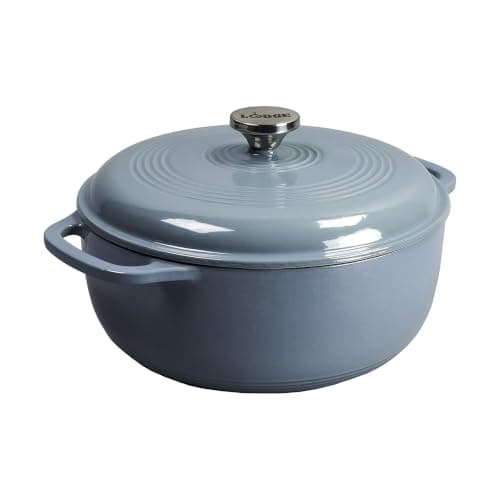
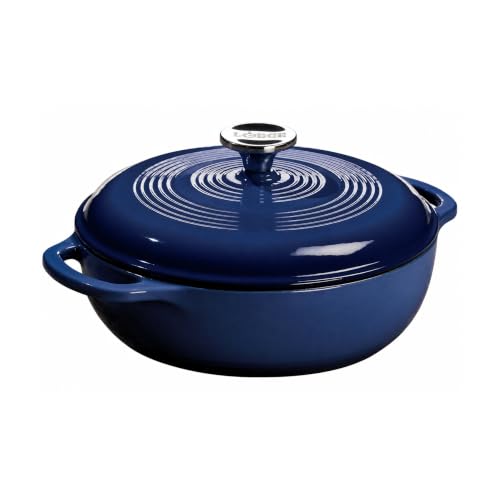
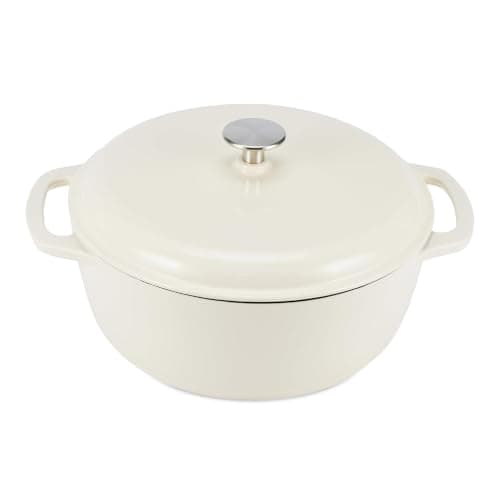
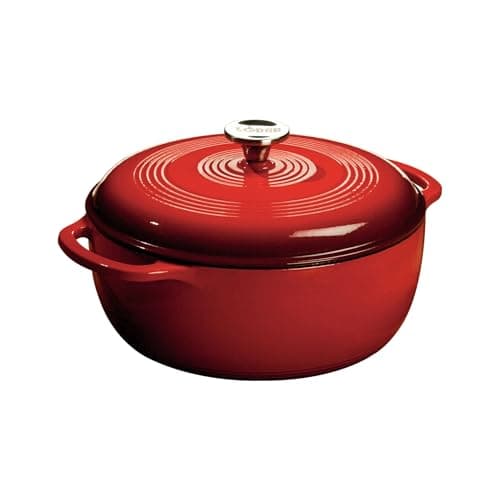
The best dutch oven under $200 is the Lodge 6-quart enameled, best for a household buying one pot to do everything — and it sits at well under half the ceiling. The budget pick is the Amazon Basics 4.3-quart, best for one or two people. The useful fact about this band is how complete it is: thirteen pots in our registry carried a live price under $200, covering every shape the category makes, and none of them gives up anything that changes how a braise turns out.
What $200 does and does not buy
A dutch oven is a thick-walled pot with a tight-fitting lid, and those two properties are the entire mechanism. Thick walls hold a low, even simmer; a heavy lid traps the moisture that keeps a braise from drying out. Both are present in an eighty-dollar pot. The French pots that cost twice this ceiling buy a harder and more chip-resistant enamel, larger and better-shaped handles, a lifetime warranty, a resale market, and a nicer object. Those are genuine. None of them is a cooking property, which is the argument our are expensive dutch ovens worth it page makes at length.
The one thing worth paying attention to in this band is the published oven-safe figure, because it is the only spec that differs materially between pots. Lodge publishes 500°F for its enameled line. Some of the cheaper pots publish a lower figure or none at all. If you bake bread by preheating an empty pot hard, that figure is the spec to buy on; if you braise at 325°F, it is irrelevant.
Enamel or bare iron under $200
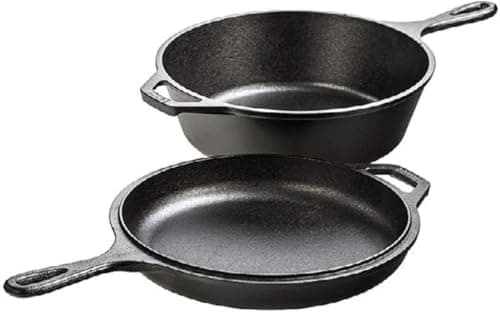
Both fit in this band comfortably, and they are different tools. Enamel is inert, so acid, soap and a dishwasher are all survivable and it needs no maintenance. Bare iron takes a seasoning layer that gets better the more you cook on it, is far cheaper for the same capacity, and goes over a fire. The Combo Cooker is here because it is the one bare-iron pot in the band that is better than any enameled pot at a specific job: its shallow base means you drop a sourdough loaf in rather than lowering it into a deep well. Our bare vs enameled dutch oven comparison covers the rest of that choice.
Round, oval, and why the ovals are here
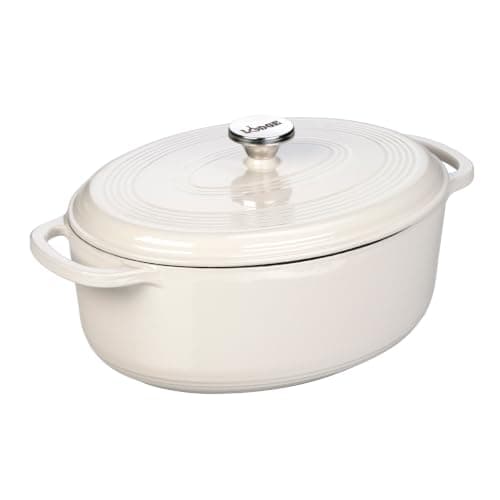
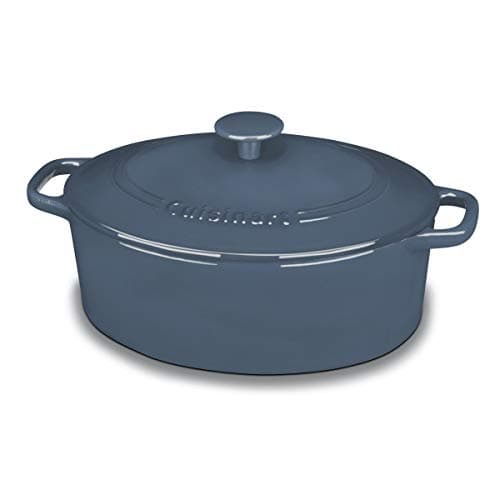
Round pots are the default: they sit evenly over one burner and cost less per quart. Two ovals make the band anyway, because an oval is genuinely better for a long cut — a brisket flat or a bone-in roast lies flat instead of being curled. Under $200 you can have either, which is not true above the band, where an oval of the same capacity costs appreciably more. If a roast is your signature dish, read the best dutch ovens for pot roast before deciding, and round vs oval for the general argument.
Capacity, which is where people overspend
The most common mistake in this band is buying the biggest pot the budget allows. An eight-quart pot is heavy to lift full, slow to come up to temperature, and mostly empty for a weeknight dinner, so it lives in a cupboard while a right-sized pot lives on the stove. Five and a half to six quarts is the everyday sweet spot for two to four people; go to 7 or 7.5 only if you routinely cook for six or make stock. Three quarts is a genuinely useful second pot for rice, beans and small braises, and at this end of the market a 3-quart and a 6-quart together still fit under the ceiling. Our what size dutch oven guide works through it properly.
How the band is checked
Every price here is read from the live Amazon listing at the date stamped under the comparison table. A price-band page that is not re-checked is just a stale claim, so a pick that drifts above $200 comes off the page rather than staying on it. Where there is no verified live price for a pot, no number is shown.
If your ceiling is much lower, the best budget dutch ovens page ranks the rock-bottom enameled pots specifically. If you are prepared to cross the line for an heirloom, Lodge vs Le Creuset is the honest version of that argument.