Skip to content
Hearth & Patina

Guides & Comparisons

Staub vs Lodge: Is the French Cocotte Worth It?

A Staub cocotte browns hard and lasts a lifetime; a Lodge enameled pot cooks within a whisker of it for a third of the money. Here is exactly what the extra pays for.

By Stephen V.Updated How we research
#ad

We earn a commission when you buy through our Amazon links, at no extra cost to you. It never affects our rankings, and we say so when the cheaper pan is the better buy. How this works.

Buy the Lodge enameled dutch oven. Blind, in a bowl, nobody is telling a Lodge braise from a Staub braise — the pot does the same low, slow, even cooking for roughly a third of the price. Buy the Staub only if you specifically want what the extra money actually buys: a dark matte enamel that browns harder, a spiked self-basting lid, French build quality, and resale value that holds like almost no other cookware. Those are honest reasons to spend up. Cooking a better stew is not one of them.

This is the same argument as our Lodge versus Le Creuset comparison, aimed at the other French icon. A dutch oven, or cocotte as Staub calls it, is a thick-walled pot with a heavy lid whose whole job is to hold heat steady and spread it evenly. Once you see the pot as a heat battery, the price ladder stops being mysterious: almost every enameled pot braises superbly, and the money above the Lodge buys finish, hardware, warranty and looks — not a noticeably better braise. If Le Creuset is also on your shortlist, the Le Creuset versus Staub guide splits those two.

What the Staub actually does better

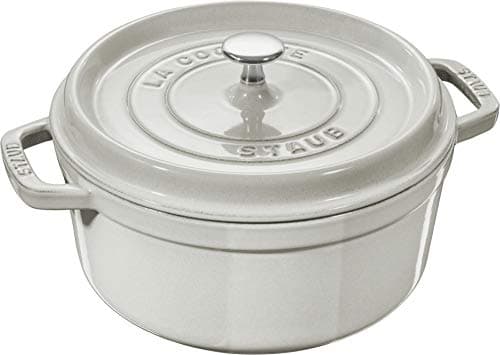
The Staub is a genuinely wonderful pot, and it is worth being precise about its advantages. Its interior is a dark, matte enamel that takes high-heat browning better than a pale interior and hides stains over years of use. Its lid is spiked on the underside so condensed moisture drips back onto the food in a fine, even rain — the self-basting effect that keeps a long braise moist. The build is heavier and the lid seals tightly, which suits low, slow cooking. And a Staub holds its resale value the way French cookware does and a budget pot does not. These are real, and if you want them, buy the Staub without guilt.

Lodge enameledStaub cocotte
Capacity6 qt5.5 qt
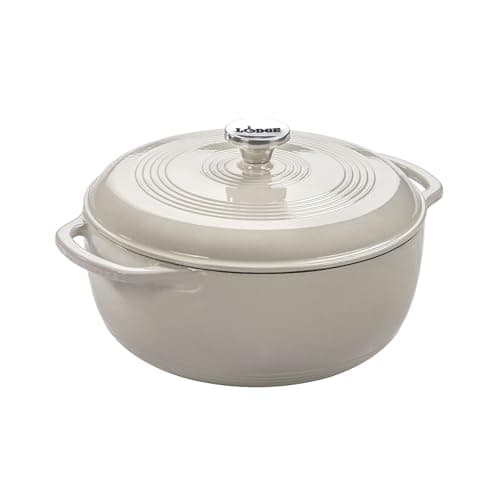
Interior enamelPale (easy to read fond)Dark matte (browns hard, hides stains)
LidStandardSpiked / self-basting
Made inNot FranceFrance
Resale valueLowHolds strongly
Cooking resultIndistinguishable on a braise

Where the Lodge wins

The Lodge wins on the only axis most cooks should weight heavily: value. It braises, bakes and simmers within a whisker of the Staub for roughly a third of the money, and its generous 6 quarts is right in the sweet-spot size. Its pale interior makes fond easy to read, which is a real cooking aid for sauces. What you give up is refinement — the enamel and hardware are a step below Staub's, there is no lifetime pedigree, and it will not hold resale value. For the overwhelming majority of home cooks that is the right trade, which is why the Lodge is our overall best buy in the best dutch ovens roundup.

The one caveat about dark enamel

Staub's dark interior is a genuine trade, not a pure upgrade. It browns aggressively and never looks stained, but it makes fond color harder to read, so watching a pan sauce for the exact moment before it burns is easier in the Lodge's pale pot. If you cook a lot of bright, light dishes and rely on seeing the color of the bottom of the pot, that is a point for the Lodge. If you brown hard and hate the look of a stained interior, it is a point for the Staub. Neither is wrong; it is a preference.

Does the size difference matter?

The Lodge here is a 6-quart pot and the Staub a 5.5-quart cocotte, and in practice that half-quart is a rounding error. Both sit squarely in the 5-to-6-quart sweet spotthat suits almost everyone — big enough for a family braise, a whole chicken, or a large loaf of bread, small enough to store and lift. Neither capacity is a reason to choose one over the other; decide on interior color, lid style, budget and how much the object itself matters to you.

One genuine long-term difference is support. A Staub is backed by a French maker's guarantee and holds strong resale value, so a chip or a change of heart is not the end of the story. The Lodge has no such pedigree — it is inexpensive enough to treat as a workhorse rather than an heirloom. If you keep cookware for life and want the reassurance of a warranty and resale, that is a real point for the Staub; if you would rather not pay for it, the Lodge is the honest value.
Whichever you buy, the enamel lasts if you treat it kindly.Avoid thermal shock, skip metal utensils, and stack with protectors. Both makers' care advice is summarized in enameled cast iron care (Lodge's own guide is here).

The short answer

Quick picks

#ProductBest forScorePrice
01
Lodge Lodge 6 qt Enameled Cast Iron Dutch Oven
Lodge 6 qt Enameled Cast Iron Dutch Oven

90% of the French pots' performance for a third of the money. The value pick, and our overall best buy.

The best-value dutch oven
8.8
$89.90Amazon
02
Staub Staub Round Cocotte, 5.5 qt
Staub Round Cocotte, 5.5 qt

The other French icon — a dark matte-enamel interior built for browning and self-basting.

Browning and braising
8.2
Check price →

#ad · Live prices from the Amazon Product API, as of Jul 29, 2026. Where we have no verified live price, we show none — we would rather leave a gap than print a number that has gone stale.

In detail

The picks, in full

01
Lodge Lodge 6 qt Enameled Cast Iron Dutch Oven

The best-value dutch oven

Lodge 6 qt Enameled Cast Iron Dutch Oven

6 qtEnameledOven safe to 500°FGreat value
8.8/10

90% of the French pots' performance for a third of the money. The value pick, and our overall best buy.

Heat retention
9
Enamel durability
7
Everyday usability
9
Oven & stovetop range
9
Value
10

Pros

  • Cooks braises, soups and bread indistinguishably from pots costing three times as much
  • A generous 6 qt — room for a big batch or a large boule
  • The most sensible first enameled dutch oven for almost everyone

Cons

  • Enamel and hardware are a step below Le Creuset/Staub in finish refinement
  • Not made in France, if that matters to you (it doesn't affect the food)

Don't buy this if…

you specifically want the heirloom object, the lifetime warranty, or the resale value of a French pot. On pure cooking, this is where the smart money goes.

$89.90View on Amazon

Price as of Jul 29, 2026. Prices change — Amazon's is the one that counts.

#ad · we may earn a commission from this link to Lodge 6 qt Enameled Cast Iron Dutch Oven

02
Staub Staub Round Cocotte, 5.5 qt

Browning and braising

Staub Round Cocotte, 5.5 qt

5.5 qtMatte black enamelSelf-basting lidMade in France
8.2/10

The other French icon — a dark matte-enamel interior built for browning and self-basting.

Heat retention
10
Enamel durability
9
Everyday usability
8
Oven & stovetop range
9
Value
5

Pros

  • Dark matte-enamel interior takes high-heat browning better than pale enamel and hides stains
  • Spiked/self-basting lid drips condensed moisture back onto the food during long braises
  • Heavier build and a tight lid make it excellent for low, slow cooking

Cons

  • The dark interior makes it harder to read fond color than Le Creuset's pale enamel
  • Every bit as expensive as Le Creuset, and heavier

Don't buy this if…

you bake a lot of bright, light dishes where you want to see the fond, or you want the lightest pot you can get. The dark interior and heft are the trade for its browning and basting strengths.

Check price on Amazon →

No buyable offer at the last price check (Jul 29, 2026). We show nothing rather than a stale number.

#ad · we may earn a commission from this link to Staub Round Cocotte, 5.5 qt

How we picked

We do not run a testing lab

We researched published manufacturer specifications, materials and thermal properties, and aggregated owner reviews, then scored each pan against a published rubric. The scores are judgments from documented research — they are notmeasurements we took, because we do not have a lab and we are not going to pretend we do. Where a number came from a manufacturer's spec sheet or someone else's lab, we name it in Sources.

Questions

Frequently asked

Is a Staub dutch oven worth it over a Lodge?
Only for reasons other than cooking. On the braise itself, a Lodge enameled pot performs within a whisker of a Staub for roughly a third of the price. Spend up on the Staub for its dark browning enamel, self-basting lid, French build and resale value — all real, but none of them a better stew.
What is a cocotte?
It is the French word for a dutch oven — a heavy, lidded pot for braising and slow cooking. Staub markets its pots as cocottes; functionally it is the same tool. More detail is in dutch oven vs cocotte.
Does the Staub self-basting lid actually matter?
A little. The spikes on the lid's underside drip condensed moisture back onto the food in a fine rain, which helps keep a long braise moist and evenly basted. It is a nice touch rather than a transformative one — a well-fitting standard lid on the Lodge braises beautifully too.
Is the Lodge enameled dutch oven good quality?
Yes. It cooks braises, soups and bread indistinguishably from pots costing three times as much. Its enamel and hardware are a step below the French pots in refinement, and it has no lifetime warranty, but the cooking is not the compromise — see the enameled dutch oven roundup.
Staub or Le Creuset, if I am spending the money?
Both are superb French pots. Staub's dark interior browns harder and hides stains with a self-basting lid; Le Creuset's pale interior reads fond easily with the most comfortable handles in the category. Compare them directly in Le Creuset vs Staub.

Keep reading

Receipts

Sources

We do not run a testing lab, and we do not pretend to. Where a measured number came from a manufacturer's spec sheet or someone else's lab, we name them and link them. Where we could not verify something, we say so on the page rather than quietly leaving it out. Read our full method.