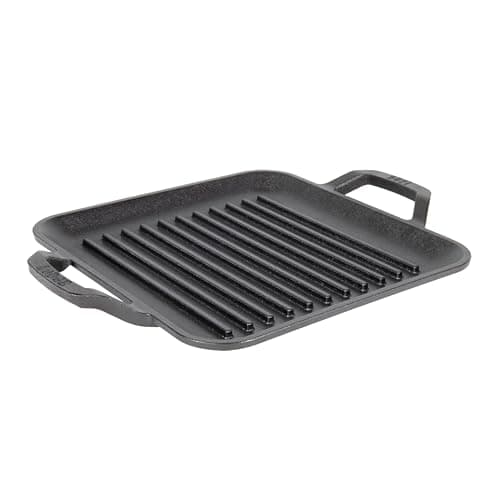
Buy the Lodge 10.5-inch square cast iron grill pan. Its tall ridges lay down real grill marks, lift food out of its own rendered fat, and sear as hard as anything indoors, for a fraction of what a fancier pan costs. Step up to the Chef Collection 11-inch pan only if you want a lighter body and a more comfortable handle, and jump to the two-burner Pro-Grid reversible slab if you routinely cook grill-marked food for a crowd. What no cast-iron grill pan does is replicate live-fire flavor — that comes from smoke and dripping fat over coals, not from a pan.
A grill pan is a skillet with a ridged floor. The ridges do two useful things: they press dark, caramelized Maillard stripes into whatever you lay across them, and they hold the food up off the pan floor so rendered fat drains away instead of shallow-frying your dinner. Cast iron is the right metal for the job because its thermal mass stays hot when cold steak or vegetables hit it, so the marks set fast and the pan does not stall. If you want the flat-surface version of this tool for smash burgers and pancakes, read the best cast iron griddles instead; if you want the real thing outdoors, see the best cast iron for the grill.
Why the cheap square Lodge wins
The standard Lodge square grill pan is the pick for almost everyone because it does the one thing a grill pan exists to do — marks and fat drainage — with no compromise, at the lowest price on this page. The square shape fits more chops, halloumi or asparagus than a round pan of the same footprint, and the tall ridges render and drain fat well. Its honest drawbacks are the ones every ridged pan shares: the grooves take a stiff brush to clean, and it sears and marks without ever tasting of charcoal. Neither is a reason to spend more. It is made in the USA and arrives pre-seasoned, like the rest of Lodge's range.
| Pan | Size | Best for | Burners |
|---|
| Lodge square grill pan | 10.5 in square | Marks and searing on a budget | One |
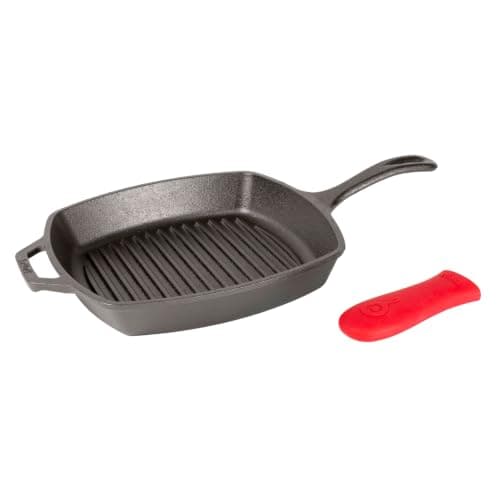
| Lodge Chef Collection grill pan | 11 in round | A lighter pan with a better handle | One |
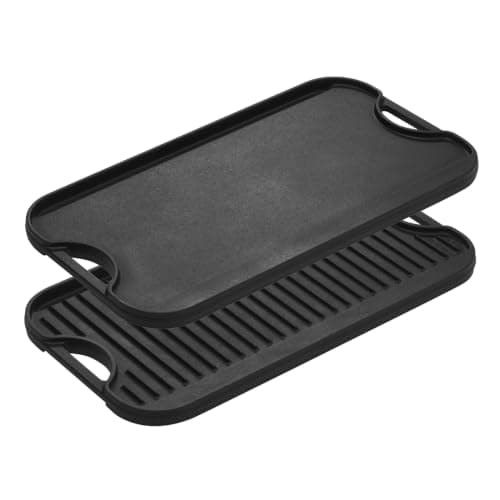
| Lodge Pro-Grid reversible | 20 x 10.5 in | Grill marks for a crowd (flat side too) | Two |
When the Chef Collection pan is worth it
The Chef Collection 11-inch grill pan is the same idea, cast a little thinner and smoother with an improved handle. It is lighter to lift and a touch nicer to cook on, and the round shape suits a couple of steaks or a fish fillet. You pay more for modest gains, so it is the pick only if the standard pan's weight or stubby handle bothers you. If a glass-smooth surface is what you are chasing across all your cast iron, the smooth-versus-rough question is worth reading first — a grill pan's ridges matter far more than its floor finish.
When to go to two burners
The Pro-Grid reversible is a different tool: a 20-inch slab that straddles two burners, with a ridged grill side and a flat griddle side. It is the pick when you are marking food for a table full of people, or want one piece that does grill marks tonight and pancakes tomorrow. The trade is real — it is heavy, awkward to store, and a pain to wash in a normal sink, and the middle can run cooler than the ends where it bridges the burners. For one or two people it is overkill; for weekend cooking and burger nights it earns its space. It is the same slab we point to in the griddle roundup.
What a grill pan is great at — and what it is not
A grill pan earns its keep on anything you want to mark and lift clear of its own fat: steaks and chops, chicken thighs and sausages, firm fish like salmon or tuna, halloumi, and sturdy vegetables such as zucchini, asparagus, peppers and corn. Panini and quesadillas pick up handsome stripes too. It is at its best on food thick enough to sit proud of the ridges and dry enough on the surface to sear rather than steam, so pat everything dry and oil the food, not the pan.
It is the wrong tool for a few jobs. Eggs, pancakes, delicate flaky fish, a pan sauce, or anything you want in full contact with the metal all belong on a flat pan — the ridges leave gaps and make a sauce impossible. Small or loose foods fall between the ridges. And no grill pan browns a whole surface the way a flat skillet does, because only the tops of the ridges touch the food. Treat it as a specialist for marks and fat drainage that lives alongside your everyday skillet, not a replacement for it.
Ridges need a scrub, not a soak. Rinse a grill pan hot, work the grooves with a stiff brush or a chainmail scrubber, dry it on the warm burner, and wipe on the thinnest film of oil. Never leave a bare pan wet in the grooves — that is where rust starts. The full routine is in how to clean cast iron.
How to choose a cast iron grill pan
Ridge height is the spec that matters
Tall, well-spaced ridges are the whole point: they print darker marks and lift food clear of the fat that renders out. Shallow ridges give faint marks and let food sit in grease. Every pan here has genuinely tall ridges, which is why they are on the list and a random bargain pan may not be.
Square or round?
Square fits more food per inch of stovetop — more chops, more vegetables, a rectangular fish. Round pans look tidier and pour marinade more neatly but hold less. For a single-burner grill pan, square is the more practical everyday shape.
Weight versus handling
Mass is what keeps the pan hot when cold food lands, so you want it heavy — but heavy pans with short handles are hard to move full. The Chef Collection pan trades a little mass for a better handle; the reversible slab is the heaviest here and needs two hands and a plan. Match the weight to what you can comfortably lift off a hot burner.
What a grill pan cannot do
It cannot give you smoke flavor. Grill marks and a hard sear are heat and contact; the taste of charcoal grilling comes from fat dripping onto fire and smoking back up. If that flavor is the goal, you want an outdoor setup, not a pan — see the cast iron for the grill guide. Buy a grill pan for marks, fat drainage and all-weather searing, and it will never disappoint you.
Preheat it properly
A grill pan that is not hot enough steams and sticks instead of marking. Preheat on medium for several minutes, oil the food rather than flooding the pan, and lay pieces down away from you. The full method is in how to preheat cast iron.