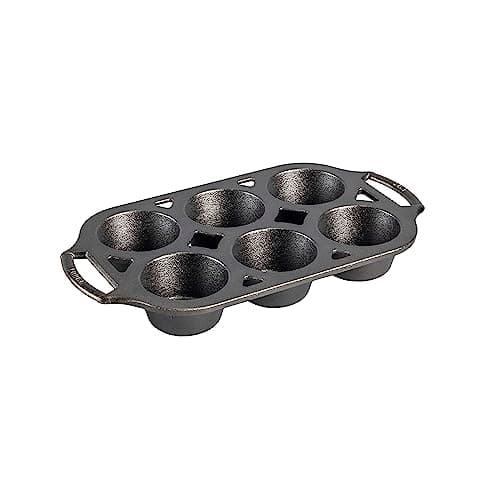
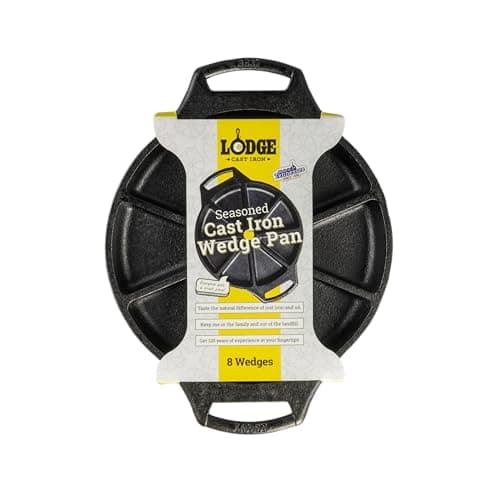
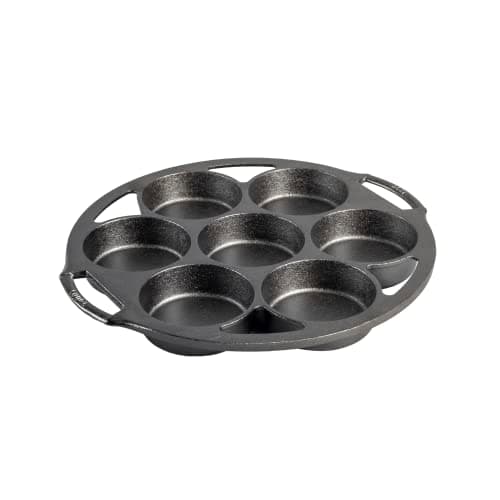
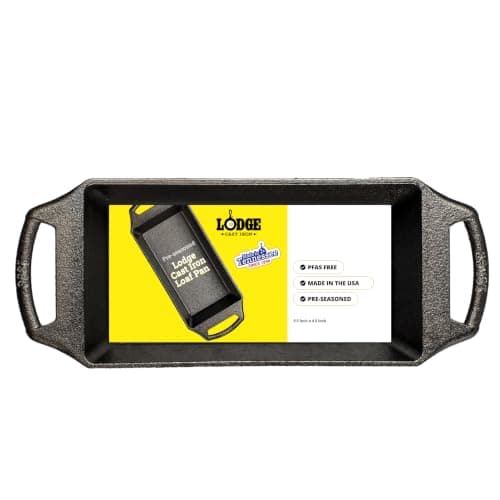
Cast iron bakeware earns its place for one reason: a preheated iron pan drives a deeper, crisper, more even crust into bread, cornbread and cakes than a thin aluminum tin can. Start with the loaf pan — it is the most versatile piece, equally good for sandwich bread, meatloaf and pound cake. Add the muffin pan for crisp-edged popovers and cornbread bites, the wedge pan for classic cornbread, and the mini cake pan for individual bakes. All are cheap, made in the USA, and effectively unbreakable.
The whole case for cast iron bakeware is thermal mass. A thin metal muffin tin cools when cold batter hits it and heats unevenly; a heavy cast-iron pan, preheated in the oven, hits the batter with steady, stored heat that sets a crisp, browned crust immediately — the same browning that makes a skillet cornbread so much better than a cake-pan one. The trade is that cast iron is heavier, slower to preheat, and — because it is bare iron — needs a light greasing and good seasoning until the surface releases cleanly. For the crust, it is a trade most bakers happily make.
Which piece to buy first
The loaf pan is the one to start with because it does the most: sandwich loaves, quick breads, meatloaf, and pound cake all come out with a crust the tin version cannot touch. The muffin pan is the next most useful, doubling as an egg-bite and mini-frittata pan. The wedge pan and mini cake pan are more specialized — wonderful if you make cornbread wedges or individual cakes often, skippable if you do not. If you already bake in a cast-iron skillet, you know the crust these pans deliver; this is the same magic in bakeware shapes.
Do you even need dedicated bakeware?
Honest question, honest answer: for a lot of baking, the cast-iron skillet you already own is the only "bakeware" you need. Cornbread, a giant skillet cookie, a Dutch baby, a upside-down cake — all come out beautifully from a plain 10.25-inch skillet, and a dutch oven bakes a better artisan loaf than any loaf pan. Buy dedicated cast-iron bakeware when the shape is the point: a loaf pan for a tidy sandwich loaf you can slice, a muffin pan for portioned popovers and cornbread bites, a wedge pan for classic cornbread triangles. If you just want the crust and do not care about the shape, reach for the skillet first and save the money.
Where cast iron clearly beats a thin aluminum or nonstick tin is anywhere you want a crisp, deeply browned crust and even heat — cornbread, popovers, a pound-cake edge, a skillet-style brownie. Where it is the wrong tool is delicate, pale bakes that should not brown hard, or anything you need to unmold perfectly intact before the seasoning is well built, since sugary batters grip a young pan. Grease generously, preheat when a recipe calls for a crisp edge, and cast iron bakeware rewards you with a texture the thin pans simply cannot produce.
How to choose cast iron bakeware
Grease and season until it releases
New cast iron bakeware arrives pre-seasoned but still needs greasing for the first several bakes, especially the detailed wells of a muffin or mini cake pan. Grease generously, and the seasoning builds with use until sticking stops. Sugary batters are the most likely to stick, so grease those the most.
Preheat for the crispest crust
The signature cast-iron crust comes from a hot pan. For cornbread and popovers, preheat the empty pan in the oven, then add batter to the hot pan — it sizzles on contact and sets a crisp edge. For delicate cakes, a gentler cold-start is safer.
Match the piece to what you bake
Buy the loaf pan if you bake bread; the muffin pan if you make popovers, cornbread bites or egg muffins; the wedge pan if cornbread wedges are a staple; the mini cake pan for individual portions. Do not buy the whole set unless you will use it — one well-chosen pan beats a drawer of specialized ones you never reach for.
Care is the same as any bare iron
Wash without long soaking, dry thoroughly (a warm-oven or burner dry is ideal for detailed pans), and wipe a thin film of oil. Rust comes from leaving it wet, not from a quick wash. The full routine is in how to clean cast iron.