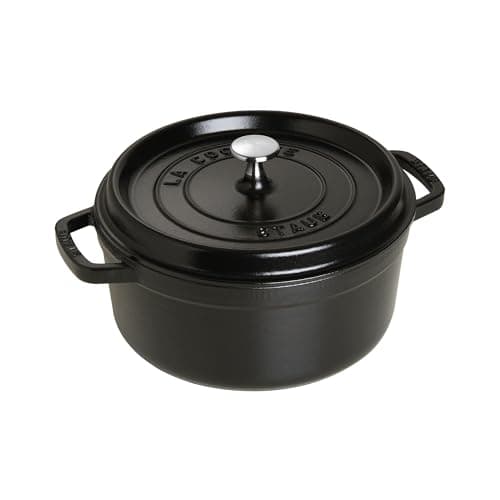
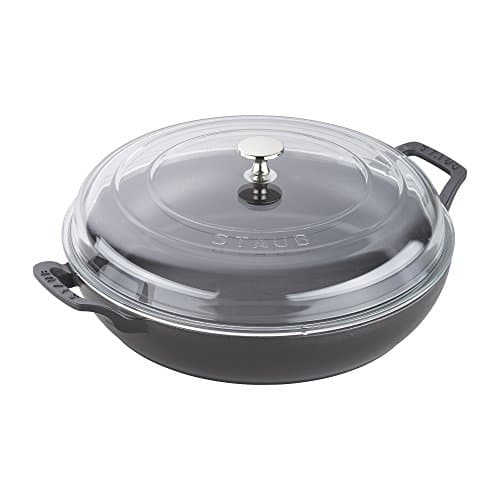
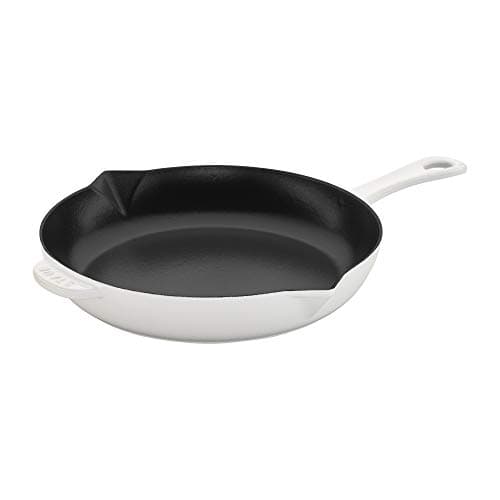
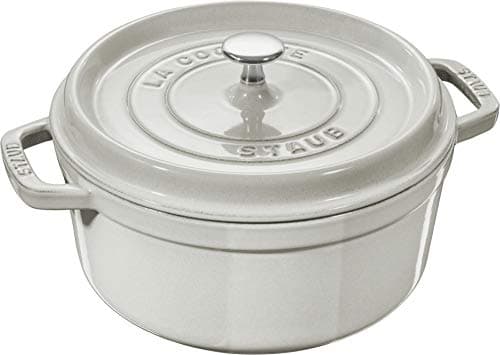
If you want one Staub, make it the 5.5-quart round cocotte — the centerpiece pot that braises, bakes bread and makes soup, and the size most people should own. The 4-quart is the same pot in a lighter, two-to-four size; the braiser is the wide, shallow pan for browning and reducing; and the enameled fry pan is the nonreactive skillet for pan sauces and acidic dishes. What sets Staub apart from a Le Creusetis a dark matte interior enamel that browns food well and hides marks, plus a spiked lid that self-bastes — genuine character, though the cooking is close to any good enameled pot.
Staub casts its enameled iron in France, and its signature is the interior (the maker's background covers the history). Where Le Creuset uses a light, sand-colored interior you can read the fond in, Staub uses a dark matte enamel that browns food beautifully and, crucially, hides the staining and marks that show on a light interior over years. The lid is the other signature: its underside is covered in spikes (Staub calls them self-basting studs) that condense rising steam and drip it back over the food, keeping a braise moist. Both are real, characterful features. Neither fundamentally changes the physics — a heavy iron body and a tight lid make the braise, as our Le Creuset vs Staub and is Staub worth it guides explain.
Which Staub piece to buy
Start with the cocotte(Staub's name for its round dutch oven): the 5.5-quart is the all-rounder, the 4-quart the lighter mid-size for two to four. Add the braiser— wide and shallow — when you brown a lot of meat and reduce sauces, jobs a deep pot does clumsily; it is the same tool we rank in the best braisers. And the enameled fry panis the piece to reach for when you want a nonreactive skillet for a tomato or wine dish that would strip a bare pan's seasoning. Between the cocotte and the braiser you can cook almost anything; the fry pan is the specialist third piece.
Staub vs Le Creuset, honestly
The two French icons are more alike than different, and the choice comes down to the interior and a bit of feel. Staub's dark matte enamelbrowns food a touch better and, more usefully, hides the staining and marks that show on a light interior over years — a real advantage if you cook hard and want the pot to keep looking new. The trade is that you cannot read the fond and the browning as easily as in a light Le Creuset interior, which some cooks rely on. Staub pots also tend to run a little heavier, and the enamel color range is narrower. Neither is better; it is a preference. Our Le Creuset vs Staub guide lays the two side by side, and our is Staub worth it guide gives the value verdict.
Caring for Staub enamel
Staub asks the same light touch as any enameled iron: wash it with soap and water (it is dishwasher-safe, though hand-washing is kinder over the years), use wood or silicone tools so you do not chip the glass, and never shock a hot pot with cold water. The dark interior is forgiving of stains, but if food carbonizes onto it, a simmer of water and baking soda lifts it without abrasives. Pay attention to the lid: dry the underside and the spikes well before storing, since trapped moisture is the one thing that can mar even an enameled pot over time. Treated this way, a Staub is a genuine buy-it-for-life piece.
How to choose Staub cast iron
Cocotte first, then the braiser
The round cocotte is the do-everything pot — buy it first. Add the wide braiser when you find yourself browning in batches and reducing sauces, which a deep pot does awkwardly. The fry pan is a later, specialist addition for acidic stovetop cooking.
Dark interior: a real trade-off
Staub's dark enamel hides marks and browns well, but you cannot read the fond and color as easily as in a light Le Creuset interior. It is a genuine preference, not a better-or-worse — choose the one that matches how you like to cook.
Size to your household
A 5.5-quart cocotte suits a family; a 4-quart is lighter and right for two to four. Match the capacity to your cooking rather than buying the biggest — our size guide helps.
What you are paying for
Like any premium French pot, a Staub buys enamel quality, French build, the self-basting lid and resale value — not a fundamentally better braise than a good budget pot. Buy it for the character and the object; if you want the cooking for less, a budget enameled pot delivers.