Skip to content
Hearth & Patina

Guides & Comparisons

Cast Iron Skillet Recipes

Nineteen recipes, grouped by what the pan is doing rather than what meal it is. Searing, oven work, baking, frying — and the one heat rule behind each.

By Stephen V.Updated How we research
#ad

We earn a commission when you buy through our Amazon links, at no extra cost to you. It never affects our rankings, and we say so when the cheaper pan is the better buy. How this works.

Cast iron is not a general-purpose pan that happens to be heavy — it is a pan that is outstanding at four specific jobs and mediocre at everything else. The four are: searing protein, stove-to-oven roasting, baking (bread, cornbread, cobblers, a cookie the size of the pan) and shallow or deep frying. Every recipe below sits in one of those four groups, and each group has one rule that matters more than the recipe does. If you only take one thing from this page: preheat longer than you think, then use less heat than you think.

Why those four and not a fifth? Because cast iron has very high thermal mass and very poor thermal conductivity. Those two facts together mean the pan takes an age to heat and spots badly while it is getting there, and then holds its temperature like an anvil once it has arrived. Anything that rewards a stable, high surface temperature is what iron is for. Anything that needs fast response — a delicate pan sauce, a quick temperature drop — is what iron is bad at, and we would rather say so than pretend one pan does everything.

Searing: the group cast iron exists for

The rule: dry surface, hot pan, do not move it. The Maillard reaction needs a dry surface and real heat; any moisture on the meat boils off first and the pan cools doing it. Pat it dry, salt it ahead, get the pan properly hot, lay the food down and leave it alone until it releases.

The method page behind all of these is how to sear in cast iron, and if your kitchen fills with smoke every time, how to sear steak without smoke is the fix. The pan rankings for this job: best cast iron for steak and best cast iron for smash burgers.

Stove to oven: the second thing only iron does well

The rule: the handle is as hot as the pan.A skillet that sears on the hob and then goes straight into a 425°F oven is a genuinely different way to cook, and Lodge publishes its classic iron as compatible with any stovetop including induction, plus the oven, a grill or a campfire. No other common pan material takes that whole range without a caveat. The caveat here is human: the bare iron handle will burn you for twenty minutes after the pan leaves the oven.

If you are not sure how far you can push it, can you put cast iron in the oven has the straight answer, and how to preheat cast iron covers the slow part properly. For crowded holiday ovens, no oven space holiday cooking and holiday sides in cast iron are the two pages that use this trick hardest.

Baking: where the pan becomes the tin

The rule: preheat the empty pan, then add the batter.That is what makes a cast iron cornbread different from a cornbread in a tin — the batter hits a surface already at temperature and sets into a crust immediately, which is starch setting at the boundary rather than slowly warming through. Fat in the hot pan first, batter straight in, do not let it sit.

For pizza specifically, the skillet-versus-stone argument is worth reading before you buy anything: cast iron skillet vs pizza stone, and the ranked pans are in best cast iron for pizza. Dedicated bakeware — loaf, muffin, cornstick and wedge pans — is best cast iron bakeware.

Frying: the group where heat retention is a safety feature

The rule: the oil temperature is the recipe.Drop cold chicken into oil in a thin pan and the temperature collapses, the coating absorbs oil instead of setting, and you get greasy food. Iron's thermal mass holds the oil within a few degrees, which is why this is the one job where a heavy pan is strictly better rather than a trade-off.

If eggs stick, the pan is not the problem and neither is the recipe: why does food stick to cast iron and the seasoning chemistry explain it, and the best skillet for eggs is the pan-shopping version.

What we deliberately have not written

No long tomato braises in bare iron, because an acidic sauce held at a simmer for an hour attacks the seasoning and picks up a metallic edge — the honest answer on tomato sauce. No delicate pan sauces, because the pan will not cool when you want it to. No boiling pasta, because there is no benefit. For those, an enameled pot or stainless is the right tool, and pretending otherwise is how people end up disappointed in cast iron.

Dutch-oven recipes are a separate index: dutch oven recipes. And for cooking any of this over a fire, how to camp cook with cast iron covers the heat management that changes outdoors.

The short answer

Quick picks

#ProductBest forScorePrice
01
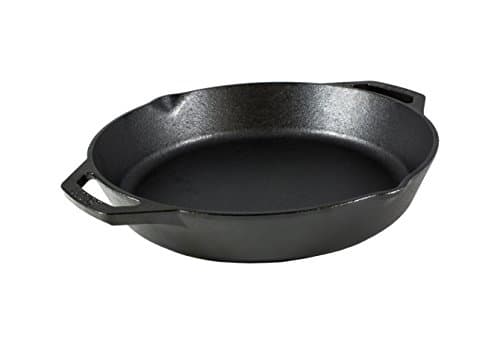
Lodge Lodge 10.25" Pre-Seasoned Cast Iron Skillet
Lodge 10.25" Pre-Seasoned Cast Iron Skillet

The honest first cast-iron pan for almost everyone. Cheap, indestructible, made in the USA.

The default first skillet
8.4
$24.42Amazon
02
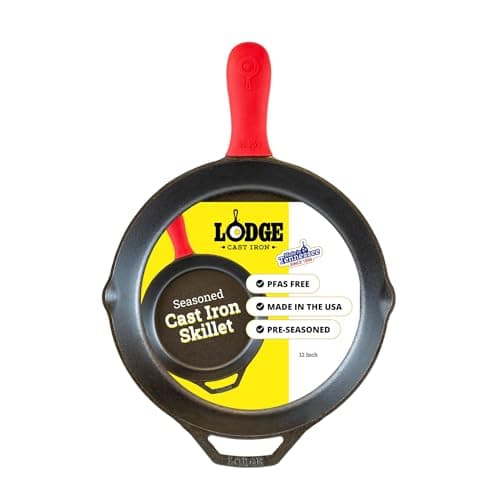
Lodge Lodge Seasoned Cast Iron Skillet, 12"
Lodge Seasoned Cast Iron Skillet, 12"

The big-batch workhorse. More searing room, more weight, same near-unkillable Lodge value.

Cooking for a family
8.4
$34.90Amazon
03
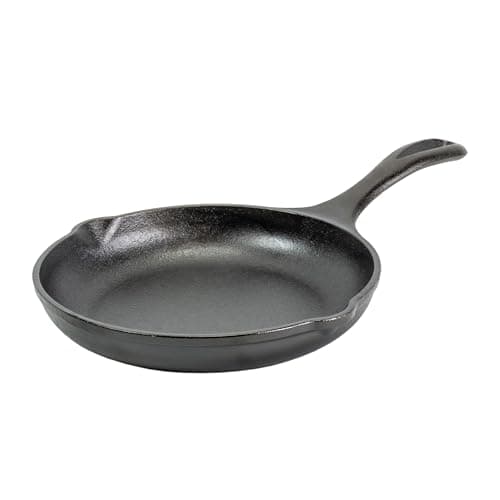
Lodge Lodge 8" Chef Collection Cast Iron Skillet
Lodge 8" Chef Collection Cast Iron Skillet

The small pan that earns its shelf space — eggs, a single steak, toasting spices, a personal cornbread.

One or two servings
8.2
$19.90Amazon

#ad · Live prices from the Amazon Product API, as of October 19, 2026. Where we have no verified live price, we show none — we would rather leave a gap than print a number that has gone stale.

In detail

The picks, in full

01
Lodge Lodge 10.25" Pre-Seasoned Cast Iron Skillet

The default first skillet

Lodge 10.25" Pre-Seasoned Cast Iron Skillet

10.25 inPre-seasonedMade in USA5.66 lb
8.4/10

The honest first cast-iron pan for almost everyone. Cheap, indestructible, made in the USA.

Heat retention
9
Cooking surface
7
Handling
7
Versatility
9
Value
10

Pros

  • The 10.25" is the size that fits four eggs, two steaks, or a batch of cornbread — the most useful single size
  • Pre-seasoned from the factory, so it works the day it arrives
  • Costs a fraction of a boutique pan and will outlive you with basic care

Cons

  • The cooking surface is pebbly, not machined smooth — food releases better once you build your own seasoning on top
  • The short helper handle is small; a leather or silicone sleeve on the main handle is a near-essential add

Don't buy this if…

…you specifically want a glass-smooth machined surface out of the box. That is what Stargazer, Smithey and Field sell, at five to eight times the price — for most cooks the Lodge gets there with a few months of use.

$24.42View on Amazon

Price as of October 19, 2026. Prices change — Amazon's is the one that counts.

#ad · we may earn a commission from this link to Lodge 10.25" Pre-Seasoned Cast Iron Skillet

02
Lodge Lodge Seasoned Cast Iron Skillet, 12"

Cooking for a family

Lodge Seasoned Cast Iron Skillet, 12"

12 inPre-seasonedMade in USA~8 lb
8.4/10

The big-batch workhorse. More searing room, more weight, same near-unkillable Lodge value.

Heat retention
10
Cooking surface
7
Handling
6
Versatility
9
Value
10

Pros

  • The extra diameter is the difference between searing two chicken thighs and searing six without crowding
  • Deep enough sidewalls for shallow-frying and pan sauces
  • Includes a silicone handle holder in the box

Cons

  • At roughly 8 lb full, it is genuinely heavy — one-handed tossing is out for most people
  • Overkill for one or two servings; a bare 8" or 10.25" is the everyday pan

Don't buy this if…

…you mostly cook for one or two. A 12" pan that lives in the cupboard because it is too heavy to bother with is worse than a 10.25" you reach for daily.

$34.90View on Amazon

Price as of October 19, 2026. Prices change — Amazon's is the one that counts.

#ad · we may earn a commission from this link to Lodge Seasoned Cast Iron Skillet, 12"

03
Lodge Lodge 8" Chef Collection Cast Iron Skillet

One or two servings

Lodge 8" Chef Collection Cast Iron Skillet

8 inChef CollectionSmoother finish~3.5 lb
8.2/10

The small pan that earns its shelf space — eggs, a single steak, toasting spices, a personal cornbread.

Heat retention
8
Cooking surface
8
Handling
9
Versatility
7
Value
9

Pros

  • Chef Collection pans have a lighter, slightly smoother casting than the standard Lodge line
  • Light enough to handle one-handed, which most cast iron is not
  • The right size for the single-egg or single-portion cooking you actually do on a weekday

Cons

  • Too small for family cooking — it is a complement to a bigger pan, not a replacement
  • Costs a little more than the standard 8" Lodge for the smoother finish

Don't buy this if…

…it would be your only cast-iron pan. As a solo pan it is excellent; as a household's only skillet it is too small for most meals.

$19.90View on Amazon

Price as of October 19, 2026. Prices change — Amazon's is the one that counts.

#ad · we may earn a commission from this link to Lodge 8" Chef Collection Cast Iron Skillet

Which skillet these recipes assume

Almost everything above works in a 10.25-inch pan, which is why that size is the default recommendation across this site. The exceptions are worth knowing before you follow a recipe and find the pan too small:

Recipe groupSize you wantWhy
Steak, chops, salmon for two10.25 inTwo portions with space between them, so they sear rather than steam
Whole roast chicken, prime rib, turkey breast12 inA whole bird needs the floor area; a 10-inch pan crowds it
Cornbread, skillet cookie, cobbler, pie10.25 inThe size every published skillet-bake recipe is written for
Smash burgers, batch searing12 in, or a flat griddleMaximum flat contact; fit beats depth
Eggs, one portion, a side dish8 inA small pan gets used on a weekday; a big one does not
Fried chicken, deep frying10.25 in minimum, deeper is betterOil depth and freeboard. A lidded deep pan is safer still

The three pans below cover every recipe on this page. If you are buying one, buy the middle one. The full sizing argument is cast iron skillet sizes, the ranked field is the best cast iron skillets, and the decision sequence is how to choose a cast iron skillet.

Three things that ruin cast iron recipes

Not preheating long enough. Cast iron needs several minutes on a medium burner, not thirty seconds on high. High-and-fast gives you a scorching centre and cold edges, because the iron cannot move heat sideways quickly. Medium and patient gives you an evenly hot pan.

Crowding the pan. Four chicken thighs in a 10-inch skillet release enough moisture to stop browning entirely. Cook in two batches; it is faster than it sounds because the pan does not lose temperature between them.

Treating a new pan like a seasoned one.A factory-seasoned pan is a starting point, not a finished surface. Cook fatty things in it first — bacon, chicken skin, cornbread — and leave the eggs for a month in. The order is in how to use cast iron for the first time and cast iron skillet setup tips.
How we picked

We do not run a testing lab

We researched published manufacturer specifications, materials and thermal properties, and aggregated owner reviews, then scored each pan against a published rubric. The scores are judgments from documented research — they are notmeasurements we took, because we do not have a lab and we are not going to pretend we do. Where a number came from a manufacturer's spec sheet or someone else's lab, we name it in Sources.

Questions

Frequently asked

What is cast iron best for cooking?
Four things: searing protein, stove-to-oven roasting, baking (cornbread, cobblers, pizza, skillet cookies) and frying. All four reward a stable, high surface temperature, which is exactly what a heavy pan delivers. It is a poor choice for delicate pan sauces and long acidic braises.
What size skillet do most cast iron recipes use?
10.25 inches. Skillet-bake recipes in particular — cornbread, cobbler, skillet cookie — are almost all written for it. Step up to 12 inches for a whole chicken or batch searing.
Can you cook anything in a cast iron skillet?
Nearly, but you should not. Long tomato or wine braises attack the seasoning and taste faintly metallic; delicate sauces suffer because the pan will not cool on command. Use an enameled pot or stainless for those.
Why do my cast iron recipes come out unevenly cooked?
Almost always an under-long preheat on too high a flame. Cast iron moves heat sideways slowly, so a short blast gives you a hot spot over the burner and cold edges. Preheat on medium for several minutes instead.
Do I need to re-season after every recipe?
No. Cooking fatty food isseasoning. Scrape, rinse hot, dry on the burner, wipe thin with oil. A full re-season is for a stripped or neglected pan — see how often to season cast iron.

Keep reading

Receipts

Sources

We do not run a testing lab, and we do not pretend to. Where a measured number came from a manufacturer's spec sheet or someone else's lab, we name them and link them. Where we could not verify something, we say so on the page rather than quietly leaving it out. Read our full method.