Buy the 12-inch Lodge. It is the best large cast iron skillet for almost everyone: enough room to sear for a family without crowding, the same near-unkillable value as the rest of the Lodge line, and a fraction of the price of a boutique pan. Spend up on the Finex12-inch with its cast-iron lid if you want an heirloom statement pan, and pick the deep skillet if you fry often. But first, the honest question: for a skillet, “large” really means 12 inches for most cooks — are you sure you want to go bigger?
A skillet is measured by its top diameter, and the jump from the everyday 10.25-inchto a 12-inch is the difference between searing two chicken thighs and searing six without steaming them. That extra room is the whole reason to buy a large pan — a crowded skillet drops in temperature and cast iron cooks by holding heat, so giving the food space is how you get a real crust rather than a gray braise. But every extra inch is also more iron, and more iron is more weight. A 12-inch Lodge runs about eight pounds empty; with a full load of food it is a genuine two-handed lift. So the size question is really a weight question, and it is worth being honest about it before you size up. Our skillet size guide maps every diameter to the job it does best.
The large skillets at a glance
| Pan | Size | Best for |
|---|
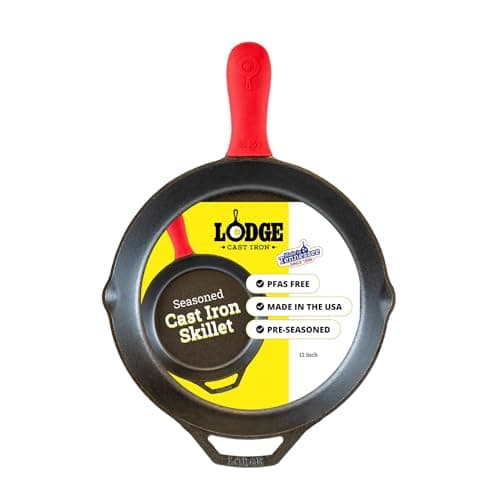
| Lodge 12-inch | 12 in | The best large skillet for most people, and the value |
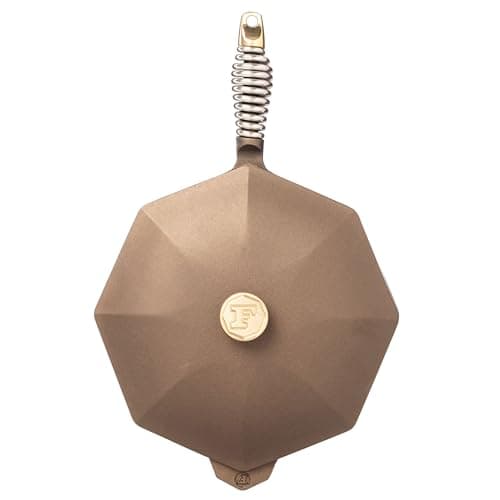
| Finex 12-inch + lid | 12 in | The premium heirloom statement pan |
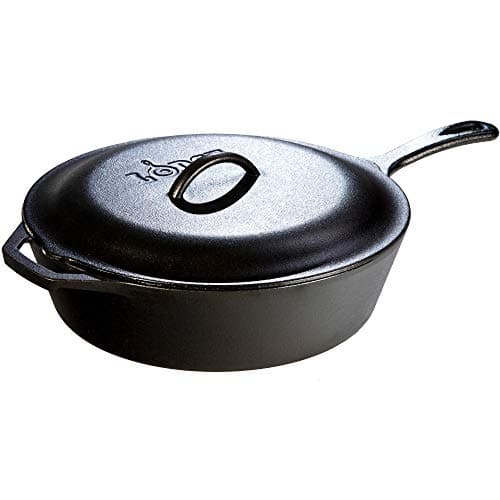
| Lodge deep skillet | 5 qt, deep | Depth for frying and shallow braising |
Best large skillet: Lodge 12-inch
The 12-inch Lodgeis the large pan we would hand almost anyone. It gives you the full family-sized cooking surface — six thighs, a big batch of hash, a stovetop-to-oven skillet dinner for four — with deep enough sidewalls for shallow-frying and pan sauces, and it comes pre-seasoned with a silicone handle holder in the box. Like any standard Lodge it arrives with the usual pebbly surface that turns slick as you build seasoning, and it is made in the USA for a price that undercuts every boutique pan on this list many times over. The honest drawback is weight: at roughly eight pounds empty it is heavy, and one-handed tossing is out for most people — you cook on it flat and use the helper handle to move it. If you are buying a single big pan for a household, this is the one.
The premium statement pan: Finex 12-inch with lid
The Finex12-inch is the large skillet for someone who wants the object as much as the sear. It is the octagonal, eight-spout design pan — now made by Lodge, which acquired Finex in 2019 — cast in the USA with a finer surface than a standard Lodge and a coiled stainless “Speed Cool” spring handle that runs cooler than solid iron. It ships with a matching cast-iron lid, so it doubles as a shallow braiser or a covered roaster. It is a beautiful, heirloom-grade centerpiece — and it is genuinely the honest drawback too: with the cast-iron lid on, it is very heavy, a two-hands-always pan and not one for anyone with wrist trouble, and it costs many times what a 12-inch Lodge does. You are paying for design, craft and the lid, not a better crust — a Lodge sears identically. Buy it because you want to own and look at it, which is a real reason, just not a performance one. Our is Finex worth it verdict makes the full money case.
For depth and frying: Lodge covered deep skillet
If “large” for you means capacity rather than a wide flat surface, the Lodge 5-quart covered deep skillet is the pick. Its tall, straight sides hold a safe depth of oil for real frying — chicken, doughnuts, fries — where a flat skillet would splatter, and cast iron's thermal mass keeps the oil temperature from crashing when cold food goes in, which is the whole secret to crisp, non-greasy frying. The lid tames spatter and stores the pan. It is a true family-size 5-quart vessel that also braises, sautes and simmers. The trade is the same as every big pan — it is heavy, and moving it full of hot oil is a two-hand, full-attention job — and as bare iron it is better kept off long acidic simmers, which belong in enamel. If you mostly want a wide searing surface, buy one of the flat 12-inch pans above; buy the deep skillet if you fry often and want the depth and the lid.
Do you actually need a skillet this big?
For a skillet, “large” tops out sooner than people expect. A 12-inch pan is the practical large size for the overwhelming majority of home cooks: it sears for a family and still fits a standard burner and cupboard. Pans bigger than 12 inches do exist — a 13.25-inch or 15-inch round, or a skillet with a helper handle — but they get heavy and awkward fast: they overhang a normal burner so they heat unevenly, they are a real strain to lift and store, and they are more pan than most kitchens ever fill. Unless you routinely cook for a big crowd, a 12-inch is the large pan to buy, ideally paired with a lighter 10.25-inch as your daily driver. If you regularly cook for one or two, skip the large pan entirely and look at the best small cast iron skillets instead — a heavy 12-inch that lives in the cupboard because it is a chore to lift is worse than a 10.25-inch you reach for every day.
How to choose a large cast iron skillet
What counts as "large"
For a skillet, large means 12 inches for most people. A 10.25-inch is the everyday standard; a 12-inch is the family and batch pan; anything past 12 — a 13.25- or 15-inch round — is a specialist size that overhangs a normal burner and is a strain to handle. Match the diameter to how many people you cook for, and remember that a pan too big for your burner heats unevenly at the rim. See the skillet size guide for the full breakdown.
Weight and the handle matter most at this size
A large skillet is heavy empty and much heavier full — a 12-inch loaded with a roast is a two-handed lift. That makes the handle the feature that decides how usable the pan is: a longer, more comfortable handle (as on the Victoria) or a cooler spring handle (as on the Finex) genuinely helps, and a helper handle opposite the main one is worth having on any big pan. Keep a cloth or a handle sleeve nearby, because bare iron handles run hot.
Smooth or standard
As in every size, a machined-smooth pan like the Finex releases food a little sooner early in its life, but a standard Lodge or Victoria becomes just as slick once you build seasoning, for a fraction of the price. On a large pan you use for hard family searing, the cheap standard casting makes the most sense; the smooth premium pan is a want, not a need. See smooth vs rough cast iron.
Flat surface or depth
Decide whether you want a wide, flat searing surface or capacity and depth. The flat 12-inch pans are for browning, roasting and skillet dinners; the deep covered skillet is for frying and shallow braising, where tall sides hold oil and contain splatter. They are different tools — buy for what you actually cook most.
Care is the same as any cast iron
Large skillets are cared for exactly like small ones: keep them seasoned, dry them promptly, and wipe on a thin film of oil so they do not rust (the manufacturer's use-and-care notes say the same). The one extra consideration is storage — a big pan is awkward to stack, so give it a spot where you can slide it out without wrestling the whole cupboard. If food sticks, our guide on why food sticks to cast iron walks through the fixes.