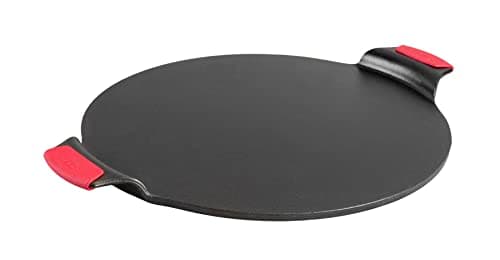
For a full, flat, round pizza, buy the 15-inch Lodge cast iron pizza pan: preheated in a hot oven, it behaves like a cheap pizza stone, hoarding heat and handing it back to the dough for a crisp bottom crust. But before you buy anything, read the next paragraph, because the best cast iron pizza tool for a lot of people is a skillet they already own.
There is no single "best cast iron for pizza" — there is a best tool for the pizza you actually want to make. Cast iron helps in one specific way: its thermal mass stores a lot of heat and releases it into the underside of the dough the instant the dough lands, which is the whole job of a pizza stone or steel. A cold, thin baking tray does the opposite: it saps heat from the crust and you get a pale, floppy bottom. So any heavy, preheated cast iron surface is a real upgrade over a sheet pan. Which piece of cast iron is right just depends on shape.
If you want a classic thin, round pie, a flat dedicated pizza pan is the pick. If you want a thick, cheesy deep-dish or a pan pizza with a fried, crunchy edge, a cast iron skillet is genuinely better and you may already own one. If you feed a crowd flatbreads and personal pizzas, a big flat griddle or a comal is the tool. We ranked these five by how well each earns its price for real home pizza, and we are honest at the end about where a dedicated baking steel beats all of them.
Match the tool to the pizza
| Tool | Shape | Best pizza |
|---|
| Lodge 15-inch pizza pan | Flat round, low rim | A full, thin-to-medium round pie |
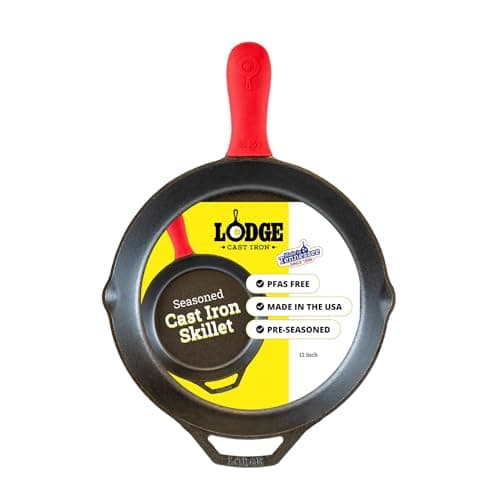
| Lodge 12-inch skillet | Deep, walled | Deep-dish and crunchy-edged pan pizza |
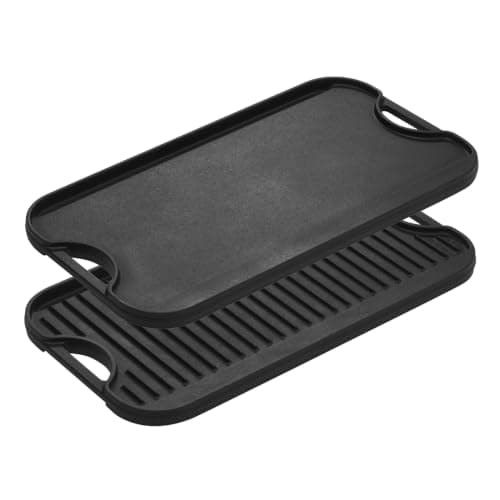
| Lodge reversible griddle | Big flat slab | A pizza-steel substitute for several pies |
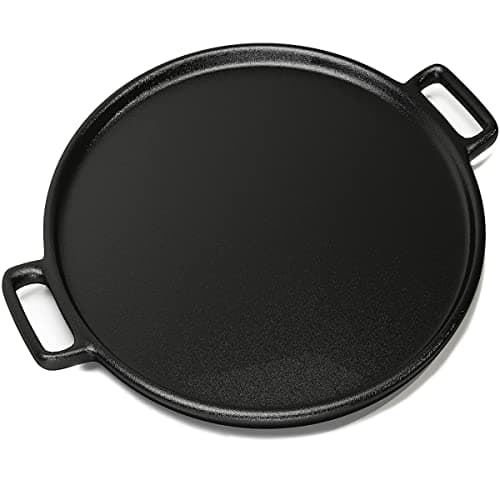
| Home-Complete 14-inch pan | Flat round, budget | The cheapest dedicated round |
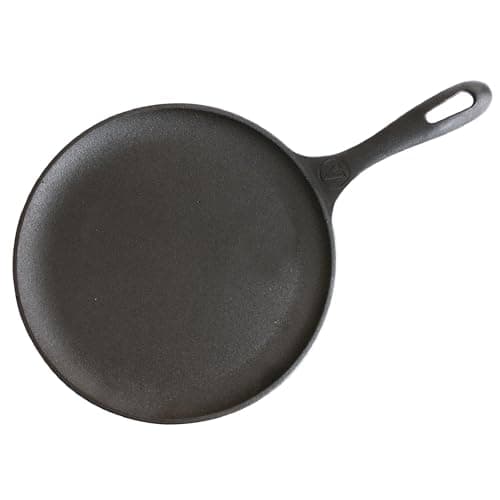
| Victoria comal griddle | Flat, low, round | Personal, thin, flatbread-style pizzas |
Best for a full round pie: Lodge 15-inch cast iron pizza pan
The Lodge 15-inch is the tool built for exactly this job: a big, flat, made-in-USA cast iron round with a low rim so you can slide a pizza on and off. Preheat it in a hot oven for twenty minutes or so and it stores enough heat to set and crisp the bottom of the crust the moment the dough touches it — the same trick a pizza stone pulls, from a pan you can also use on the stovetop or the grill. It comes pre-seasoned, and the two included silicone grips are a genuine kindness when you are moving a screaming-hot fifteen-inch slab of iron.
The honest limits are the limits of any dedicated pan. It does one thing, so it earns its cupboard space only if you make round pizzas often; it is heavy; and out of the box the surface is Lodge's usual pebbly cast finish that releases better once you build seasoning on it. It also will not, on its own, turn a home oven into a pizzeria — see the caveat below on why a baking steel edges it for true Neapolitan thin crust.
The honest caveat: no cast iron pan makes home-oven pizza taste like a 900°F wood-fired one — that heat simply is not available in a domestic oven. What a preheated cast iron round does is give you a far crisper, more evenly browned bottom than a cold sheet pan, for a fraction of the price of a fancy steel. Buy it for that.
Best for deep-dish and pan pizza: Lodge 12-inch skillet
Here is the pick most people should check first, because you may already have it. A cast iron skilletmakes a superb pan pizza: oil the pan, press the dough up the walls, top it, and bake — the walls fry the edge of the crust into a lacy, crunchy, cheese-crisped rim that a flat pan cannot produce. It is the classic Detroit-and-deep-dish move, and the 12-inch is the family size for it. Because the skillet does everything else in your kitchen too, it is the highest-value "pizza pan" on this page by a mile. If you want deep-dish rather than thin-crust, a skillet is not the compromise — it is the correct tool.
Best big flat surface: Lodge Pro-Grid reversible griddle
If you bake several pizzas or big flatbreads, the reversible griddle's flat side is essentially a large, cheap cast iron baking steel. Preheat it on the smooth side and it stores a wall of heat across a surface big enough for two personal pizzas at once, and its huge thermal mass barely dips when a cold, wet dough lands on it. It spans two burners for stovetop flatbreads or slides into the oven as a pizza surface, and the ridged reverse side still grills. The trade is the obvious one: it is big, heavy, and awkward to store and wash, and its flat side is only part of what you are paying for.
The cheapest dedicated pan: Home-Complete 14-inch pizza pan
The Home-Complete 14-inch is the budget route to a dedicated cast iron pizza round — the same flat-and-heavy idea as the Lodge, for less money. Fourteen inches fits a generous personal-to-family pie, and it preheats and crisps a crust the same way any cast iron does. The catches are the usual budget-import catches: no real brand track record or warranty, a rougher casting and thinner factory seasoning than a Lodge, and a longer break-in before food releases cleanly. It is the pick when you want to try baking pizza on cast iron without spending Lodge money.
Best for personal and flatbread pizzas: Victoria comal griddle
The Victoria 10.5-inch comal is a flat, low-rimmed round built for tortillas and flatbreads, and that makes it a natural for thin personal pizzas and pita-style pizzas, especially finished on the stovetop and slid under a broiler to melt the top. It is light for cast iron, cheap, and the open, rimless surface makes launching and turning a thin base easy. It is too small for a family pie and too shallow for anything deep-dish, so treat it as the single-serving-pizza and flatbread specialist it is, not your only pizza tool.
How to choose cast iron for pizza
First, decide what pizza you want
Thin and round: a flat pizza pan or a preheated griddle. Thick, deep-dish, or crunchy-edged pan pizza: a skillet. Personal and flatbread: a comal. Everything downstream — size, price, whether you even need to buy anything — follows from this one question. The most common mistake is buying a dedicated flat pan when the pizza you actually love is a deep-dish that a skillet you own already makes better.
Preheating is the whole point
Cast iron does nothing for pizza cold. The benefit is stored heat, so the pan or griddle must be preheated — in the oven, or on the stovetop — until it is genuinely hot before the dough goes on. A preheated surface sets and browns the crust bottom immediately; a cold one steams it. Give a flat pan or griddle a good twenty minutes in a fully preheated oven.
Size and weight
A 14-to-15-inch flat pan handles a full family pizza; a 10-to-12-inch skillet makes a deep-dish for two to four. Remember cast iron is heavy and a big preheated round is screaming hot, so factor in whether you can safely move it — the silicone grips on the Lodge pizza pan exist for a reason. Buy the largest size you can comfortably handle, not the largest that exists.
Seasoning and care
Every bare pan here is cared for like a skillet: preheat and cook fat in it to build seasoning, avoid long acidic sauces sitting in a bare pan, and dry it promptly and wipe on a thin film of oil so it does not rust. Cheese and oil at high heat actually build seasoning fast. Our how to season cast iron and how to clean cast iron guides cover the routine, and a sticky, gummy surface is the one thing to head off early — see why cast iron gets sticky.
When a baking steel beats cast iron
Be honest about your goal. If you are chasing true Neapolitan thin crust with a leopard-spotted, blistered bottom, a dedicated baking steel outperforms every pan here: it is flatter, stores even more heat per inch, and transfers it faster, so the crust sets in seconds under a broiler. Cast iron is the better buy when you want one versatile piece that also cooks everything else, when you make deep-dish or pan pizza, or when you want a stone-like surface for a fraction of a steel's price. If it is only ever pizza, and only ever thin crust, a steel is the specialist.