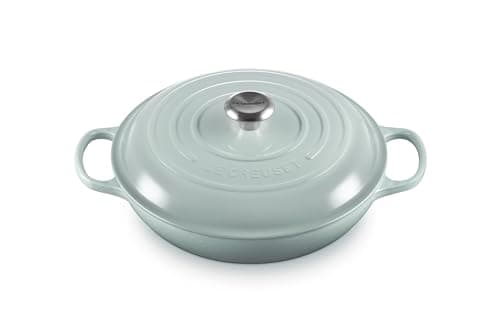
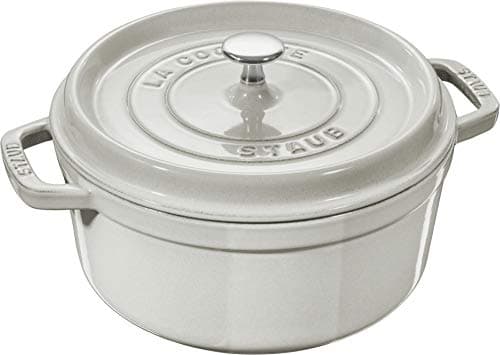
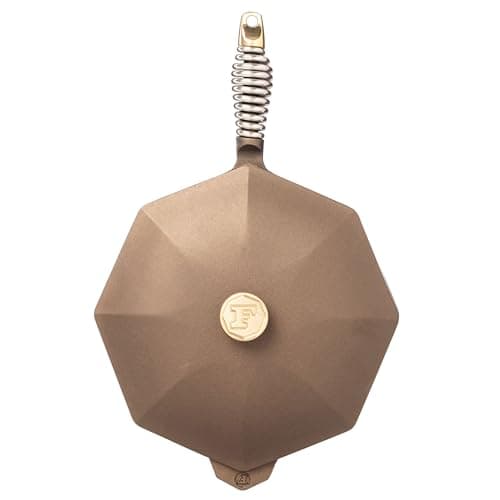
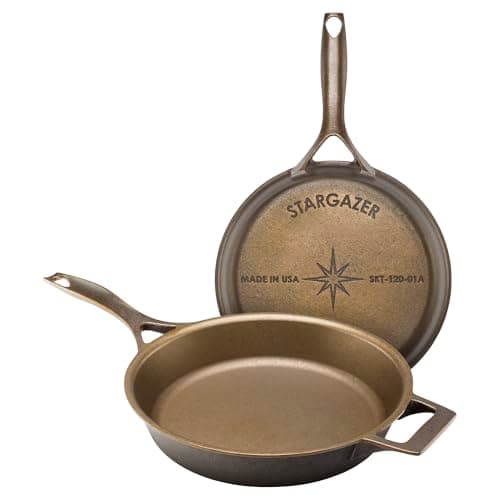
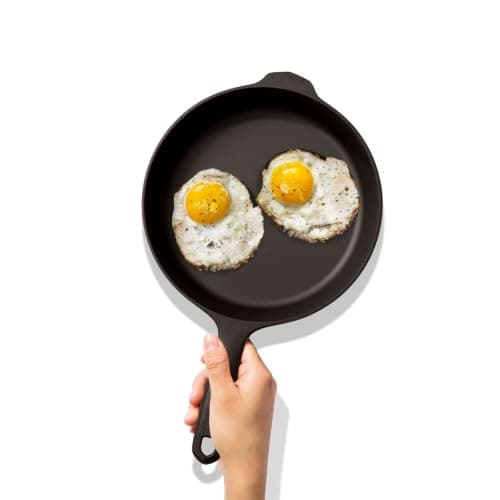
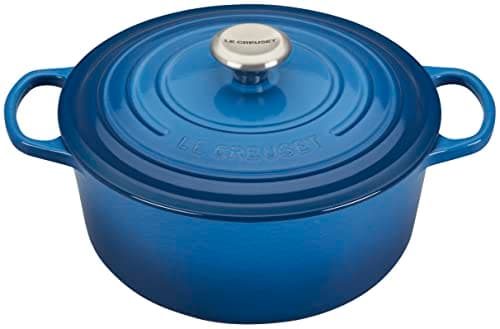
If you want one premium gift that lands, give a French enameled dutch oven. It is instantly recognizable as an expensive object, it is the most useful pot in a kitchen, it carries a lifetime warranty, and it is the thing most people want and will not buy for themselves. The braiser is the pick if they already own a dutch oven, and the machined American skillets are for recipients who already cook in cast iron and will actually feel the difference.
Be clear-eyed about what the premium tier buys, because it is not cooking performance. A Lodge and a Le Creuset braise indistinguishably; we say so in Lodge vs Le Creuset and we are not going to walk it back on a gift page. What the money buys is enamel that resists staining and chipping over decades, hardware that is genuinely nicer to hold, a lifetime warranty, a resale market, and an object people are visibly pleased to own.
As a gift, that last point is not vanity — it is most of the value. You are buying the recipient permission to own something they would have talked themselves out of. That is a legitimate thing to spend money on, and it is the honest reason this tier exists.
How to choose at this level
| Gift | Give it to | The catch |
|---|
| French round dutch oven | Almost anyone; the classic milestone gift | Heavy, and they may already own one |
| Braiser | Someone who already has a dutch oven | Shallower, so it is a second pot not a first |
| Staub cocotte | A serious cook who browns and braises | Dark interior makes judging fond harder for beginners |
| Design-led octagonal skillet | Someone who wants the object as much as the pan | The most polarizing looks in the category |
| Machined American skillet | An existing cast iron cook | Wasted on someone who does not already use cast iron |
The dutch oven is the safe premium gift
There is a reason it is the default. It braises, bakes bread, deep-fries, makes soup, and goes from oven to table looking like a centerpiece. The enamel means no seasoning to learn, no rust risk, and free use of tomato and wine.
Size it down, not up. The single most common mistake at this price is buying the biggest pot. A mid-size round pot suits most households; the large ones are heavy enough full that people quietly stop using them. Our sizing guide and Le Creuset by size both make the same case.
About engraved and personalized cast iron
This is where we have to be straight with you, because a lot of gift content is not. Personalized cast iron falls into three buckets, and only one of them is a good idea.
Manufacturer personalization.Some premium brands offer engraved or monogrammed pieces through their own stores at certain times of year, usually on the handle or the lid knob. Availability changes constantly and is often seasonal, so we will not list a link that may be dead by December — check the brand's own site directly if this is what you want.
Third-party engraving on the cooking surface. Avoid. Any engraving that cuts into the cooking surface breaks the seasoning layer, and on enameled cookware it breaches the enamel — which is a glass coating whose entire job is being unbroken. It also voids most manufacturer warranties. A personalized pan that can no longer be claimed under a lifetime warranty is a worse gift than a plain one.
Personalize around the pan instead. An engraved wooden handle cover, a custom trivet, a leather handle sleeve, or a printed card with a recipe. You get the personal element without compromising the object. This is what we would actually do.
What we would not buy at this price
A large premium cookware set. Sets at this tier are enormously expensive and always contain a piece the recipient will not use. Buy one great pot. See set vs individual pieces.
A premium skillet for a non-cast-iron cook. It is the most common expensive mistake in this category and we argue it out in heirloom vs starter.
A color you like. Enameled cookware sits on a stovetop for thirty years. Buy a color you think they like, or buy a neutral.
Spending well at the top of the category
The warranty is part of what you are buying
A lifetime warranty on an enameled pot is a genuine differentiator against the value tier, and it is one of the few premium features that is objectively verifiable rather than a matter of taste. It is also the reason not to have anything engraved into the enamel.
Buy the pot, not the set
One excellent dutch oven beats a five-piece set at the same price every time. The set spreads the money across pieces that sit in a cabinet while the recipient works out which one they actually reach for.
Mid-size beats large
A full enameled pot is heavy, and weight is the number-one reason expensive cookware goes unused. If you are between two sizes at this price, take the smaller one. Always.
Pale interiors are friendlier
A light-colored interior makes it much easier to judge how far a fond has browned. Dark enamel looks superb and is harder to read while you are still learning — a real consideration if the recipient is not a confident braiser. Our Le Creuset vs Staub comparison covers that difference in detail.
Consider the enameled pot over the premium skillet
Households are far more likely to be missing a good dutch oven than a good skillet, because the cheap skillet is genuinely excellent and the cheap pot is merely fine. Spending premium money where the gap is largest is the better use of it.