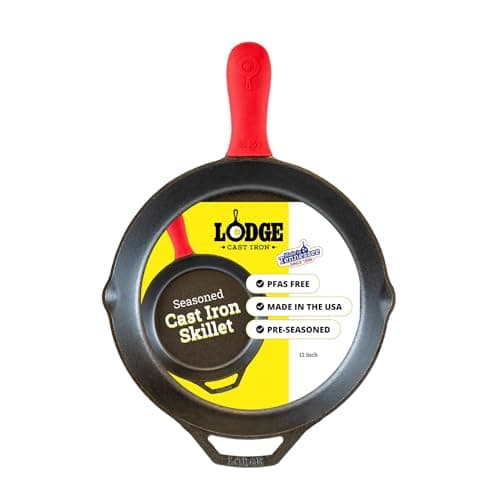
If you can only buy one thing to fix a holiday oven jam, buy a 12-inch cast iron skillet. It is the single pan that will brown sprouts on the stovetop, bake stuffing in the residual heat of a resting roast, go onto a covered grill as a second oven, and sit over coals if it comes to that. The oven is a fixed resource. Cast iron is the cookware that does not need one.
Every holiday kitchen hits the same wall: the centerpiece owns the oven for three hours, everything else wants 375°F to 425°F, and there is one oven. People try to solve this with scheduling. Scheduling helps at the margins — a roast's 30-minute rest is a genuinely free oven window, and most people waste it — but it cannot create capacity you do not have.
The real fix is to move dishes off the oven entirely. There are four places to move them to, and cast iron works on all four, which is the whole reason it belongs in this conversation:
- The stovetop— sprouts, glazed carrots, greens, gravy, anything that only needs browning and heat.
- A covered gas or charcoal grill— a functioning 375°F oven that most households already own and never use in December.
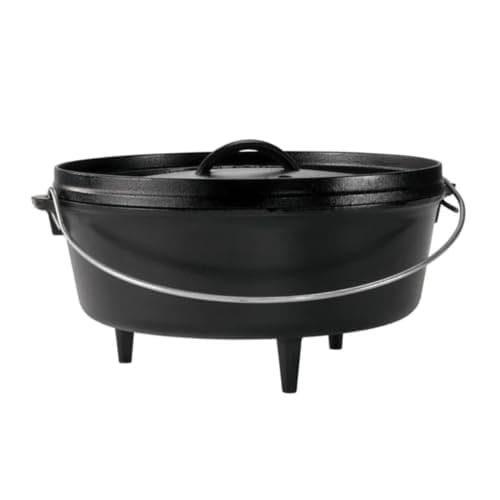
- Coals or a fire pit— a camp Dutch oven bakes cobbler, rolls and casseroles with coals above and below.
- Yesterday— a braise cooked the day before needs only a gentle reheat, which is the cheapest oven space there is.
The triage: what moves and what cannot
Stays in the oven
The roast or bird, and anything that genuinely needs enveloping dry heat for a long time. Do not fight this. Give the centerpiece the oven and plan around it.
Moves to the stovetop, easily
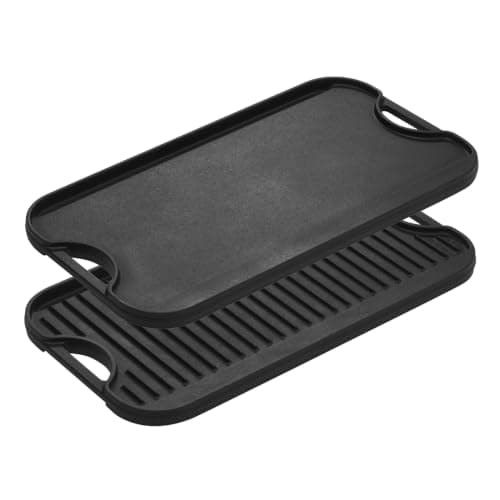
Seared sprouts, glazed carrots, sautéed greens, mashed potato, gravy, and any vegetable whose goal is char rather than roasting. A 12-inch skillet and a two-burner reversible griddle together roughly double your usable stovetop surface, because a griddle turns two burners into one continuous cooking area.
Moves to the grill
Anything that would bake at 350 to 400°F: stuffing, gratin, cobbler, even rolls. Set up for indirect heat, put the skillet on the cool side, keep the lid down, and watch the dome thermometer. The main adjustment is that grills run hotter near the flame, so rotate the pan once.
Moves to the coals
A camp Dutch oven — the legged kind with a flat, rimmed lid — bakes with coals stacked on the lid and set beneath. It is genuinely how a cobbler or a pan of rolls was baked for a century, and it works in a driveway in December. Our camp cooking guide has the coal counts.
Moves to yesterday
Braises. A short rib braise or a pot roast cooked the day before is better for having rested, lets you lift the set fat off the top, and needs 40 minutes of gentle reheat rather than three hours of oven. This is the highest-leverage change on the whole list and it costs nothing.
Use the resting window
A roast rests for 20 to 30 minutes, and during that time the oven is empty and still at temperature. That is enough for cornbread, for crushed potatoes to finish crisping, or for rolls. Plan two dishes into that window deliberately instead of discovering it by accident.
One caution: pull the roast out of its skillet to rest. A cast iron pan radiates heat for a long time and will keep cooking the meat sitting in it — the same stored heat that makes it a good roasting pan makes it a bad resting surface.
What not to do
Do not stack racks and hope. Three loaded racks in a domestic oven block convection, and the bottom dish browns while the top one stays pale. Two racks is the honest maximum, and even then rotate.
Do not lower the oven to split the difference.Cooking a 375°F dish and a 425°F dish at 400°F gives you two dishes that are both slightly wrong. Move one.
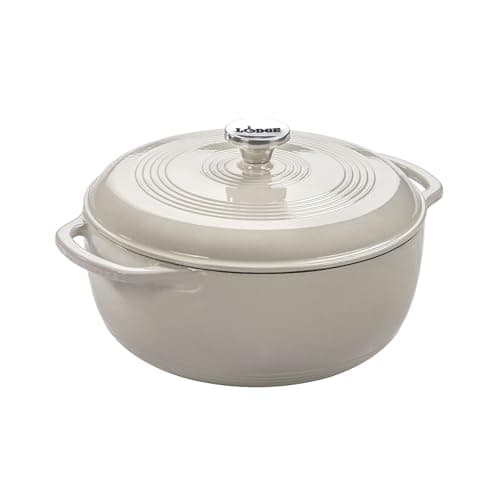
Do not put enameled cookware through a shock. If you are moving pans between a cold garage, a grill and an oven, remember that Lodge explicitly warns about thermal shock on enamel and says not to heat enameled cookware empty on the stovetop. Bare iron is the more robust choice for grill and coal duty.
Which pan solves which problem
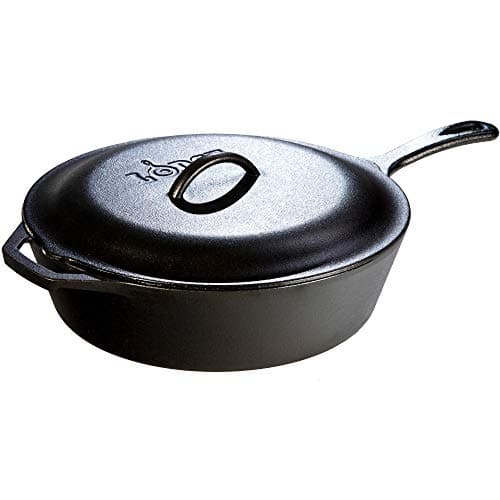
Buy the 12-inch skillet first
It is the most oven-independent pan in the kitchen: stovetop, oven, grill, coals, all of it. If your holiday problem is capacity and you own one 10.25 inch skillet, a second large skillet does more for you than any other purchase. Two pans browning at once is the actual bottleneck.
The reversible griddle is the surprise pick
A two-burner griddle converts your stovetop into one large flat surface. On the day, it warms rolls, finishes sprouts, holds things hot, and doubles as a serving platform. Nobody buys it for the holidays and everyone who owns one uses it then.
The enameled Dutch oven is the make-ahead machine
Braise in it two days out, refrigerate the food in the pot, lift the fat off, reheat gently. That is one main course completely removed from the oven schedule. It is also the pot you serve from, which saves a dish.
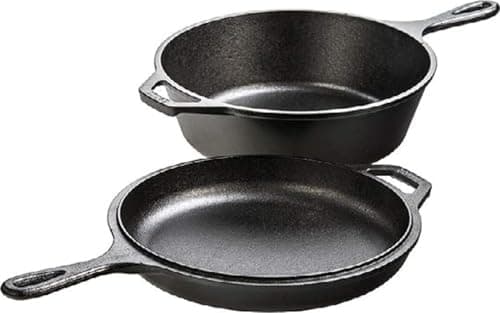
The combo cooker is the small-kitchen answer
A skillet and a deep pot that nest as one piece — two pans of storage for one pan of shelf. If your kitchen is short on cabinet space as well as oven space, this is the piece that solves both. It also bakes bread, which is its usual claim to fame.
Only buy the camp Dutch oven if you will actually go outside
A legged camp oven is superb over coals and awkward everywhere else — the legs mean it does not sit flat on a stovetop, and the flat lid is for holding coals. Buy it if you have a fire pit or a charcoal grill and intend to use them. Otherwise the enameled pot is the better buy. Being honest about that is more useful than selling you a second pot.