Cast iron is a family of iron–carbon alloys carrying more than 2% carbon — usually 1.8 to 4% by weight, with silicon at around 1 to 3%. Drop the carbon below that and the same metal is called steel. That extra carbon is the whole story: it lowers the melting point enough that the metal can be poured into a mold rather than rolled or hammered into shape, which is why these pans are called cast iron. Everything cooks love about a cast iron pan, and everything they complain about, follows from being a casting.
One quick disambiguation, because the phrase is shared: this page is about the cookware metal. “Cast iron plant” is a houseplant and “cast iron pipe” is plumbing. Same alloy family in the pipe's case, completely different subject.
What it is made of, and why that matters
Cast iron starts as pig iron — the product of smelting iron ore in a blast furnace — which is then melted, adjusted and poured. The adjustment that matters for cookware is silicon. A high percentage of silicon forces carbon out of solution so it forms graphite, producing gray cast iron; a low percentage keeps the carbon locked up as iron carbide and produces white cast iron, which is harder and far more brittle. Cookware is gray iron. Those graphite flakes are why a skillet is relatively machinable, relatively forgiving, and dark gray rather than silver when you grind into it.
Three consequences come out of this directly, and they are the three things you will actually notice:
- It has to be thick. Cast iron is brittle — strong in compression, weak in tension. A thin casting would crack, so pans are poured with substantial walls. Modern pans are cast thicker than pre-war ones, which is exactly why vintage iron feels lighter in the hand.
- It is cheap to make in quantity. Pouring metal into a sand mold is a low-cost, high-volume process. That is the real reason a lifetime skillet costs about what a takeaway meal costs, and why this is the rare category where cheap and excellent are the same object.
- It comes out slightly rough. A sand mold leaves the familiar pebbly surface. Boutique makers mill it away; mainstream makers leave it and let seasoning fill it in. We argue that out in smooth vs rough cast iron.
How it behaves on a burner
Two thermal properties, pulling in opposite directions, explain every cooking strength and weakness.
High thermal mass. A heavy slab of iron stores a great deal of heat, so when a cold steak lands in it the surface temperature barely dips. That is what makes the Maillard browning reaction run properly instead of stalling into steam, and it is the single best argument for owning one.
Low thermal conductivity. Iron moves heat sideways far more slowly than aluminum or copper. So the pan takes several minutes to come up to an even temperature, it develops a hot spot over the burner while it gets there, and once hot it will not cool on command. Cast iron is therefore superb at searing, roasting, baking and frying, and genuinely poor at delicate pan sauces and anything that needs a fast temperature change.
The practical rule that falls out of this: preheat on medium for longer than feels necessary, then use less heat than you think. Most complaints about cast iron are a rushed preheat on a high flame. See how to preheat cast iron and why cast iron heats unevenly.
Seasoning is not a coating the factory sprays on
This is the part most explanations get wrong. Seasoning is a stick-resistant layer created by polymerized oils and fats — oil heated past its smoke point until it cross-links into a hard, bonded film on the metal. It is not Teflon, it is not a chemical treatment, and it is not permanent in the sense of being fragile: it wears, and you rebuild it by cooking.
Two things follow. First, a cast iron pan improves with use, which no coated pan does — every fatty thing you cook adds to the layer. Second, a cast iron pan can always be taken back to bare metal and started again, which is why hundred-year-old pans are still in service. Nothing about it wears out. Start with how to season cast iron, and if the surface has gone sticky or patchy that is a known, fixable thing: why is my cast iron sticky.
It is also worth being honest about the limit: a seasoned pan is stick-resistant, never truly non-stick. Eggs in a three-week-old pan will stick, and that is the pan being new rather than the pan being faulty.
Rust, acid and the two real maintenance rules
Bare iron rusts, and people treat that as a flaw rather than a condition. Rust is iron oxide and it needs both water and oxygen, so a pan that is dried and lightly oiled cannot form it. The whole maintenance routine is two rules: dry it with heat, not a towel, and wipe it thin with oil. Thirty seconds on the burner after washing does more for a pan than any product you can buy.
The second limitation is acid. A long tomato or wine braise will attack a seasoning layer and can leave a faintly metallic taste — the honest version is in can you cook tomato sauce in cast iron. A quick deglaze is fine; two hours of simmering tomato is not what bare iron is for. And modern dish soap is not a threat, whatever you have been told: can you use soap on cast iron.
The three forms you will actually be choosing between
“Cast iron” in a shop means one of three quite different objects, and knowing which you want is most of the buying decision:
| Form | What it is | Buy it for | The catch |
|---|
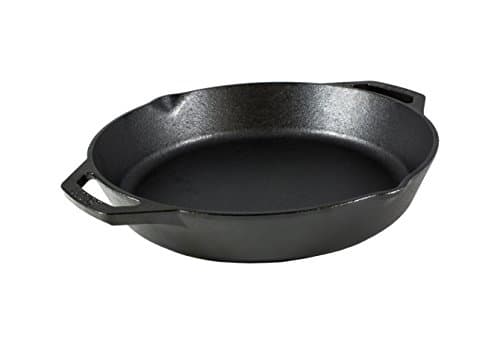
| Bare, seasoned cast iron | Raw gray iron with a polymerized oil layer on it | Searing, oven work, baking, frying. Improves with use | Needs drying and oiling; dislikes long acidic cooking |
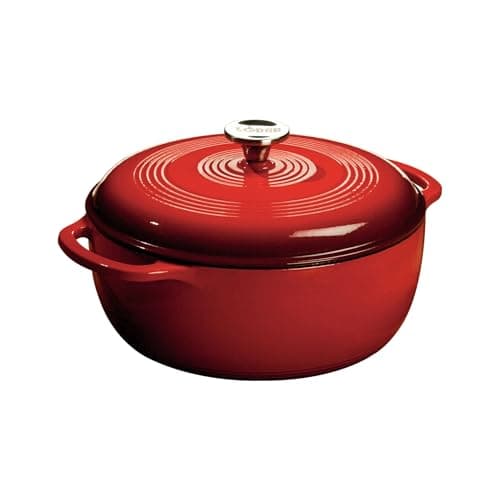
| Enameled cast iron | The same casting with glass fused to it | Braises, acidic food, soap-and-water cleanup, serving at table | Chips, cannot be rebuilt, never becomes slick |
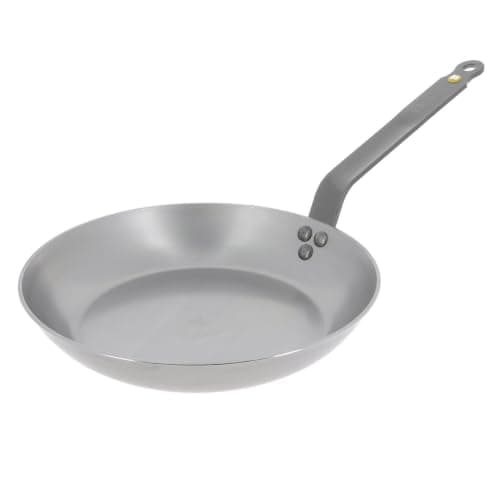
| Carbon steel | Not cast at all — rolled sheet steel, under 2% carbon | The same seasoning, far less weight, much faster response | Less heat retention; warps if you abuse it |
Each has a page of its own: what is enameled cast iron, what is carbon steel, and the head-to-heads enameled vs bare cast iron and cast iron vs carbon steel.
What cast iron is good for, in one list
Because this is the question behind “what is cast iron good for” and “what is a cast iron skillet used for”, which is where most of this page's readers are actually headed:
The full method index is cast iron skillet recipes, grouped by what the pan is doing rather than by meal.
Is it safe? And does it work on my hob?
Yes to both, with one footnote each. There is no coating to scratch off into food — Lodge publishes its cookware as made without PFAS — and small amounts of dietary iron do migrate into food, more so with acidic dishes. The evidence-based version is is cast iron safe to cook with and cast iron for iron deficiency.
On hobs: iron is ferrous, so induction drives it extremely well — cast iron is arguably the best induction material there is. On glass-ceramic the pan is fine and the glass is the risk, so lift rather than slide. See the handling rules.
So what should you actually buy?
If the answer to “what is cast iron” has led you to wanting some, the honest starting kit is small: one 10.25-inch bare skillet, and later one enameled pot if you braise. That pair covers more cooking than any multi-piece set, which is why we argue against sets in cast iron set vs individual pieces. The third pick below is for readers who read the thermal section and realized they want responsivenessrather than mass — that is carbon steel, and it is a different and legitimate answer.
If you want the decision sequence rather than a primer, go to how to choose a cast iron skillet; if you want the value argument, is cast iron worth it; and if you want the spec sheet, the skillet comparison table.
Five things people get wrong about the material
“Cast iron and wrought iron are the same thing.” They are not. Wrought iron is very low in carbon and was worked by hammering; cast iron is high in carbon and poured. The full distinction.
“Heavier means better.”Weight buys heat retention and costs you usage — a pan too heavy to lift one-handed stops getting cooked on, and a pan that is not cooked on never builds seasoning. Published weights, ranked: best lightweight cast iron skillets.
“A rough pan is a bad pan.” The texture is the sand mold, and seasoning fills and levels it within a few months of real cooking. Machining buys a head start, not a permanently better pan.
“It is indestructible.” Nearly. It is brittle and notoriously difficult to weld, so a dropped pan can crack and a cracked pan is finished — can cast iron crack. Thermal shock (a screaming-hot pan into cold water) is the other way people break one.
“Rust means it is ruined.”Rust is a surface reaction, not rot. Scrub, dry, oil, carry on — remove rust from cast iron and is rusty cast iron safe to use.
Where the three picks come from
One of each form discussed above, so the page ends with the actual objects rather than an abstraction. The 10.25-inch Lodge is the default bare skillet and is cast in Lodge's own Tennessee foundries; the 6-quart Lodge enameled pot is the value answer on the enamel side (and note, honestly, that Lodge publishes this line as made by its partners in China or Vietnam — the full picture is in our review of it); and the de Buyer is carbon steel, included because for some readers that is the right conclusion from this page rather than a consolation prize.
Prices are live from the price layer with the date they were fetched, so nothing on this page quotes a number that has gone stale. In qualitative terms: the bare skillet is the cheapest thing here by a wide margin, the enameled pot is a mid-range purchase, and the carbon steel pan sits between them.