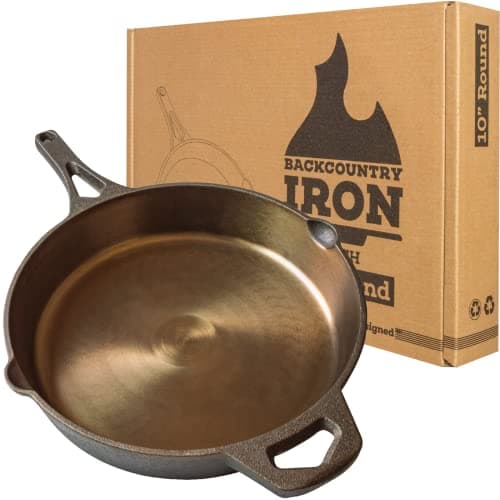
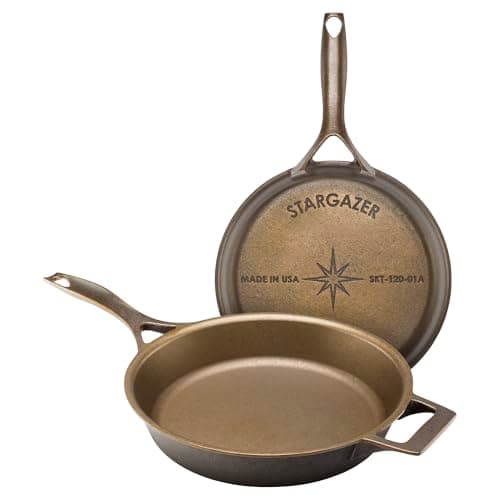
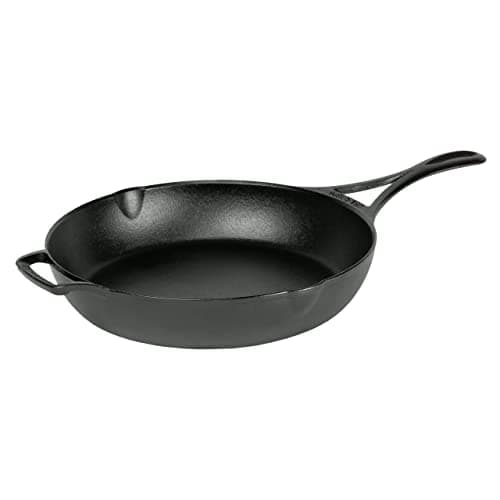
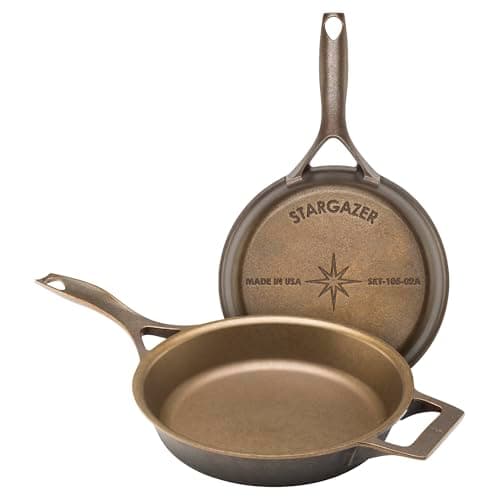
Buy the Stargazer 10.5-inch. Its interior is CNC machined across the entire cooking surface, it is cast and finished in Pennsylvania, the company publishes its real numbers — 5.2 lb, an 8.1-inch cooking surface, 2.0 inches deep — and 10.5 inches is the size most households cook in. If you want a milled surface for less, the Backcountry Iron Wasatch is the cheapest one we can find, provided you can live with a seven-pound pan. And if what you actually want is a lighter, slicker Lodge rather than a milled pan, buy the Blacklock and save yourself the rest.
First, the thing nobody selling these pans wants to spell out: “smooth” is being used for two different products. One group of pans has the cooking surface physically cut away after casting. The other group is simply cast thinner and seasoned more times at the factory, which feels smoother in the shop but is not the same thing. Both are legitimate. They cost very different amounts of money, and they solve different problems.
This page ranks both, labels which is which, and ends with the argument against buying any of them — because for a lot of readers that is the right answer, and we make the same case in smooth vs rough cast iron.
Why a modern skillet is rough in the first place
Cast iron cookware is made by pouring molten iron into a sand mold. The sand leaves its texture in the metal, so every skillet comes out of the mold slightly pebbly. Pre-war American foundries then ground and polished that surface flat as a matter of course, which is why a Griswold or a Wagner feels like glass and a new Lodge does not.
That polishing step was labor, and it was the first thing to go when cookware got cheap. A modern Lodge skips it and leaves the as-cast texture in place. The boutique makers brought it back — machining the interior on a CNC mill until the surface is flat and even — and that machining time is most of what you are paying for.
The part the boutique marketing skips: a rough pan does not stay rough. Seasoning is polymerized oil, and it builds up in the low spots first. A Lodge that is cooked on regularly fills its own texture in and gets meaningfully slicker over months. It never reaches milled-flat, but it gets close enough that plenty of people who own both reach for the cheap one.
The criteria we ranked on
1. Is it actually machined?
The only question that separates the tiers. Stargazer states its interiors are CNC machined across the entire interior surface. Field describes its pans as machine polished, like the best vintage cast iron skillets. Backcountry Iron sells the Wasatch on its milled cooking surface. Lodge's Blacklock page claims the line is engineered to be lighter than traditional iron and triple seasoned, and makes nomachining claim at all. We checked, and we are not going to upgrade a manufacturer's own wording for them.
2. Weight — and the assumption that gets this wrong
Most buyers assume smooth means light. It does not. Weight comes from how thick the pan is cast, which is a separate decision from whether the interior is milled:
| Pan (about 10 inches) | Published weight | Milled? |
|---|
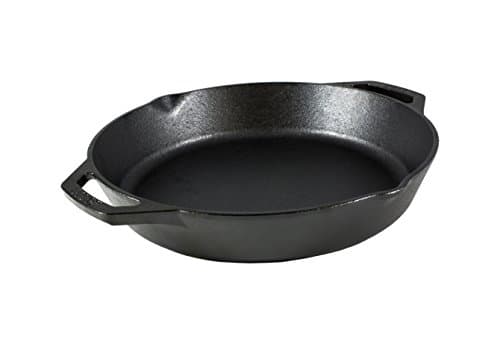
| Lodge 10.25-inch (classic) | ~4.5 lb | No |
| Lodge Blacklock 10.25-inch | Lighter than classic Lodge (figure not published) | No |
| Stargazer 10.5-inch | 5.2 lb | Yes |
| Backcountry Iron Wasatch 10.25-inch | 7 lb | Yes |
Read that table twice before you spend. The cheapest milled pan on this list is the heaviest thing on it, and the machined Stargazer is heavier than the Lodge people buy it to escape. If your real complaint is that cast iron is a lift, the answer is Blacklock or Field, not “a smooth pan”.
3. Heat retention, which cuts the other way
Thermal mass is why cast iron sears: a heavy pan does not stall when cold food lands on it. Thin pans store less. So the lightweight members of this list — Blacklock, Field — give up a little searing authority for handling comfort, and the seven-pound Wasatch gives up handling comfort for a lot of stored heat. There is no free option; pick which side you want to pay on.
4. Where it is made, and whether the maker will say
Stargazer, Field, Finex and classic Lodge all state American manufacture. Backcountry Iron publishes detailed dimensions but does not publish where the Wasatch is cast. That is not an accusation — plenty of good cookware is made abroad, and this site recommends Colombian and Brazilian pans elsewhere. But if origin is part of why you want a smooth pan, it belongs in the decision, and we would rather flag the silence than paper over it.
5. The handle
Underrated, and the thing owners actually notice daily. A stubby Lodge handle gets hot fast and offers little leverage. Stargazer's longer angled handle is the single most-praised thing about the pan and is a bigger day-to-day upgrade than the surface for many cooks.
The picks, and who each one is for
Stargazer 10.5-inch — the one to buy
It hits every criterion without a serious compromise: genuinely machined, genuinely American, genuinely the right size, with the best handle in the group. The company publishes real specifications rather than adjectives, which on a site that refuses to invent numbers counts for a lot.
Its honest weakness is that at 5.2 lb it is not the weight saving people expect — it is slightly heavier than the 10.25-inch Lodge. Buy it for the surface and the handle. If you want the 12-inch instead, that is the fourth pick below and our full Stargazer 12-inch review goes deeper.
Backcountry Iron Wasatch 10.25-inch — the value milled pan
A real milled cooking surface for meaningfully less than the boutique smiths charge, from a company that publishes its dimensions to the quarter-inch. The trade is blunt and worth restating: at a published 7 lb it is a heavy pan, and the maker does not say where it is cast.
If those two things do not bother you, this is the cheapest legitimate route into a machined surface, and we would rather point you at it than upsell you.
Field No. 6 — the light, heirloom one
Field is the pan for people whose actual complaint is weight. It is machine polished and cast thin in the pre-war style. The catch is size: the No. 6 is 8.38 inches, which is a one-or-two-serving pan. Lovely, expensive, and not a household workhorse — see our Field review and Field vs Stargazer.
Stargazer 12-inch — the large machined option
Same machining and same handle, sized for a family. It is the pan to buy if you routinely cook for four or more and have decided the smooth tier is worth it. Check your burner first — a 12-inch pan on a small element heats unevenly, which our uneven-heating guide explains.
Lodge Blacklock 10.25-inch — smoother, lighter, not milled
The honest budget entry, with the label attached. Lodge says Blacklock is engineered to be lighter than traditional iron and triple seasoned; it does not claim a machined surface, so neither do we. What you get is a thinner, lighter Lodge that starts slicker than a standard one and costs a fraction of a boutique pan. For a lot of readers this is the pan that actually solves the complaint.
Lodge 10.25-inch classic — the control
It is on this list because an honest roundup of the smooth tier has to include the thing you are comparing against. It arrives seasoned from the foundry, costs a fraction of everything above it, and after a year of real cooking its surface will be far closer to the machined pans than the price gap suggests. If you have never owned cast iron, start here and let the material earn the upgrade.
What about Smithey and Finex?
Both belong in this conversation and neither is ranked above, for different reasons.
Smitheymakes some of the most beautiful mirror-polished cast iron in America and sells direct rather than through Amazon, so there is no live listing for us to price or link. That is a purchasing fact, not a quality judgment — our Smithey review covers where to actually buy one.
Finex is machined, American, octagonal and genuinely a design object, and it is the most expensive way onto this list. It is a legitimate buy if you want the object as much as the pan; we make that case in the Finex review and is Finex worth it.
The honest bottom line
A machined pan is a real improvement and a small one. It releases eggs sooner in its life, it cleans a little faster, and it is nicer to look at. It does not sear better, it does not hold heat better, and it will not make you a better cook. Every pan on this list, including the cheapest, is capable of everything you will ask a skillet to do.
So the sequence we would actually follow: cook on a Lodge for six months. If the surface is still the thing that bothers you, buy the Stargazer 10.5. If it is the weight that bothers you, buy the Blacklock or the Field. And if neither bothers you — which is the most common outcome — spend the money on a dutch oven instead, because that is the piece most kitchens are genuinely missing.
How to buy a smooth skillet without overpaying
Ask what your actual complaint is
Food sticking? That is usually technique and seasoning, not the surface — start with why food sticks to cast iron before you spend anything. Pan too heavy? Buy thin, not milled. Surface genuinely bothers you to look at and touch? Then a machined pan is the right purchase and you should get the good one.
Buy the size you cook in, not the size that impresses
10 to 10.5 inches is the everyday size for most households; 12 inches is for cooking for four or more and needs a big burner. An 8-inch machined pan is a luxury egg pan, not a first skillet. Our size ladder sets the buying order.
Milled surfaces still need seasoning
A machined pan is not non-stick out of the box; it is a better starting point. It still needs the same care routine as any bare iron — seasoning, cleaning, drying on the burner. Anyone selling a milled pan as maintenance-free is overselling it.
Do not sand your Lodge
Grinding a modern pan smooth removes the factory seasoning and a layer of iron, and leaves you re-seasoning bare metal from scratch for a surface that is rarely as even as a milled one. If the surface matters that much, buy a pan that was machined properly.
Check the return window before you buy direct
Several makers in this tier sell primarily through their own stores with tighter return terms than a marketplace. At these prices that flexibility is worth real money if the pan turns out not to suit you.
Prices in this tier move
The boutique pans discount rarely and the value ones move more than you would expect. Every figure on this page is pulled live and stamped with the date it was checked — trust the button, not a number you read in an article last spring.