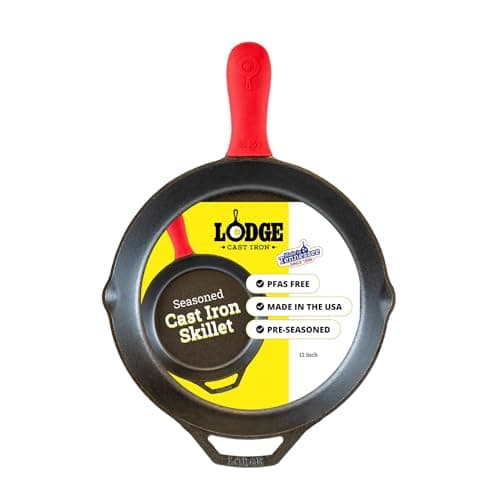
Buy the 10.25-inch Lodge. For almost everyone that is the honest best cast iron skillet: pre-seasoned, made in the USA, cheap enough to be an impulse buy, and good for a lifetime of searing, baking and frying. Spend more only when you know exactly what you are paying for.
Cast iron is a strange corner of the kitchen market because the least expensive pan is also, for most cooks, the right one. A skillet is a slab of iron. What makes it cook well is thermal mass and a slick surface, and a factory-seasoned Lodge delivers both. The boutique pans further down this list are genuinely nicer to hold and smoother out of the box, but none of them will sear a steak or bake a cornbread any better than the Lodge once the Lodge is broken in. That is the whole story of this category, and every honest ranking has to start there.
We ranked these six by how well they earn their price for a normal home cook, not by which is fanciest. The order below is the order we would hand them to a friend. If you are still deciding which diameter to get, read the cast iron skillet sizes guide first, then come back.
How the picks break down
A quick map of who each pan is for before we get into the reasoning. Prices are live, so we do not quote them here; the buy buttons above show today's number. If you would rather compare on published numbers than read an argument, every pan on the site sits in one spec sheet at the cast iron skillet comparison.
| Skillet | Surface | Best for |
|---|
| Lodge 10.25-inch | Pebbly, pre-seasoned | The default first pan for almost everyone |
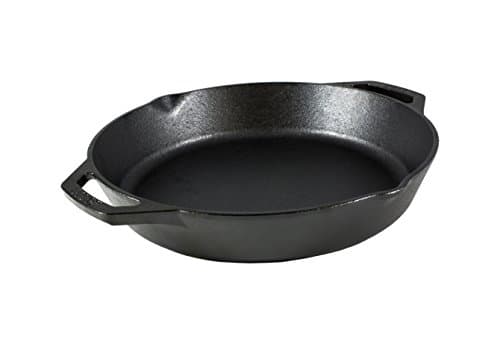
| Lodge 12-inch | Pebbly, pre-seasoned | Family batches and bigger sears |
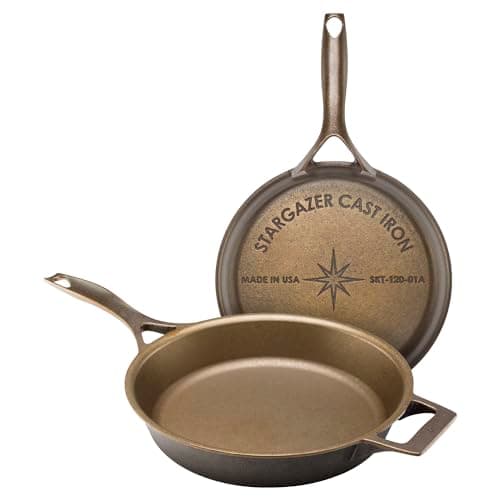
| Stargazer 12-inch | Machined smooth | A real upgrade: smoother surface, better handle |
| Field No. 6 | Machined smooth | A light, heirloom-grade small pan |
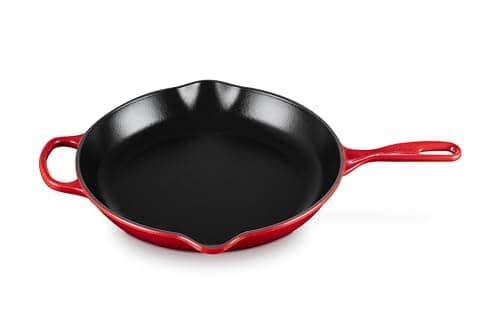
| Le Creuset enameled | Enamel (does not season) | Looks and braising, not sear-and-release |
Why the 10.25-inch Lodge wins for almost everyone
The 10.25-inch is the size that fits four eggs, two steaks, or a batch of cornbread. It is the most useful single diameter in a home kitchen, and Lodge sells it pre-seasoned from a factory in South Pittsburg, Tennessee, so it works the day it arrives. It is heavy in the way all good cast iron is heavy: that mass is what lets it hold heat when you drop a cold steak into it and keep searing instead of stalling.
The only real knock is the cooking surface. Lodge casts its standard pans with a pebbly texture rather than machining them smooth, so a brand-new one is not slippery. That fixes itself. Every time you cook fat in a hot iron pan, a thin layer of oil polymerizes and bonds to the metal, and those layers stack into a glassy, naturally nonstick coat. That is the whole mechanism behind seasoning, and it is why a Lodge that has been cooked on for a few months releases a fried egg nearly as cleanly as a pan that cost eight times as much. If you want to speed that up, our how to season cast iron guide walks through building coats deliberately.
The honest caveat: a Lodge out of the box is not the glass-smooth pan Instagram sells you. It gets there with use. If you cannot live with a break-in period and want slick on day one, that is exactly what the Stargazer and Field pans below are for, and you will pay several times more for the head start.
The big-batch pick: Lodge 12-inch
Everything true of the 10.25-inch is true of the 12-inch Lodge, with more room and more weight. The extra diameter is the difference between searing two chicken thighs and searing six without crowding the pan, and crowding is the single most common reason home sears go gray and steamy instead of brown. The trade is heft: a full 12-inch Lodge is genuinely heavy, and one-handed tossing is out for most people. If you regularly cook for four or more, get this size; if you cook for one or two, the 12-inch will live in the cupboard and the 10.25-inch will live on the stove.
When a machined-smooth pan is worth it
The Stargazer 12-inch is the upgrade that is not just a status buy. It is machined smooth, so it releases food well before you have built up decades of seasoning, and its angled, longer handle stays cooler and is far more comfortable than a stubby Lodge handle. Thinner, more even walls make it lighter than a same-size Lodge. It costs several times what a Lodge does for performance that is better but not transformatively so, which is the honest way to describe every premium cast iron pan. Buy it as a considered upgrade, not as a first pan.
The Field Company No. 6 is a different kind of luxury: a light, polished, heirloom-grade small skillet cast thin in the pre-war Griswold tradition. It is a joy to lift and it releases food early in its life, but the No. 6 is genuinely small, about 8.38 inches, which is a one-to-two serving pan. It is a jewel, not a household workhorse. If you want the Field smoothness in a do-everything size, you are looking at their larger numbers, not this one. For more on where these makers came from, see the Field Company brand page and Stargazer brand page.
About that enameled Le Creuset
We included the enameled Le Creuset skillet mostly so we can say this plainly: it is not a sear-and-release pan. The interior is a layer of glass fused to iron, and glass does not season. It never becomes truly nonstick the way a well-seasoned bare pan does, so eggs are a struggle and it costs many times what a bare skillet that sears better does. It is beautiful, the enamel needs no seasoning, and it is a lovely braising-and-roasting pan with a lifetime warranty. If that is what you want, buy it with clear eyes. If you want the classic cast-iron crust, buy a bare pan and season it. We lay out the whole enamel-versus-bare trade in Lodge vs Le Creuset.
How to choose a cast iron skillet
Size is the decision that matters
Get the diameter right and almost any brand will make you happy; get it wrong and the nicest pan in the world sits unused. For most households the answer is a single 10.25-inch skillet, big enough for real meals and light enough to actually pick up. Cook for a crowd and you want a 12-inch; cook mostly solo and an 8-inch earns its shelf space. The full breakdown, including a size-to-household table, is in the skillet sizes guide, and the whole decision sequence — size, then weight, then finish, then price tier, with the honest pros and cons — is laid out in how to choose a cast iron skillet.
Smooth versus pebbly surface
Vintage and boutique pans are machined smooth; modern Lodge, Victoria and most budget pans have a pebbly cast texture. Smooth releases food sooner, which matters for the first few months. After that, a well-seasoned pebbly pan is close enough that most cooks stop noticing. Pay for smooth if day-one nonstick performance is worth several times the price to you; skip it if you are willing to cook the pan in.
Pre-seasoned versus bare
Nearly every skillet sold today is pre-seasoned, meaning the factory baked on a starter coat of oil so the pan works immediately and resists rust in the box. Bare, unseasoned pans still exist and cost a little less, but you have to build the first coats yourself before cooking. For a first pan, pre-seasoned is the obvious choice. Either way, the coat is yours to maintain from there, per Lodge's own care guidance.
Weight and handle
Cast iron is heavy, and that weight is a feature: it is the thermal mass that holds a sear. But an 8-pound 12-inch pan is a lot to maneuver, and a short stubby handle makes it worse. A leather or silicone handle sleeve is a near-essential few-dollar add for any Lodge. Premium pans like Stargazer earn part of their price with longer, angled, cooler handles, which is a real ergonomic upgrade if lifting a heavy pan is hard on your wrist.
When to upgrade
Start with a Lodge. If the ritual sticks, if you find yourself reaching for the pan daily and enjoying the care of it, then a machined-smooth Stargazer or a light Field is a genuine pleasure and a fair use of money. Buying the boutique pan first, before you know you love the material, is the classic mistake. There is no shame in a pan that costs the same as two coffees doing 95 percent of the job forever. If you are new to all of this, our best skillet for beginners guide is the gentler on-ramp.