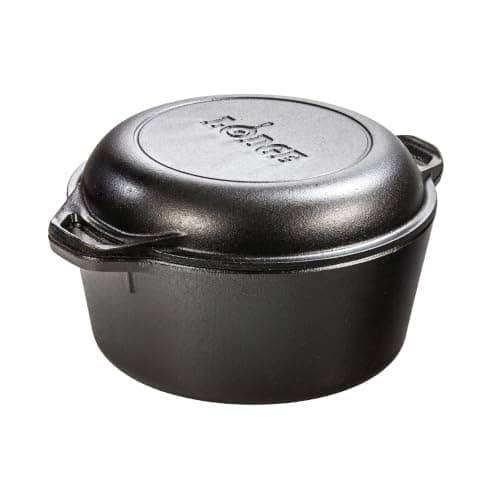
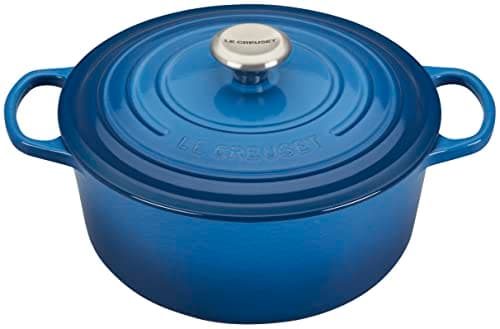
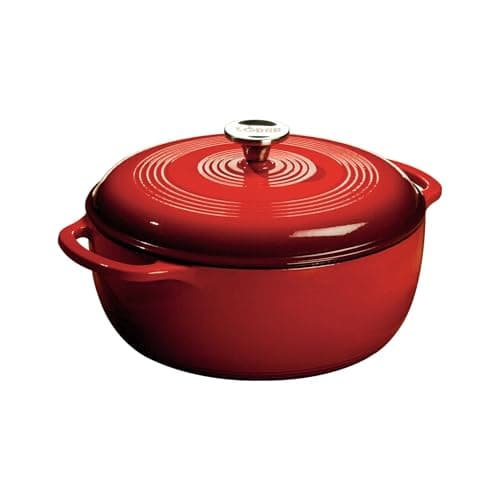
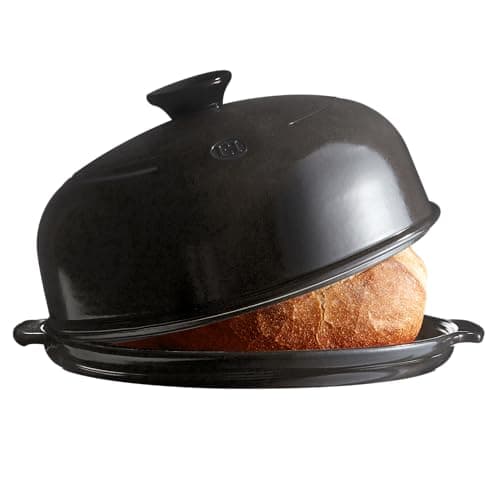
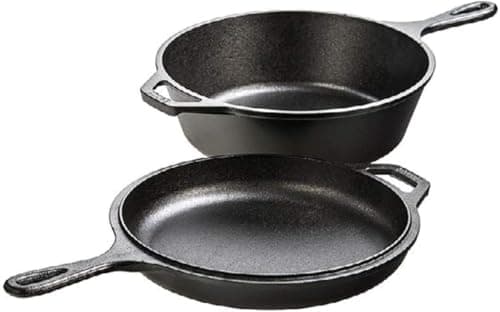
Buy the Lodge Combo Cooker. Its shallow bottom pan means you drop and score a boule from above instead of lowering it into a deep, hot well, and it is the cheapest vessel that bakes a genuinely bakery-grade crust. The Lodge Double Dutch does the same trick with a little more room. A Le Creuset or the Lodge enameled pot both bake beautiful bread if you already own one — just mind the knob's temperature limit. The ceramic Emile Henry cloche is the lightest, easiest to load, but it only bakes bread.
Why a covered pot makes better bread
A home oven cannot compete with a steam-injected bakery deck oven — but a covered cast-iron pot cheats its way there. When you seal a wet, shaped loaf under a heavy lid, the dough's own moisture evaporates and is trapped as steam around the crust (King Arthur Baking explains it well). That steam keeps the surface soft and elastic for the first several minutes, so the loaf can balloon — the burst of rise bakers call oven spring — before the crust sets. Take the lid off for the last stretch and the now-dry heat drives the Maillard browning that turns that thin, set crust deep brown and crackly. Trapped steam first, dry heat second: that is the whole mechanism, and any of these vessels delivers it.
Why loading beats capacity
Given that they all trap steam, the pot that wins for bread is the one that is easiest and safest to load. This is exactly where a deep, tall dutch oven fights you: you are lowering a slack, sticky boule into a 500°F well and trying not to burn your knuckles or deflate the dough on the way down. The Lodge Combo Cooker flips the problem. Its shallow pan is the base, so you tip the loaf out onto a flat, easy target, score it in the open, then lower the deep pan over the top as a lid. The Double Dutch works the same way — its lid is a 10.25-inch skillet — with a bit more headroom for a taller loaf. For the sheer ease of getting a wet loaf in and out, these two bare Lodges beat pots that cost far more.
The five things that actually decide it
Every vessel on this page traps steam, so steam is not the tiebreaker — it is the entry fee. What separates them, in the order that matters to a home baker:
- How you get the loaf in. A shallow base you load from above is worth more than any other single feature, because it is the step where loaves get deflated and forearms get burned. Shallow-base vessels: the Combo Cooker, the Double Dutch, the cloche.
- Preheat ceiling.Bare iron has none. Enamel is limited by its lid knob, and a recipe calling for a 500°F empty preheat leaves no margin on a pot rated to 450°F.
- Capacity versus your actual loaf.A 3-quart vessel is perfect for a 500-gram-flour boule and too tight for a double batch. Headroom matters more than volume — the loaf must spring without touching the lid.
- Whether it has a second job. A bread-only cloche is the easiest to use and the hardest to justify if your cupboard is full. An enameled pot bakes a slightly more awkward loaf and braises five nights a week.
- Weight in a hot oven.You are lifting this thing, lid on, at 500°F, twice per bake. Lighter is genuinely safer, which is the ceramic cloche's real argument and part of the small Combo Cooker's.
Price barely moves the answer, which is the unusual part of this category: the vessel that loads best and takes any preheat is also the cheapest one here. Run those five factors against the side-by-side table above and most bakers land on the same pot we did.
Mind the knob on a high preheat
Most sourdough recipes want you to preheat the empty vessel to 450–500°F. Bare iron like the Combo Cooker and Double Dutch does not care — there is no knob and no enamel to risk, so they take that heat happily. Enameled pots are limited by their lid knob: Le Creuset and the Lodge enameled pot publish a 500°F rating, which covers almost every bread recipe, but you must respect it. If your enameled pot has a lower-rated plastic knob, swap in a metal one before you preheat empty and hot. It is a cheap part and it removes the one real risk of baking bread in enamel.
The specialist and the everyday pot
The Emile Henry cloche is not cast iron at all — it is glazed ceramic, purpose-built as a bread dome. It is far lighter than any iron pot, its shallow base is the easiest of all to load, and it needs no seasoning. The catch is that it bakes bread and does nothing else, and ceramic is more fragile than iron. At the other end, the Lodge enameled pot and a Le Creuset are wonderful bread bakers that also braise, roast and simmer — the right pick if you want one vessel for everything and bread is just part of the job. If that is you, weigh them in the enameled dutch oven roundup and the overall best dutch ovens list.
Bare iron needs to stay dry. A bread pot that goes in a hot oven, then gets shoved damp into a cupboard, will rust. Rinse hot, dry it on the still-warm burner, and wipe on the thinnest film of oil. Our seasoning guide and the broader care hub cover the routine in full.
How to choose a bread vessel
Shallow base beats deep well
The single most useful feature for bread is a shallow bottom you load from above. It is the difference between confidently tipping out and scoring a loaf and nervously lowering it into a hot pit. The Combo Cooker and the Double Dutch are built this way on purpose; a tall, classic dutch oven can still bake a great loaf, it is just harder to load without burns or deflation.
Bare iron or enamel for bread?
For bread alone, bare iron has the edge: it takes any preheat you throw at it and there is no knob to limit you. Enamel is the better all-rounder if you want the same pot to braise acidic stews the rest of the week — just confirm the knob's temperature rating. Ceramic, like the Emile Henry cloche, is the lightest and easiest to load but is a single-purpose tool.
Size to your loaf
A 3-to-5-quart vessel suits a standard single loaf using roughly 500 grams of flour. The 3.2-quart Combo Cooker is sized right for exactly that. If you bake big, high-hydration or double batches, step up to a 5-quart-plus round pot for the extra headroom so the loaf does not touch the lid as it springs.
Preheat temperature and the knob
Decide how hot you preheat before you buy. If you follow recipes that call for a 450–500°F empty preheat, either go bare or make sure the enameled pot's knob is rated for it. A metal replacement knob is an inexpensive upgrade that lets any enameled pot take a hard preheat safely.
Weight and handling
You will move this vessel in and out of a very hot oven with a lid on. Lighter is genuinely safer here, which is the ceramic cloche's real advantage and a reason some bakers prefer the smaller Combo Cooker over a big, heavy pot. Whatever you choose, use dry, heavy mitts and a clear path to the counter — a slack loaf and a 500°F pot are an unforgiving combination if you fumble.
Match the vessel to the loaf you actually bake
Bakers size pots by quarts; recipes are written in grams of flour. This is the translation, and it is the single most common sizing mistake we see — people buy the 7-quart pot because bigger sounds safer, then bake a flat, spread-out loaf in it.
| Your loaf | What it needs | On this page |
|---|
| 350–450 g flour (small boule) | 3 qt is plenty; a big pot lets it spread | Combo Cooker, cloche |
| 500 g flour (the standard loaf) | 3–5 qt, with headroom to spring | Combo Cooker, Double Dutch |
| 700–1000 g flour (big or double batch) | 5.5 qt and up, tall walls | Le Creuset, Lodge enameled |
| Batards and long loaves | An oval pot, not a round one | See oval dutch ovens |
The rule underneath the table: the loaf should have room to grow upward without touching the lid, and not so much floor that it slumps sideways. A pot that is slightly too small ruins a loaf; a pot that is much too big just makes a flatter one.
What you should expect to spend
This is the rare category where the cheapest sensible option is also the one we rank first, so read the price ladder as a list of things you are buying besides bread. The bare Lodges are the entry point and they bake the crust you came for. A ceramic clochecosts more for a lighter, easier-to-load, single-purpose tool. An enameled pot — Lodge or Le Creuset — costs more again, and what the extra money buys is a pot that braises, simmers and roasts the other six days of the week, plus in Le Creuset's case the French finish and resale value. None of that makes better bread. Live numbers for all five sit in the comparison table; we do not print prices in prose because they go stale between visits.
The mistakes that cost people their first loaf
- Not preheating the vessel. A cold pot means no instant steam burst and a pale, dense loaf. The empty pot goes in with the oven and stays there.
- Leaving the lid on the whole bake. Steam first, then dry heat. Keep the lid on and you get a soft, matte, anaemic crust instead of a dark crackly one.
- Buying oversized. See the table above. The 7-quart pot is a braising purchase, not a bread purchase.
- Ignoring the knob rating.A plastic knob and a 500°F empty preheat is how enamel lids get destroyed. Check the rating or fit a metal knob.
- Storing bare iron damp. A bread pot rinsed hot and shoved wet into a cupboard will rust. Dry it on the warm burner and wipe on a thin film of oil.