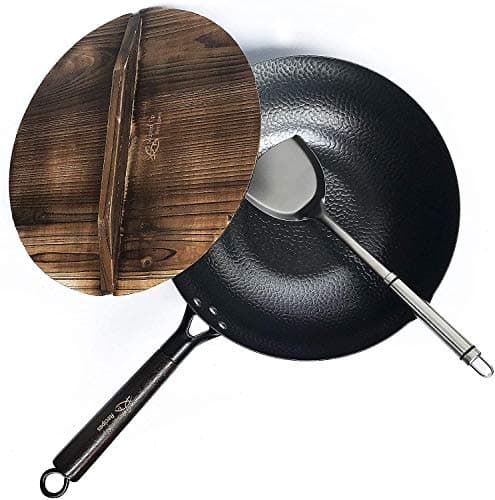
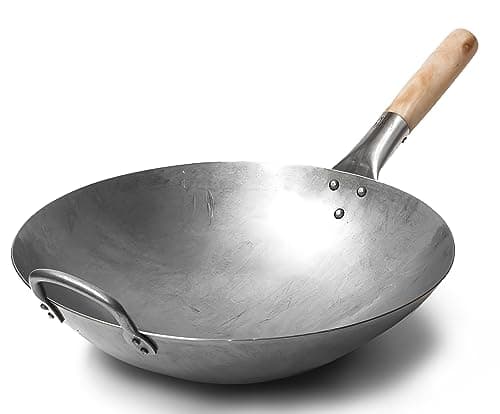
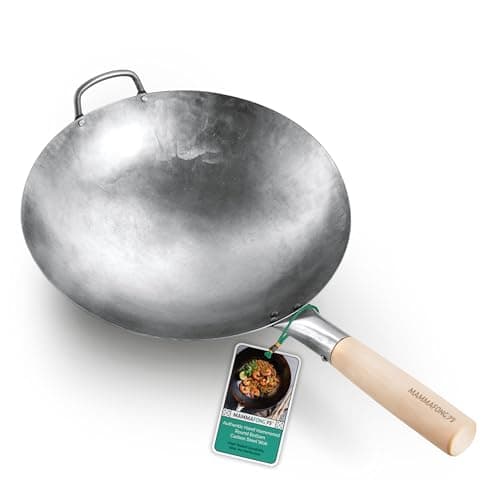
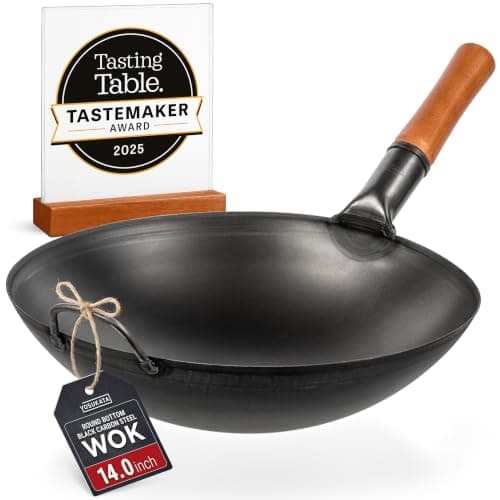
For a wok, buy carbon steel, not cast iron. A wok lives or dies on responsiveness — the ability to rip to a screaming heat, then back off the instant you lift it — and thin, light carbon steel does that where heavy cast iron cannot. Our pick for most people is the pre-seasoned Yosukata, which works close to out of the box. If you cook on electric or induction, buy the flat-bottom Souped Up Recipes wok so it sits stable without a ring. And if you want the real, traditional article and will season it yourself, a hand-hammered Craft Wok or budget Mammafong is the genuine thing.
Carbon steel is the classic wok material for the same reason it makes a great skillet: it is an iron-and-carbon alloy pressed thin, so it seasons into a slick, naturally nonstick surface but weighs a fraction of cast iron. That lightness is the whole point of a wok. You toss and flip constantly, pushing food up the sloped sides to control how fast it cooks, and a heavy cast-iron wok fights you the whole time. This is exactly the fork we describe in cast iron vs carbon steel: cast iron's heat-hoarding mass helps on a weak burner, but for the agile, high-heat tossing a wok is built for, thin carbon steel wins. If you specifically have a low-powered stove, our best cast iron woks guide makes the case for the heavier option.
Round bottom or flat bottom?
This is the decision that matters most, and it is about your stove, not your cooking. A round-bottom wok is the traditional shape: it concentrates heat at the base and lets you sweep food up the sides, but it needs a strong gas flame and usually a wok ring to sit still, so it is for gas ranges and outdoor wok burners. A flat-bottomwok has a small flat base that sits stable on electric, induction and gas without a ring — the right choice for most Western kitchens, at the cost of a little of the deep-bowl tossing feel. Match the shape to your burner first; everything else is secondary.
Pre-seasoned or raw?
A pre-seasoned wok (the Yosukata) has a factory head start on its seasoning and is usable much sooner. A raw hand-hammered wok (Craft Wok, Mammafong) ships bare with a protective oil or none at all, so it needs a proper wash and a full seasoning before its first stir-fry — the same polymerized-oil process as cast iron. Neither is better cooking; it is a question of whether you want to do the setup. New wok cooks are usually happier starting pre-seasoned.
Do you need a wok ring, a lid or a spatula?
A round-bottom wok wants a wok ring— a simple metal collar that cradles the bowl over a burner so it does not tip. On a strong gas flame you can sometimes balance a wok in the burner grate without one, but a ring is cheap insurance and makes the whole thing safer to use. A flat-bottom wok needs no ring at all, which is part of its appeal on a Western stove. A lidis worth having if you steam or braise in the wok as well as stir-fry — the Souped Up Recipes pick includes one — and a long metal or bamboo wok spatula(a chuan) with its curved edge is the tool that actually fits the bowl, where a flat turner does not. None of these are strictly required to stir-fry, but a ring for a round wok and a proper spatula are the two that most improve the experience. Our accessories guide covers the cast-iron gear worth owning alongside a wok.
One thing you do not need is a nonstick wok. The entire point of carbon steel is that it seasons into its own naturally slick surface that takes the high heat a nonstick coating cannot, so a stir-fry sears instead of steams. A nonstick wok cannot get hot enough to do the job and wears out besides; a seasoned carbon steel wok only gets better.
How to choose a carbon steel wok
Size: 14 inches is the standard
A 14-inch wok is the home-kitchen standard — big enough to stir-fry for a family without crowding, small enough to handle. Go bigger only if you cook for a crowd on a powerful burner; a too-large wok overhangs a home flame and heats unevenly. A slightly smaller flat-bottom wok is fine for one or two people on an electric top.
Handle style
A long wooden or steel handle (a "pow wok" style) lets you toss and flip one-handed, the classic technique; a two-loop-handle wok is steadier for braising and steaming but harder to toss. For stir-frying, the long handle is the more useful design, and every pick here has one.
Thickness
Wok carbon steel is thin on purpose — usually a millimeter or two — so it heats and responds fast. A too-thin wok can warp on fierce heat, while a slightly heavier gauge is more durable but a touch less responsive. The hand-hammered woks here strike the traditional balance; the pressed woks are consistent and sturdy.
Care: treat it like cast iron
A wok seasons and is cared for exactly like a bare skillet: cook, rinse hot, dry on the burner, wipe a thin film of oil. Do not leave it wet, do not scour off the seasoning, and it builds a dark, slick patina that gets better with every meal. The method in how to season carbon steel applies directly.